
Get the latest price? We will reply as soon as possible (within 12 hours)

Product News

  • Analysis and Solutions of Four Common Problems of Sucker Rod Pump
    07-03/2025
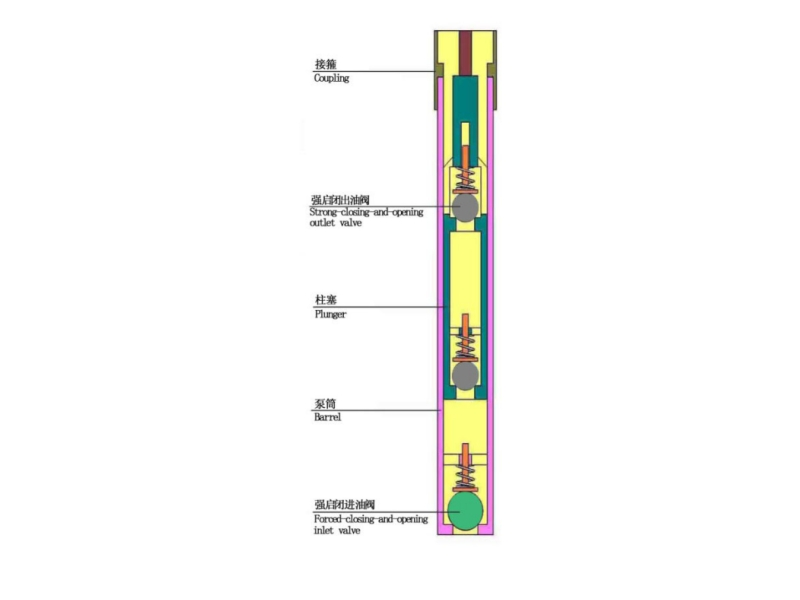
    Application requirements of sucker rod pump: In the process of working of sucker rod pump, in order to ensure the long-term production capacity of oil fields, you can refer to the following contents: (1) the material strength of the suction valve and plunger of sucker rod pump must meet the actual use requirements, especially the pump barrel structure that bears the most pressure, which must have sufficient strength, hardness and sealing at the same time, and its overall shape will not deform when subjected to high pressure. (2) sucker rod pump needs to work underground for a long time, and in this extremely closed working environment, the equipment itself needs to have extremely high stability and reliability, and must have a long service life. (3) various valves and plungers need to meet the corresponding process requirements in terms of quality and material strength, and have high corrosion resistance, and pay attention to the impact of the working process of sucker rod pump on valves and plungers. (4) pay attention to daily maintenance procedures, and solve various problems faced by sucker rod pump in a preventive manner. Below, we will conduct a specific analysis of several common problems, hoping to help friends who encounter such problems. Let's read on!
  • How Does the Separate Layer Production Oil Well Pump Work?
    07-02/2025
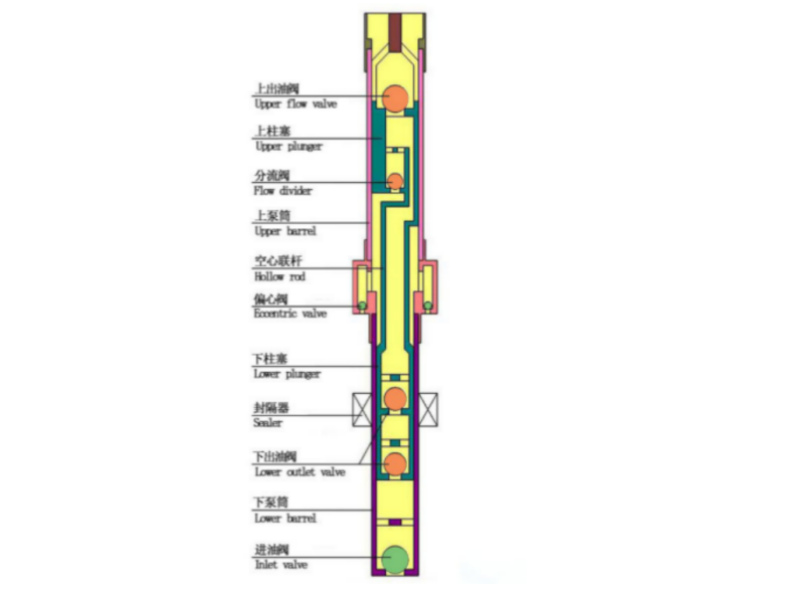
    Layered oil production: Background. In view of the current situation that the oil well joint production cannot meet the production needs due to the prominent contradiction between multiple layers and layers, the layer-stuck method is generally adopted for production. The main layer-stuck pipe string structure is as follows: Control layer-production layer. Production layer-control layer. Production layer-control layer-production layer. Through the application of various layer-stuck pipe strings, the problem of inter-layer interference is effectively solved, but the full play of the production capacity of each layer of the oil well is limited. At present, there is an urgent need for a layered co-production technology that can effectively mobilize each contributing oil layer and avoid inter-layer interference, fully tap the production capacity of the oil well, increase the production of the oil well, and improve the development time.
  • What are the technical standards for sucker rod pumps?
    06-30/2025
    Sucker Rod Pump Technical Standards: 1. Sucker rod pump parts materials and processes: Pump Barrel: Sucker rod pump barrel hardening methods: chrome plating, carburizing. Chrome-plated pump barrel basic materials: 1045, 1026, 4140, 4/6 chrome steel, C44300. Carburized pump barrel basic materials: 1020 steel. Pump barrel maximum length: 35ft. Chrome plating hardness: HV100900~1160. Carburizing hardness: minimum hardness 690 Knoop at 0.005in from the single edge surface, minimum hardness 466 Knoop at 0.010in from the single edge surface. Plunger For Oil Well: Plunger hardening method: alloy powder spray welding, chrome plating. Spray welding layer hardness: ≥HV200595. Chrome plating hardness: HV100832~1160. Various lengths of plungers can be manufactured according to user requirements, with a maximum length of 41ft. Parts: API standard whole-barrel pump, rod pump, moving barrel pump accessories; monel alloy lined valve cover; rubber lined valve cover, Parts materials include: carbon steel, low alloy steel, stainless steel, nickel-copper alloy, brass Valve pair: Valve pair materials include: stainless steel; cobalt-chromium-tungsten alloy; tungsten carbide; titanium carbide; nickel carbide.
  • Safety Tips for Sucker Rod Pumps from Storage to Downhole
  • Tips to Solve Problems | Solve Various Problems Encountered by Deep Well Oil Well Pump
    06-23/2025
    1. Description of the problem: When the pumping well is abnormal during the production process, it is necessary to perform maintenance inspection of the deep well oil well pump. Due to scaling, the piston of some operating oil wells is stuck in the pump barrel of the deep well oil well pump, which makes it difficult to lift it during the well repair operation. At this time, it is necessary to reverse the rod pipe. The reverse rod is reversed by 2-3 operators using pipe pliers at the wellhead. The operation is very dangerous and there have been many injuries in the past. Through on-site observation and research, the sucker rod reverser is made.
  • API subsurface rod pump structure, classification and industry development status
    06-20/2025
    API subsurface rod pump, polished rod and coupling are components of rod pumping equipment, which transmit the power of the pumping unit to the downhole pump. The API subsurface rod pump column is made up of dozens or hundreds of API subsurface rod pumps connected by couplings. During the oil production process, the API subsurface rod pump column is subjected to asymmetric cyclic loads, and the working medium is well fluid (crude oil and mineral water), and the well fluid of many pumping wells contains corrosive media. Therefore, the main failure form of API rod pump is fatigue fracture or corrosion fatigue fracture. The breakage accident of API subsurface rod pump will seriously affect the crude oil production, increase the cost of well repair, and increase the cost of crude oil.
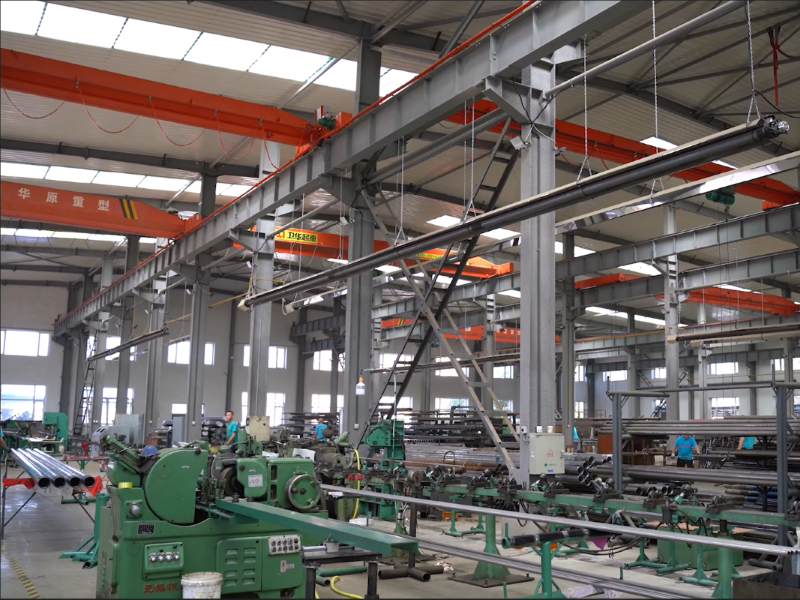
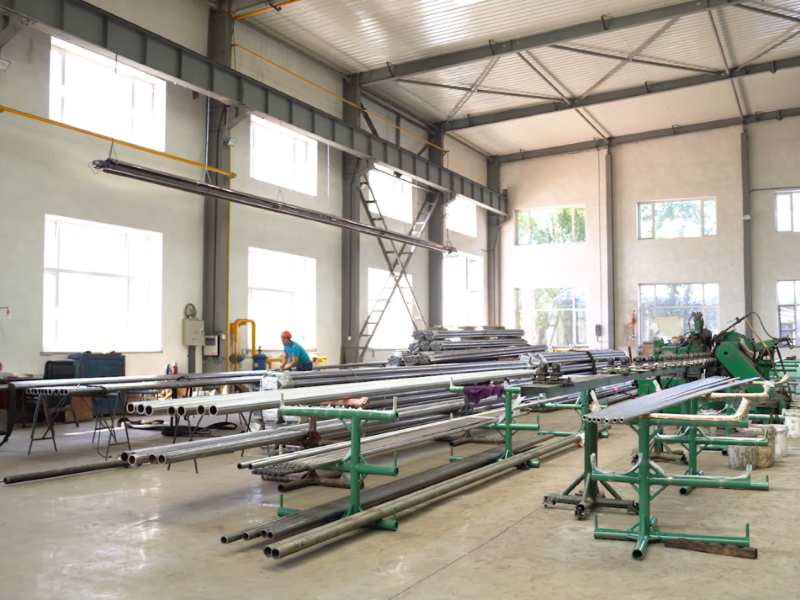
  • How Is the High-Quality API Standard Sucker Rod Pump Manufactured?
    06-19/2025
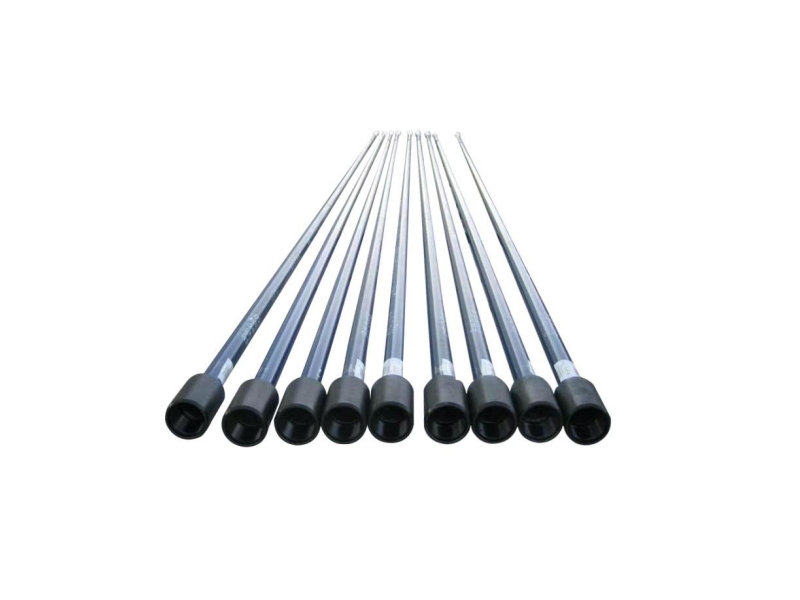
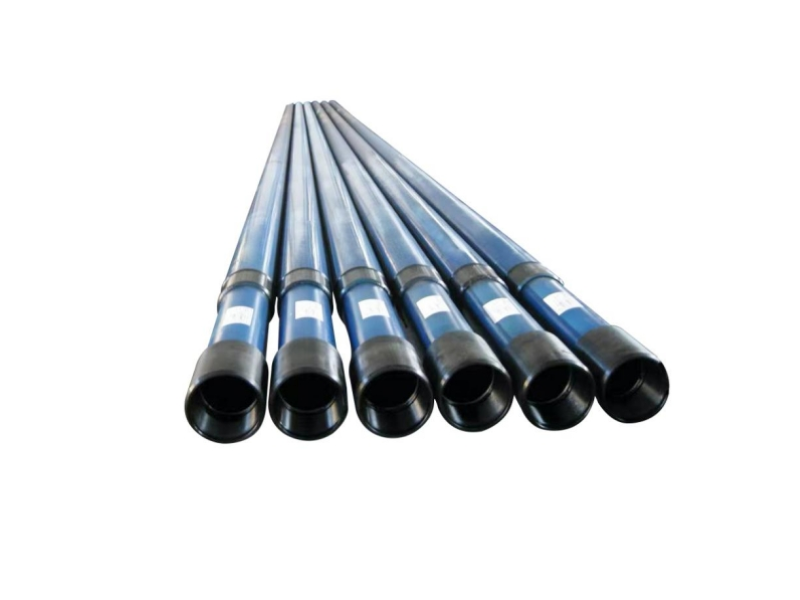
    ​Today, we will take you to learn more about the structural composition, coupling types and precision manufacturing process behind the API standard sucker rod pump. How is the high-quality API standard sucker rod pump manufactured? Let's take a look at it together! Let's first take a brief look at the structure and grade classification of the API standard sucker rod pump: The API standard sucker rod pump is connected by a coupling to form a complete API standard sucker rod pump column. The top is connected to the pumping unit through a bare rod, and the bottom is connected to the plunger of the pumping pump, which accurately transmits the reciprocating motion of the ground pumping unit to the downhole pump body.
  • Analysis of the Six Major Failure Causes of Sucker Rod Pump
    06-17/2025
    In actual oilfield operations, sucker rod pumps, as transmission components of rod pump oil production, often bear high-frequency and alternating mechanical loads. During maintenance and overhaul, we often encounter different types of sucker rod pump failure problems. Combining field data and previous cases, here are several common failure modes and their possible causes for reference by peers.
  • Why Long Plunger Sand Control Subsurface Pump Can Extend the Life of Oil Wells by 40%
    06-16/2025
    ​When I disassembled the long plunger sand control subsurface pump that had been used for almost a year with the customer on site, the first thing I noticed was that the wear on the contact surface between the plunger and the pump barrel was almost negligible. The customer's words at the time impressed me deeply: "I didn't expect that this well condition could withstand so long." This pump is the 25 106th long plunger sand control pump we recommended. Their oil wells are typical well sections with high sand content and strong liquid corrosiveness. Many customers asked us, what does the 25 106th model mean? We are used to explaining that 25 is the diameter of the pump barrel, 106 represents the length, and th is the version with enhanced structure. In practical applications, it is not just a parameter number, but also represents a type of pump type structure optimized for the problem of "high wear, high sand, and easy to get stuck".
  • Why Is China's Sucker Rod Pump More Suitable for Indian Oil Fields?
    06-13/2025
    In western and southern India, many oil fields in the middle and late stages have encountered such problems: Less than half a year after the sucker rod pump was replaced, abnormal noises began to appear in the well, either broken rods or eccentric wear. In serious cases, the well was directly stopped for repair, wasting a lot of manpower and material resources. In fact, the root cause of the problem is not complicated - the well conditions are changing, but the sucker rod pump used has not kept up. Faced with this situation, more and more Indian customers are beginning to try to use China's API sucker rod pump, not because we say it well, but because these sucker rod pumps are indeed durable and long-lasting on site.