

Get the latest price? We will reply as soon as possible (within 12 hours)

News

  • What are the technical standards for sucker rod pumps?
    06-30/2025
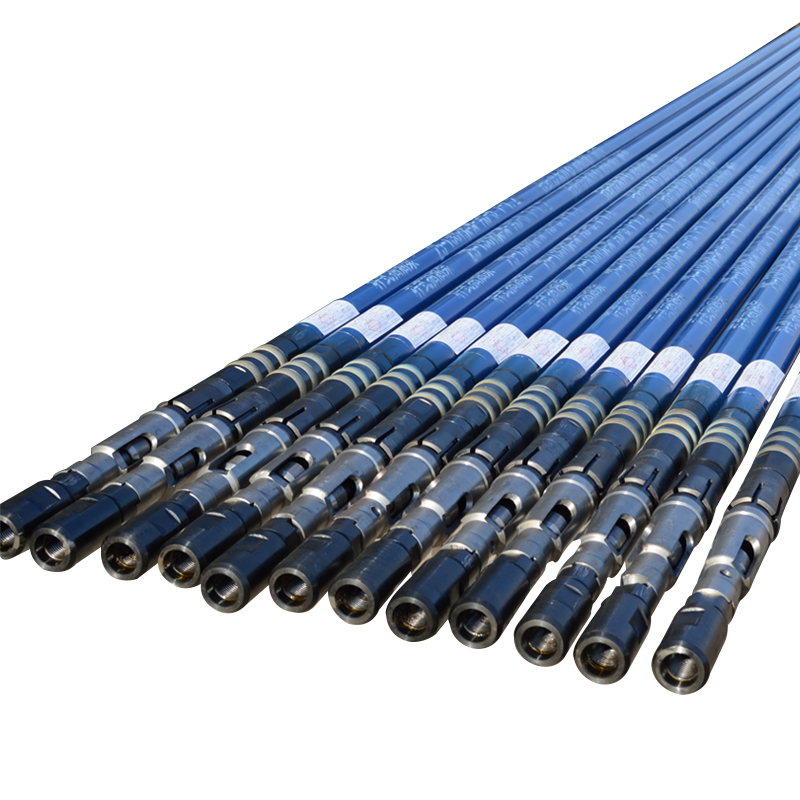
    Sucker Rod Pump Technical Standards: 1. Sucker rod pump parts materials and processes: Pump Barrel: Sucker rod pump barrel hardening methods: chrome plating, carburizing. Chrome-plated pump barrel basic materials: 1045, 1026, 4140, 4/6 chrome steel, C44300. Carburized pump barrel basic materials: 1020 steel. Pump barrel maximum length: 35ft. Chrome plating hardness: HV100900~1160. Carburizing hardness: minimum hardness 690 Knoop at 0.005in from the single edge surface, minimum hardness 466 Knoop at 0.010in from the single edge surface. Plunger For Oil Well: Plunger hardening method: alloy powder spray welding, chrome plating. Spray welding layer hardness: ≥HV200595. Chrome plating hardness: HV100832~1160. Various lengths of plungers can be manufactured according to user requirements, with a maximum length of 41ft. Parts: API standard whole-barrel pump, rod pump, moving barrel pump accessories; monel alloy lined valve cover; rubber lined valve cover, Parts materials include: carbon steel, low alloy steel, stainless steel, nickel-copper alloy, brass Valve pair: Valve pair materials include: stainless steel; cobalt-chromium-tungsten alloy; tungsten carbide; titanium carbide; nickel carbide.
  • Safety Tips for Sucker Rod Pumps from Storage to Downhole
  • How Is the High-Quality API Standard Sucker Rod Pump Manufactured?
    06-19/2025
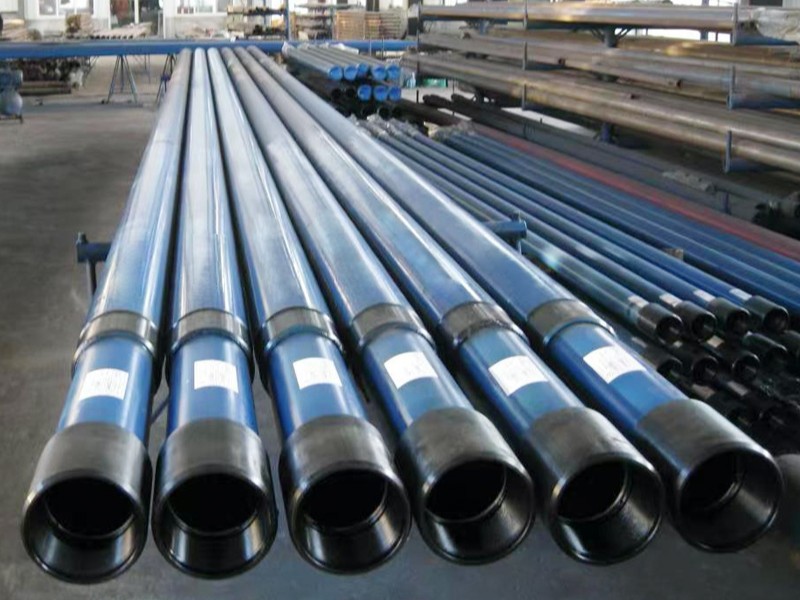
    ​Today, we will take you to learn more about the structural composition, coupling types and precision manufacturing process behind the API standard sucker rod pump. How is the high-quality API standard sucker rod pump manufactured? Let's take a look at it together! Let's first take a brief look at the structure and grade classification of the API standard sucker rod pump: The API standard sucker rod pump is connected by a coupling to form a complete API standard sucker rod pump column. The top is connected to the pumping unit through a bare rod, and the bottom is connected to the plunger of the pumping pump, which accurately transmits the reciprocating motion of the ground pumping unit to the downhole pump body.
  • Analysis of the Six Major Failure Causes of Sucker Rod Pump
    06-17/2025
    In actual oilfield operations, sucker rod pumps, as transmission components of rod pump oil production, often bear high-frequency and alternating mechanical loads. During maintenance and overhaul, we often encounter different types of sucker rod pump failure problems. Combining field data and previous cases, here are several common failure modes and their possible causes for reference by peers.
  • Why Is China's Sucker Rod Pump More Suitable for Indian Oil Fields?
    06-13/2025
    In western and southern India, many oil fields in the middle and late stages have encountered such problems: Less than half a year after the sucker rod pump was replaced, abnormal noises began to appear in the well, either broken rods or eccentric wear. In serious cases, the well was directly stopped for repair, wasting a lot of manpower and material resources. In fact, the root cause of the problem is not complicated - the well conditions are changing, but the sucker rod pump used has not kept up. Faced with this situation, more and more Indian customers are beginning to try to use China's API sucker rod pump, not because we say it well, but because these sucker rod pumps are indeed durable and long-lasting on site.
  • Which Sucker Rod Pump Should Be Used for Shale Oil Wells in the United States?
    06-12/2025
    We all know that although the artificial lift sucker rod pump is only a part of the downhole equipment, its selection has a particularly large impact on the life and production capacity of the well. Especially after the shale oil wells in the United States enter the middle and late stages, the well conditions are becoming more and more complicated, and the production is gradually declining. The quality and performance of the artificial lift sucker rod pump are directly related to whether the production can be stabilized and the shutdown and maintenance can be reduced.
  • Oil Production Method: Sucker Rod Oil Production
    06-06/2025
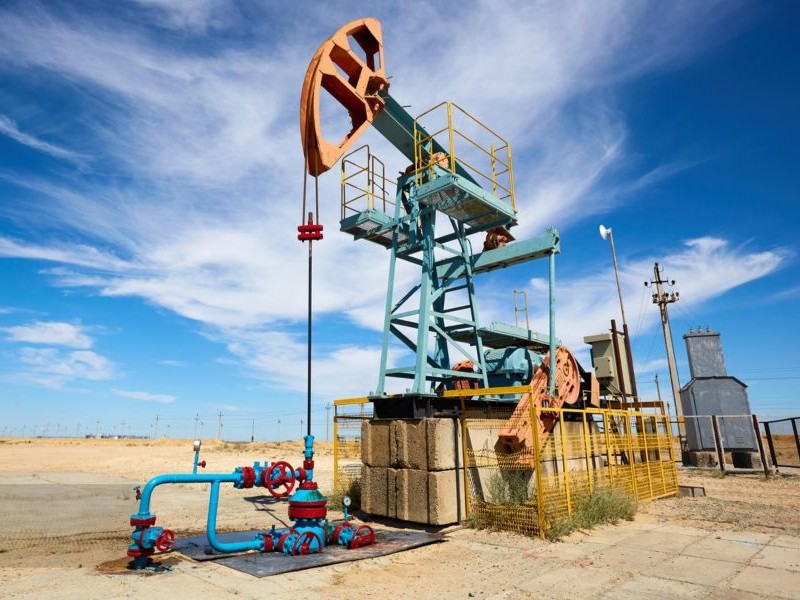
    Sucker rod pump oil production is the most widely used oil production method at present. China's sucker rod pump oil production accounts for about 90% of the total number of artificial lift oil production wells. The sucker rod pump equipment is simple, with low investment, convenient management and strong adaptability. It can be used from shallow wells of 200 to 300 meters to deep wells of 3,000 meters, and the oil production ranges from a few tons per day to 100 to 200 tons per day. In terms of equipment manufacturing, from ground pumping units, downhole sucker rods to sucker pumps, China's products have long been serialized and complete sets, which can meet the production needs of oil fields. The disadvantage of the sucker pump is that the displacement is not large enough, and it cannot meet the requirements for oil wells with a daily output of more than 200 tons.
  • Three Major Factors That Affect the Efficiency of Deep-Well Sucker Rod Pumps. How Many Do You Know?
    05-23/2025
    There are many factors that affect pump efficiency, but from the three basic links of the deep-well sucker rod pump (the piston gives up volume, crude oil enters the pump and is discharged from the pump), it can be summarized into the following three aspects.
  • What Is a Sucker Rod Pump and How Does It Work?
    05-22/2025
    Definition of sucker rod pump: Sucker rod pump is a common downhole device that is driven by a pumping unit to pump crude oil from the well to the ground. The ordinary sucker rod pump is mainly composed of four parts: pump barrel, suction valve, piston, and discharge valve. According to the way the sucker rod pump is fixed underground, it can be divided into tube pump and rod pump.
  • Discussion on the Treatment Method of Pump Barrel Leakage
    05-10/2025
    In the process of crude oil extraction, sucker rod pump barrel leakage is a common problem, which not only causes delays and energy waste, but also may cause problems such as liquid hammer and vibration, and accelerate the damage of components such as plungers and valve groups. Pollute the well site environment and even cause fire hazards. So, what causes pump barrel leakage? How should we effectively reduce pump barrel leakage?