
Get the latest price? We will reply as soon as possible (within 12 hours)

News

  • Which Pump Is Best for Pumping Crude Oil?
    08-24/2025
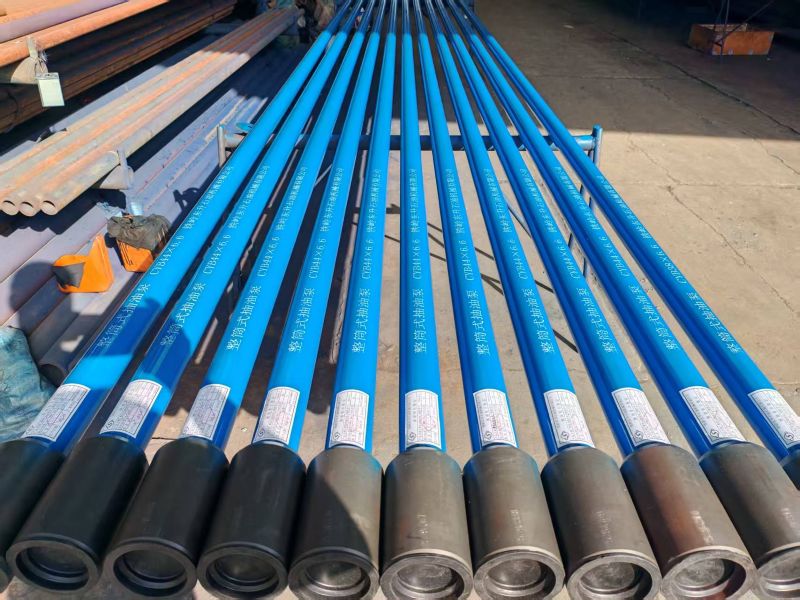
    Today, Dongsheng will explain which pump is best for pumping crude oil. Please follow us for a closer look. Because crude oil contains a high amount of gas, using a conventional pump can cause cavitation. This is undesirable. Therefore, a pump that can pump crude oil without cavitation is required. So, which pumps are safe from cavitation when pumping crude oil? There are many types of pumps, including insert rod pumps, pneumatic crude oil pumps, cam rotor crude oil pumps, gas-liquid mixing self-priming crude oil pumps, gear crude oil pumps, and more. To help you understand which pumps are best for pumping crude oil, Dongsheng will use the insert rod pump as a specific example.
  • Application Scenarios of Petroleum Insert Rod Pump
    08-22/2025
    In the field of oilfield development, choosing the right lifting equipment is very important to maintain stable oil well production and improve recovery. In recent years, insert rod pump, as an efficient and adaptable mechanical oil production equipment, has shown significant advantages under specific reservoir conditions. Its application scenarios are receiving widespread attention and practical testing from Tieling Dongsheng Petroleum Co., Ltd. and other companies in the industry.
  • What Is the Role of Insert Rod Pump?
    08-21/2025
    The rod pump is the core equipment for mechanical lifting in petroleum mines. The plunger is driven by the sucker rod to efficiently extract the crude oil from the bottom of the well to the ground, which directly determines the production capacity and recovery rate of the oil well. The rod pump has a simple structure, sand resistance and wear resistance (especially suitable for inclined wells/low-yield wells), which can significantly reduce maintenance costs by more than 40%. It is the key support to extend the life of old wells and ensure stable production.
  • Which of the Three Pump Types Is the Most Efficient?
    08-21/2025
    Rod pumps are usually divided into three types, namely: tube pumps, rod pumps and special pumps. Tubular pump: The pump barrel is directly connected to the bottom of the tubing, which is suitable for shallow or medium-deep wells. It has the characteristics of simple structure and easy maintenance. Rod pump: The pump body is suspended underground through a sucker rod, which is suitable for deep wells and has a strong pressure bearing capacity, but the installation and maintenance are relatively complicated. Special pumps: such as sand-proof pumps, anticorrosive pumps, etc., are designed for specific geological conditions and are used to solve problems such as sand stuck and corrosion.
  • What Is the Difference Between Sucker Rod Pump and Tubing Pump?
    08-20/2025
    Insert rod pump is a kind of mechanical equipment widely used in the field of petroleum extraction, mainly used to extract crude oil from oil wells. The design concept of insert rod pump is based on artificial lifting technology, which mechanically lifts the fluid in the formation to the ground, thereby overcoming the natural flow difficulties caused by insufficient reservoir pressure. Insert rod pump has the characteristics of simple structure, high reliability and strong adaptability, and plays an outstanding role in low-permeability reservoirs and high-water-bearing oil wells.
  • Insert Rod Pump Troubleshooting
    08-20/2025
    The insert rod pump is a piece of equipment widely used in oil production, featuring a simple structure, easy maintenance, and high reliability. This article will explain the working principle, structural features, operation, maintenance, and troubleshooting of the insert rod pump to help readers better understand and apply this equipment.
  • How Does an Insert Rod Pump Work in an Oil Well?
    08-19/2025
    Selection Guide: Shallow wells with high production (<300 meters): Tube pumps offer 12% lower energy consumption, but require tubing pull-up for maintenance. Deep wells with low production (>5,000 meters): Insert rod pump maintenance cycles extend to 18 months, and displacement is only 15 cubic meters per day. Heavy oil in inclined wells: Hydraulic pumps offer 2.3 times the displacement of rod pumps, increasing pipeline costs by 40%. Key Data: Insert rod pumps have a maximum stroke of 3,000 meters (the height of a 300-story building). Rod string vibration reduces actual stroke by 15%. Gas anchor devices can separate over 90% of bottomhole gas.
  • Commonly Used Sucker Rod Pump Categories Internationally
    08-17/2025
    A sucker rod pump is a type of downhole equipment that, driven by a pumping unit, lifts crude oil from a wellbore to the surface. Commonly Used Sucker Rod Pump Categories Internationally: A tubing pump, also known as a tubing pump, is unique in that the outer barrel, sleeve, and suction valve are pre-assembled on the surface and connected to the lower portion of the tubing before being lowered into the wellbore. A piston equipped with a discharge valve is then fed into the pump via the sucker rod and tubing. Tubular pumps can be further divided into sleeve pumps and solid-barrel pumps.
  • How to Choose the Right Downhole Sucker Rod Pump?
    08-17/2025
    Downhole sucker rod pump adopts an innovative double-layer pump barrel structure. Downhole sucker rod pump is designed for deep and thin oil well conditions. Downhole sucker rod pump is suitable for oil wells that cannot be produced normally due to insufficient formation fluid supply or low formation pressure in conventional lifting processes. The standard applicable well depth range is 2600 meters to 3500 meters.
  • Global Oil Prices Are Entering a Downward Cycle, Highlighting the Value of Insert Rod Pumps
    08-16/2025
    The value and application of insert rod pumps: As the core component of artificial lift systems, insert rod pumps have become increasingly strategically important during low oil price cycles: Insert rod pumps reduce costs and increase efficiency: their highly wear-resistant design and long-life structure significantly reduce maintenance and replacement costs. Insert rod pumps ensure productivity: they maintain stable lift in low-permeability, heavy oil, and deep well conditions, ensuring continuous well production. Insert rod pumps are highly adaptable: they can be customized to suit diverse reservoir conditions to meet diverse production needs. Insert rod pumps improve oil recovery: their stable and reliable lift efficiency helps oil companies maintain high production despite downward pressure on oil prices.