
Get the latest price? We will reply as soon as possible (within 12 hours)

News

  • Which of the Three Pump Types Is the Most Efficient?
    08-21/2025
    Rod pumps are usually divided into three types, namely: tube pumps, rod pumps and special pumps. Tubular pump: The pump barrel is directly connected to the bottom of the tubing, which is suitable for shallow or medium-deep wells. It has the characteristics of simple structure and easy maintenance. Rod pump: The pump body is suspended underground through a sucker rod, which is suitable for deep wells and has a strong pressure bearing capacity, but the installation and maintenance are relatively complicated. Special pumps: such as sand-proof pumps, anticorrosive pumps, etc., are designed for specific geological conditions and are used to solve problems such as sand stuck and corrosion.
  • What Is the Difference Between Sucker Rod Pump and Tubing Pump?
    08-20/2025
    Insert rod pump is a kind of mechanical equipment widely used in the field of petroleum extraction, mainly used to extract crude oil from oil wells. The design concept of insert rod pump is based on artificial lifting technology, which mechanically lifts the fluid in the formation to the ground, thereby overcoming the natural flow difficulties caused by insufficient reservoir pressure. Insert rod pump has the characteristics of simple structure, high reliability and strong adaptability, and plays an outstanding role in low-permeability reservoirs and high-water-bearing oil wells.
  • Insert Rod Pump Troubleshooting
    08-20/2025
    The insert rod pump is a piece of equipment widely used in oil production, featuring a simple structure, easy maintenance, and high reliability. This article will explain the working principle, structural features, operation, maintenance, and troubleshooting of the insert rod pump to help readers better understand and apply this equipment.
  • How Does an Insert Rod Pump Work in an Oil Well?
    08-19/2025
    Selection Guide: Shallow wells with high production (<300 meters): Tube pumps offer 12% lower energy consumption, but require tubing pull-up for maintenance. Deep wells with low production (>5,000 meters): Insert rod pump maintenance cycles extend to 18 months, and displacement is only 15 cubic meters per day. Heavy oil in inclined wells: Hydraulic pumps offer 2.3 times the displacement of rod pumps, increasing pipeline costs by 40%. Key Data: Insert rod pumps have a maximum stroke of 3,000 meters (the height of a 300-story building). Rod string vibration reduces actual stroke by 15%. Gas anchor devices can separate over 90% of bottomhole gas.
  • Commonly Used Sucker Rod Pump Categories Internationally
    08-17/2025
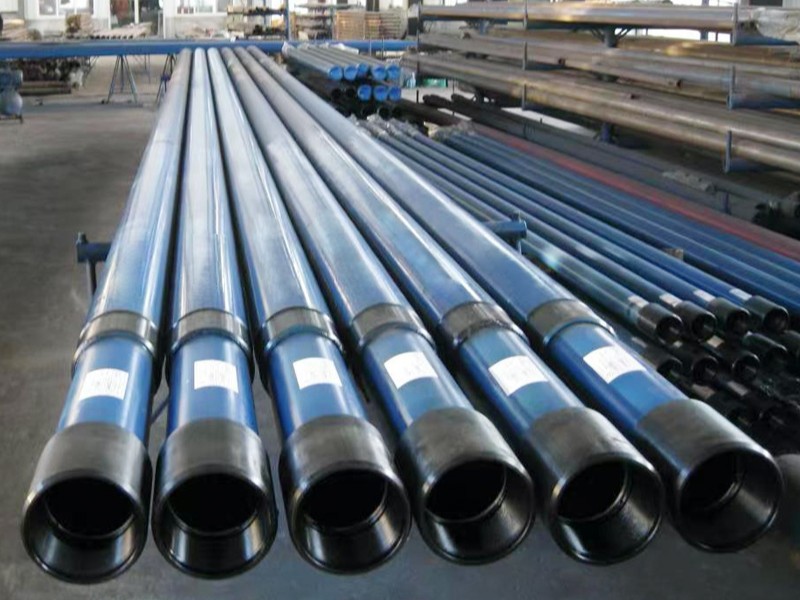
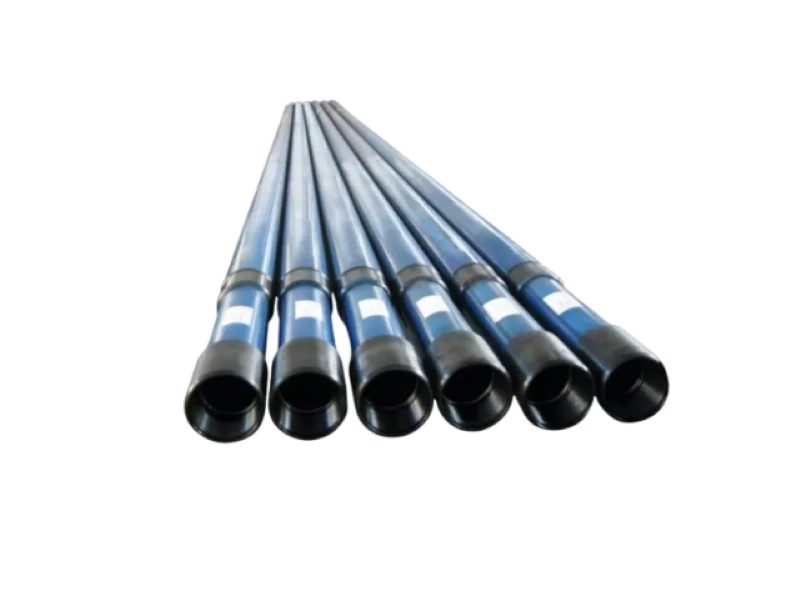
    A sucker rod pump is a type of downhole equipment that, driven by a pumping unit, lifts crude oil from a wellbore to the surface. Commonly Used Sucker Rod Pump Categories Internationally: A tubing pump, also known as a tubing pump, is unique in that the outer barrel, sleeve, and suction valve are pre-assembled on the surface and connected to the lower portion of the tubing before being lowered into the wellbore. A piston equipped with a discharge valve is then fed into the pump via the sucker rod and tubing. Tubular pumps can be further divided into sleeve pumps and solid-barrel pumps.
  • How to Choose the Right Downhole Sucker Rod Pump?
    08-17/2025
    Downhole sucker rod pump adopts an innovative double-layer pump barrel structure. Downhole sucker rod pump is designed for deep and thin oil well conditions. Downhole sucker rod pump is suitable for oil wells that cannot be produced normally due to insufficient formation fluid supply or low formation pressure in conventional lifting processes. The standard applicable well depth range is 2600 meters to 3500 meters.
  • Global Oil Prices Are Entering a Downward Cycle, Highlighting the Value of Insert Rod Pumps
    08-16/2025
    The value and application of insert rod pumps: As the core component of artificial lift systems, insert rod pumps have become increasingly strategically important during low oil price cycles: Insert rod pumps reduce costs and increase efficiency: their highly wear-resistant design and long-life structure significantly reduce maintenance and replacement costs. Insert rod pumps ensure productivity: they maintain stable lift in low-permeability, heavy oil, and deep well conditions, ensuring continuous well production. Insert rod pumps are highly adaptable: they can be customized to suit diverse reservoir conditions to meet diverse production needs. Insert rod pumps improve oil recovery: their stable and reliable lift efficiency helps oil companies maintain high production despite downward pressure on oil prices.
  • How Do Pumpjacks Pump Crude Oil from Deep Underground to the Surface?
    08-15/2025
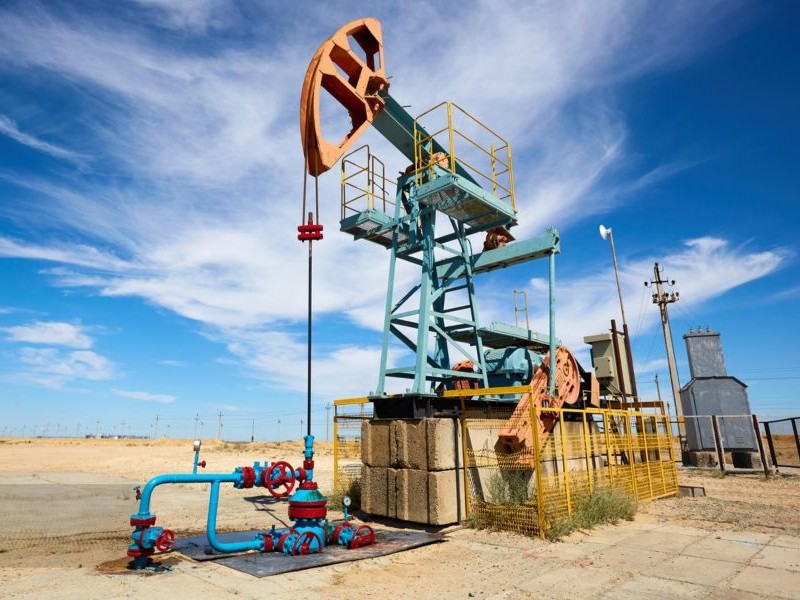
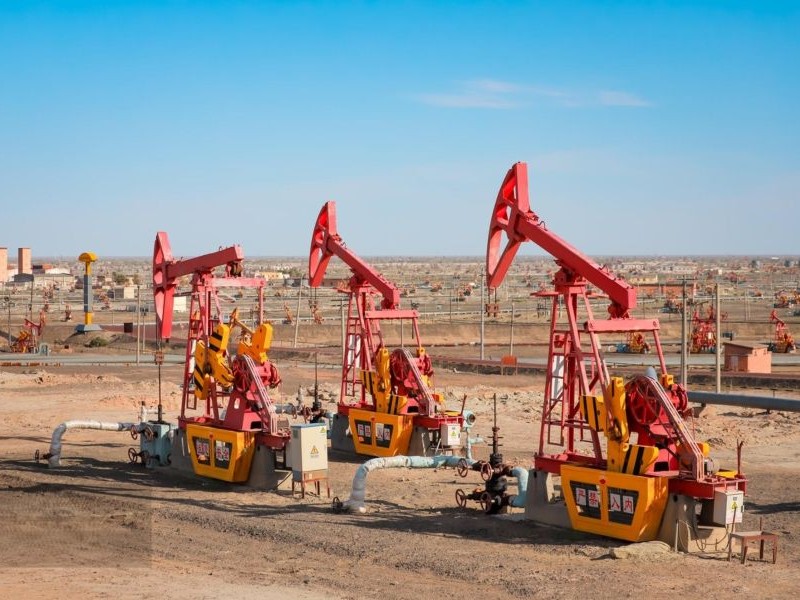
    How do pumpjacks actually bring crude oil from deep underground to the surface? Some might answer that it's the sucker rod pump. Indeed, the sucker rod pump plays a crucial role. However, a deeper look reveals that sucker rod pumps are divided into two types: rod-type sucker rod pumps and tubular-type sucker rod pumps. In our oilfields, rod-type sucker rod pumps are commonly used for oil recovery due to various practical considerations. Let's take a closer look at this crucial piece of equipment hidden deep underground—the rod pump—and learn about its working principles and functions.
  • Advantages of Rod Pump Systems
    08-13/2025
    On the oilfield floor, especially in shallow-to-medium formations, rod pumping has long been one of our engineering team's most commonly used, familiar, and reliable production methods. This isn't to say that other technologies are inferior—submersible electric pumps and progressive cavity pumps have their uses, but when it comes to cost-effectiveness, ease of maintenance, and versatility, rod pumping systems are the preferred choice. Why do we continue to use rod pumps? The reason is simple—not all wells are self-flowing, and not all wells warrant the expense of installing electric pumps. Especially when formation pressure is gradually decreasing, or when producing heavy oil, low-yield wells, or cyclic steam injection wells, we need a stable and easy-to-maintain mechanical recovery solution. In these situations, rod pumping is the preferred choice. Currently, there are two mainstream mechanical recovery methods: gas lift (mostly used in marginal water wells and light oil wells) and deep well pumping. Our rod pumping system is the most mature and widely applicable deep well pumping system. A complete sucker rod pump system consists of three main components: Surface unit (pump unit): Everyone is familiar with the "kowtow pump," the power source, consisting of a connecting rod and a reduction gearbox. Rod system: Connects the surface to the wellbore, transmitting power to the plunger. Downhole pump (sucker rod pump): The actual actuator, sucking up fluid and pumping it into the tubing.
  • Anti-Gas Sucker Rod Pump: The Ultimate Guide
    08-07/2025
    Learn an in-depth understanding of efficient solutions to oil well degassing challenges. I. What is an anti-gas sucker rod pump? An anti-gas sucker rod pump is a type of pumping equipment specifically designed to address high gas content in well fluids. It is an improved version of the sucker rod pump. Its unique structural design and degassing mechanism effectively prevent gas from entering the pump body, resolving the "gas lock" or "gas cap" issues associated with conventional sucker rod pumps and improving oil recovery efficiency.