
Get the latest price? We will reply as soon as possible (within 12 hours)

News

  • The Association Between the Pump Barrel Material and the Downhole Sucker Rod Pump
    10-20/2025
    In the core equipment system of oil extraction, the stable operation of downhole sucker rod pump is the key to ensuring the continuous oil production of oil fields and improving the efficiency of mining. With the continuous expansion of oilfield development scenarios, from conventional shallow wells to deep wells, ultra-deep wells, from ordinary reservoirs to complex reservoirs with high sulfur content and high mineralization, the working conditions faced by downhole sucker rod pump are becoming more and more serious. As the core pressure bearing and sealing component of downhole sucker rod pump, the pump barrel is directly related to the overall performance, service life and operating stability of the equipment. It has become an important research direction in the industry to optimize the performance of downhole sucker rod pump.​
  • Historical Source of Petroleum Rod Pump
    10-14/2025
    As the core equipment in the field of oil and gas extraction, sucker rod pump's development history is closely linked to the global energy development process.
  • The Wide Application of Petroleum Rod Pumps in the Global Market​
    10-13/2025
    In the global energy development system, sucker rod pump, as a kind of oil and gas extraction equipment with reliable structure and controllable cost, has become an important equipment for the extraction of land oil and gas fields and conventional oil and gas reservoirs due to its strong adaptability to different geological conditions. Its application footprint is all over the major energy production areas, deeply supporting the stable operation of the global oil and gas supply.
  • Adaptation of Thermal Recovery Sucker Rod Pump to Well Conditions
    10-09/2025
    At present, the development of global oil and gas resources is gradually turning to the field of difficult to recover reserves, of which the proportion of heavy oil resources is increasing year by year. However, complex well conditions such as high temperature, high pressure, and high viscosity have become key bottlenecks restricting the efficient extraction of heavy oil. In this context, thermal recovery sucker rod pump, with its unique technical advantages, has gradually become the core equipment for solving complex well mining problems. Its precise positioning of adapted well conditions provides important support for improving the efficiency of oilfield development.
  • Advantages of Thermal Recovery Sucker Rod Pump
    10-08/2025
    In the field of heavy oil and high-viscosity crude oil extraction, the performance of thermal recovery sucker rod pump directly determines the recovery efficiency and operating costs of oil fields. As a professional manufacturer in the field of domestic petroleum machinery, Tieling Dongsheng relies on in-depth research on thermal mining conditions to create the thermal recovery sucker rod pump.
  • “Three Pumping Equipment” in the Oil Recovery Device-Oil Pumping Rod
    09-25/2025
    In the complete set of oil recovery equipment, the pumping unit, the pumping rod, and the oil pump are all very important key core components. Through collaborative operation, they have built a “three pumping equipment” working system to jointly promote the complete process from underground crude oil extraction to ground transportation. The performance advantages and disadvantages of these three and the degree of tacit cooperation will not only directly affect the output of the oil well, but also have a vital impact on the overall economic benefits of the mining project.
  • The “three Pumping Equipment” in the Oil Recovery Device-The Oil Pump
    09-24/2025
    In oil extraction operations, deep well pump oil recovery equipment is the core equipment to open up the underground crude oil delivery channel to the ground, and the beam—type oil pump-oil pump device, with its excellent reliability and strong environmental adaptability, occupies an important position in various types of oil recovery equipment and has become one of the most widely used types.
  • Frequently Asked Questions About Downhole Sucker Rod Pump
    09-19/2025
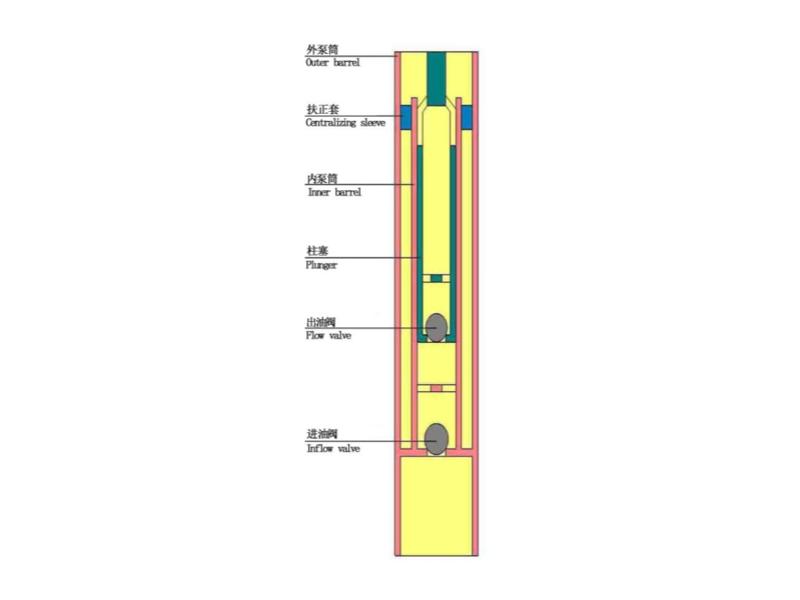
    Downhole sucker rod pump generally refers to a plunger-type oil pump driven by the reciprocating movement of the sucker rod up and down. It is the key underground equipment of the rod pumping system. It is mainly composed of four parts: pump cylinder, plunger, fixed valve and swimming valve. When working, the ground pumping unit drives the plunger up and down through the pumping rod.
  • How to Prevent Gas Lock During Oil Production
    09-02/2025
    What is Gas Lock? Some oil wells contain a high concentration of gas, which can enter the pump barrel through the fixed valve. If not promptly vented, the gas will gradually fill the space below the plunger in the pump barrel. As the plunger descends, the liquid in the tubing string acts on the traveling valve, exerting significant pressure. This prevents the traveling valve from opening, compressing the gas in the pump barrel below the plunger and preventing the flow of liquid above the plunger. As the plunger ascends, the compressed gas expands, exerting pressure on the fixed valve, preventing it from opening and preventing the pump from drawing liquid. This repetitive cycle of gas compression and expansion without any discharge is called gas lock.
  • Application Scenarios of Sucker Rod Pump
    09-01/2025
    In the process of oilfield development, sucker rod pump has always played a very important role. This kind of device, which drives the downhole plunger to work through the ground pumping unit, is like a loyal partner, accompanying the oil well through the middle and late stages of production attenuation. The core value of sucker rod pump lies in its reliability, durability and easy maintenance, especially suitable for the continuous production of conventional onshore oil fields. When the natural energy of the oil well is gradually exhausted, sucker rod pump becomes the key pillar to maintain stable crude oil production.