Get the latest price? We will reply as soon as possible (within 12 hours)

News

  • Judgment and Treatment of Common Faults in Pumping Wells (Ⅱ)
    08-27/2025
    In the previous article, we discussed the main causes of sucker rod pump failure and how to diagnose pumping well failures. This article will detail common troubleshooting methods for pumping wells and the steps for analyzing abnormal wells. Without further ado, let's take a look.
  • Judgment and Treatment Methods of Common Faults of Pumping Wells
    08-27/2025
    (1) Common forms of corrosion of Sucker rod pumps include brittle corrosion, acid corrosion, fracture corrosion, electrochemical corrosion, pitting corrosion and abrasion corrosion.
  • Inclined Well Sucker Rod Pump Buyer's Guide
    08-26/2025
    Table of Contents: Why Use an Inclined Well Sucker Rod Pump? Challenges of Inclined Well Pumping Application Scenarios of Inclined Well Sucker Rod Pumps Comparison of Common Artificial Lift Methods Structure and Features of Inclined Well Sucker Rod Pumps Pump Types and Selection How to Choose the Right Inclined Well Sucker Rod Pump Conclusion and Recommendations In oil production, rod pumping remains the most common method of artificial lift. However, traditional vertical well pumping methods face many challenges in inclined well environments. Inclined well sucker rod pumps are designed to address these challenges.
  • Application Differences Between API Tubing Pumps and API Rod Pumps in Oilfields
    08-26/2025
    API type tubing pumps and API type rod pump​s are two common types of mechanical oil production equipment. Due to their structural differences, their application performance in different well conditions varies. Choosing the right pump based on well depth, production rate, and ease of maintenance has always been a core concern for oilfield engineers and production units. This article will provide an in-depth analysis of the structural characteristics and application scenarios of API type tubing pumps and API type rod pumps, helping you quickly compare their advantages and limitations.
  • What Are the Advantages and Disadvantages of Tubing Pumps and Insert Rod Pumps?
    08-26/2025
    The main difference between tubing pumps and insert rod pumps is that tubing pumps have a simple structure and low cost. The diameter of the pump that can be inserted under the same oil pipe diameter is larger than that of insert rod pumps, so the displacement is large. However, when inspecting the pump, the oil pipe must be started, and the workload of repairing the well is large. It is suitable for oil wells with small depth and high production. Insert rod pumps are convenient for pump inspection, but have a complex structure and high manufacturing cost. The diameter of the pump that can be inserted under the same oil pipe diameter is smaller than that of tubing pumps. Insert rod pumps are suitable for oil wells with large depth and low production.
  • Tubing Pump Structure and Features
    08-25/2025
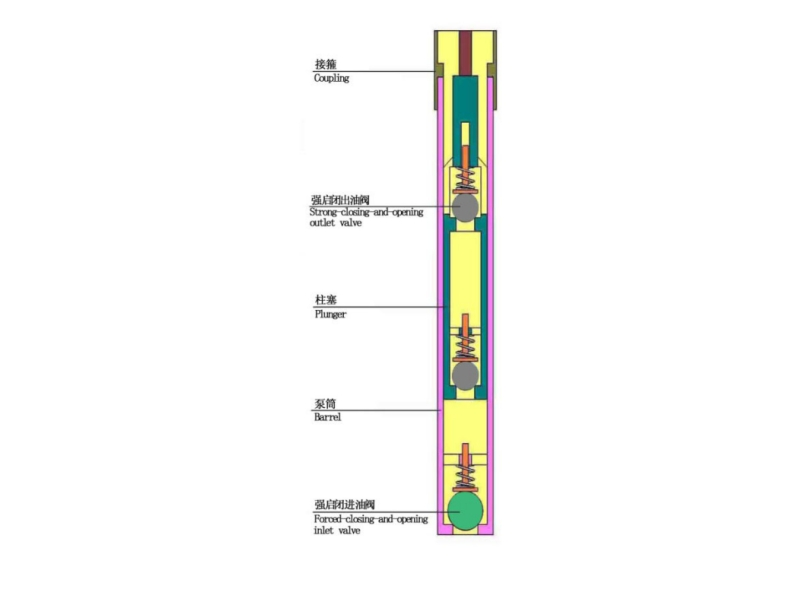
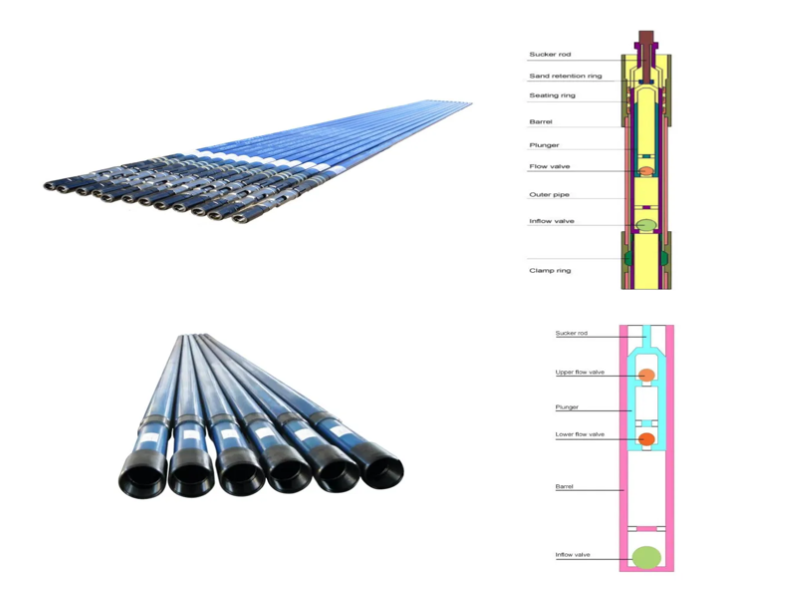
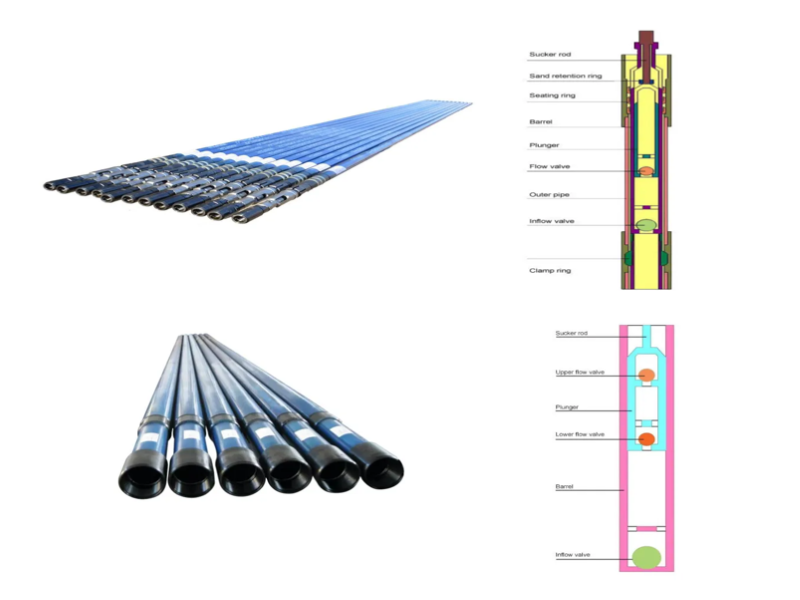
    Tubing pump, also known as tubing pump, is divided into double-valve and three-valve tubing pump according to the number of valves. It consists of a working cylinder, a piston, a floating valve, a fixed valve, etc.:
  • Tubing Pump Overview
    08-25/2025
    Table of Contents: The previous article explained insert rod pumps. This article will explain the definition of tubing pumps, a comparison between tubing pumps and insert rod pumps, the classification of tubing pumps, the impact of pump diameter on production, and the pumping process. For more information, let's take a look together!
  • Insert Rod Pump Overview
    08-24/2025
    Table of Contents: This article will provide a comprehensive understanding of the definition of an insert rod pump, a comparison between an insert rod pump and a progressive cavity pump, its classification, the impact of different pump hole sizes, and how to install a pump. By leveraging our company's strengths in this field, we'll help you quickly make a selection decision.
  • Which Pump Is Best for Pumping Crude Oil?
    08-24/2025
    Today, Dongsheng will explain which pump is best for pumping crude oil. Please follow us for a closer look. Because crude oil contains a high amount of gas, using a conventional pump can cause cavitation. This is undesirable. Therefore, a pump that can pump crude oil without cavitation is required. So, which pumps are safe from cavitation when pumping crude oil? There are many types of pumps, including insert rod pumps, pneumatic crude oil pumps, cam rotor crude oil pumps, gas-liquid mixing self-priming crude oil pumps, gear crude oil pumps, and more. To help you understand which pumps are best for pumping crude oil, Dongsheng will use the insert rod pump as a specific example.

  • Do You Really Know About Tubing Pump?
    08-23/2025
    In the field of oil extraction, tubing pump, as a mature and reliable mechanical oil production equipment, continues to provide the core driving force for stable oilfield production. Tieling Dongsheng Petroleum Co., Ltd. has been deeply engaged in the research and development and manufacturing of oil production equipment for more than ten years. Relying on structural optimization and technological innovation, its tubing pump series products have been applied on a large scale in many domestic oilfield blocks, effectively supporting the development needs of old wells to increase production and new wells to improve efficiency.