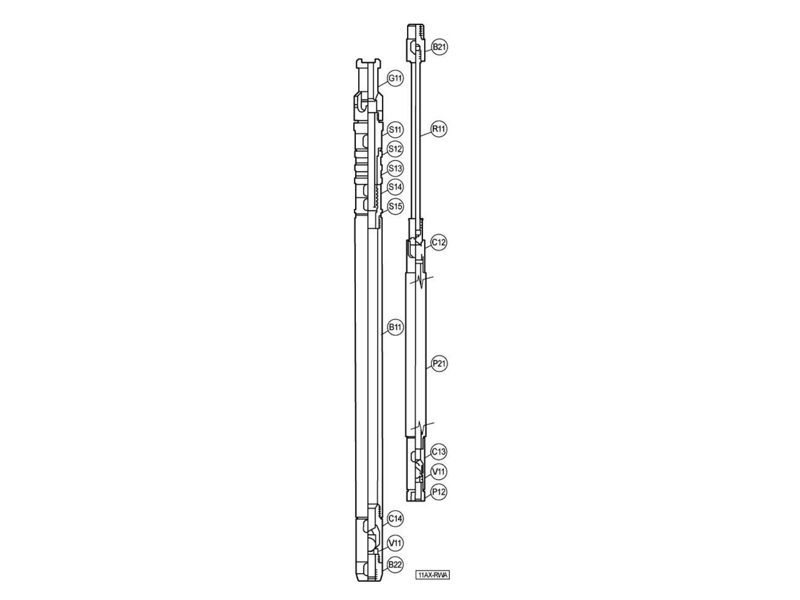
The RWA rod pump with an insert is a top hold-down, thin-wall barrel-type pump designed to provide efficient artificial lift in sandy, shallow, and low-fluid-level wells.
Meanwhile, it is made following the API 11AX specifications, giving it the ability to function properly and reliably even in situations where sand settling and pump sticking are the central issues.
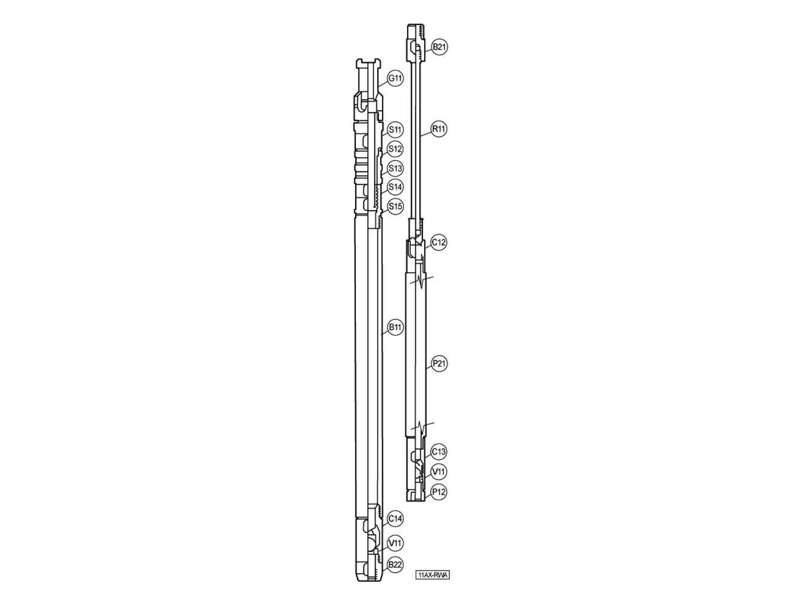
The RWA pump is available in various sizes and configurations to meet different well conditions and production requirements.
| Table B.4—RWA—Rod,Stationary Thin Wall Barrel,Top Anchor Pump(See Note) | |||||
| (1) | (2) | (3) | (4) | (5) | (6) |
| Standard Pump Size | |||||
| 2 3/8×1 1/4 (60.3×31.8) | 2 3/8x1 1/2 (60.3x38.1) | 2 7/8×2 (73.0×50.8) | 3 7/2×2 7/2 (88.9×63.5) | ||
| Complete Pump Designation | |||||
| 20-125 RWACac | 20-150 RWACac | 25-200 RWACac | 30-250 RWACac | ||
| Symbol | Description | Part Numbere | |||
| B11 | Barel,Thin Wall | B11-125a | B11-150a | B11-200a | B11-250a |
| B21 | Bushing,Valve Rod | B21-20 | E21-20 | B21-25 | B21-30 |
| B22 | Bushing,Barrel Cage | B22-20 | B22-20 | B22-25 | B22-30 |
| C12 | Cage,Top Plunger | C12-125 | C12-150-20 | C12-200 | C12-250 |
| C13 | Cage,Closed Plunger | C13-125 | C13-150 | C13-200 | C13-250 |
| C14 | Cage,Closed Barrel | C14-20-125 | C14-20 | C14-25 | C14-30 |
| G11 | Guide,Valve Rod | G11-20 | G11-20 | G11-25 | G11-30 |
| P12 | Plug,Seat | P12-125 | P12-150 | P12-200 | P12-250 |
| P21 | Plunger,One Piece 5 | P21-125c | P21-150c | P21-200c | P21-250c |
| R11 | Rod,Valve | R11-20c | R11-20c | R11-25c | R11-30c |
| S11 | Seating Mandrel,Cup(Type HR) | S11-20 | S11-20 | S11-25 | S11-30 |
| S12 | Seating Cup(Type HR) | S12-20 | S12-20 | S12-25 | S12-30 |
| S13 | Seating Cup Ring(Type HR) | S13-20 | S13-20 | S13-25 | S13-30 |
| S14 | Seating Cup Nut(Type HR) | S14-20 | S14-20 | S14-25 | S14-30 |
| S15 | Seating Cup Bushing | S15-20-125 | S15-20 | S15-25 | S15-30 |
| V11 | Valve,Balland Seat | ||||
| Traveling | V11-125 | V11-150 | V11-200 | V11-250 | |
| Standing | V11-175 | V11-175 | V11-225 | V11-250 | |
| NOTE All dimensions in inches (followed by equivalent in milimeters). | |||||
| Specify barel length in feet(meters).Standard lengths are:2ft(0.61m)through 40 ft(12.19m)in 1ft(0.305m)increments. A seat must be used between C12 and P21 if an optional F1A pin thread is present on P21 plunger,see component P21. Specify nominal plunger length in feet(meters),and clearance (fit)in thousandths of an inch (hundredths of a millimeter). See pat number R11 for valve rod length. See Annex C for definitions of symbols used for pump components. | |||||
RWA insert rod pump barrel length: 8-30 feet, in increments of every 2 feet.(Support customization)
Nominal plunger length: the shortest is 2 feet, and the default is 4 feet when the user does not request it.
Connecting tubing specifications: 2 3/8UPTBG, 2 7/8UPTBG, 3 1/2UPTBG, etc.
Specifications for connecting sucker rods: CYG15.9, CYG16, CYG19, CYG22, etc.
R: Rod type
W: External support
A: Fixed cylinder type, fixed top
This design makes the RWA pump especially suitable for wells where sand fallback and gas interference are common, helping improve pump efficiency and reduce maintenance frequency.
Wells with sandy production and persistent sand settling.
Shallow to medium depth wells (≤5000 ft).
Wells with low fluid levels.
Gas or foam-producing wells.
Not suitable for deep wells (>5000 ft).
Lower pressure resistance compared to thick-wall pumps.
Not recommended for high-load conditions.
A high-top hold-down design is one feature that significantly reduces the sand disturbance.
The thin-wall barrel plays a crucial role in enhancing pump performance.
You can save a lot of money on operations with/use lighter-wall pumps instead.
| Type | Wall Thickness | Hold-down | Best Application |
| RWA | Thin | Top | Sandy, shallow wells |
| RWB | Thin | Bottom | Clean wells |
| RHB | Thick | Bottom | Deep wells |
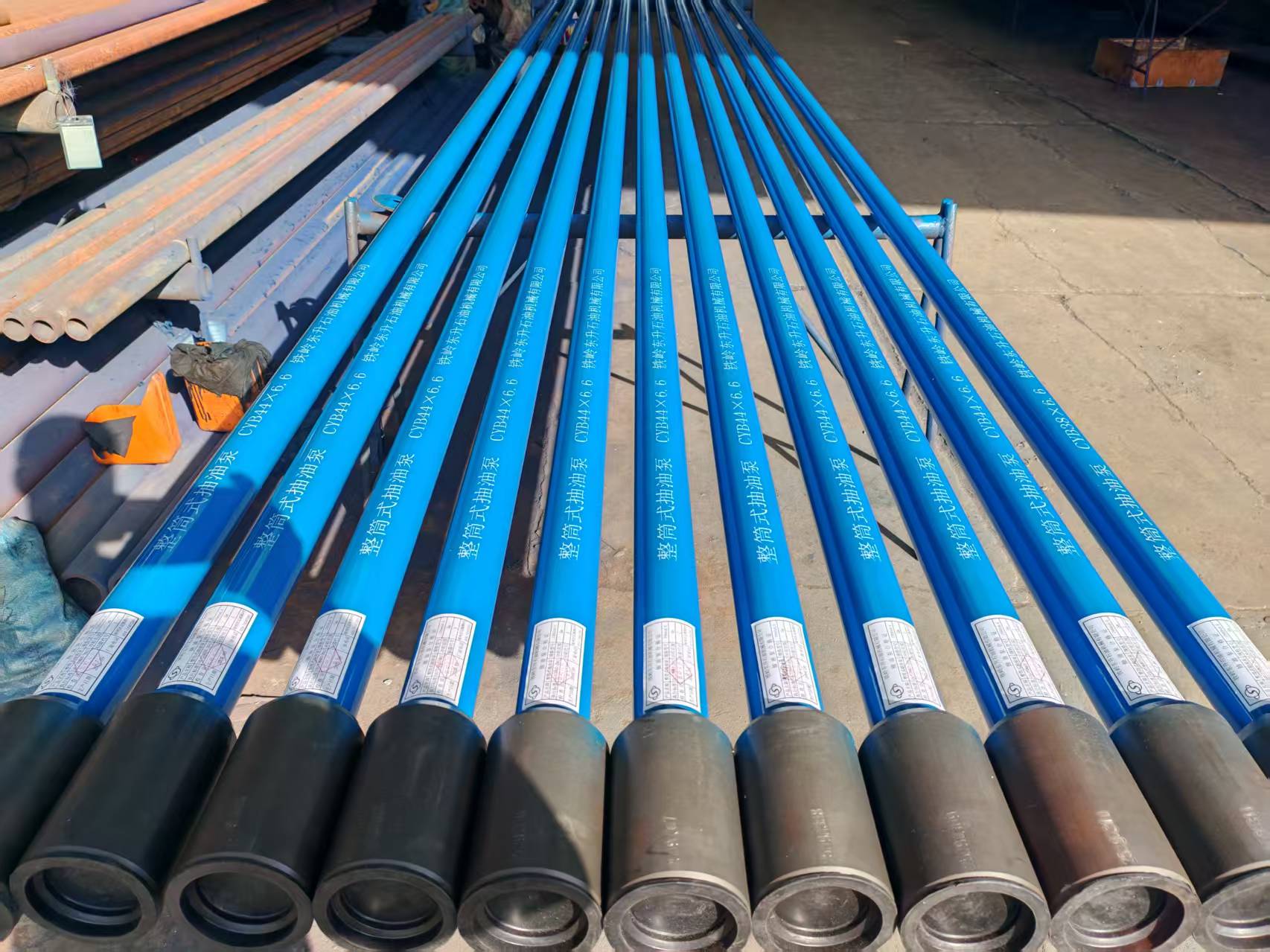
If there is a quality problem with this kind of RWA APl insert pump, there is no need to raise the oil pipe column. You only need to raise the entire RWA APl insert pump out of the well through the pumping rod column. The operation is simple.
Pump cylinder: ordinary carbon steel electroplating (A1), low alloy steel nitriding (B5).
Plunger: 1045 steel spraying (B1), 1045 steel spraying (B2), 1045 steel plating (A1), 1045 steel double plating (A2).
Tee: stainless steel (A1), cobalt-chromium-tungsten (B2), tungsten carbide (C1), nickel-carbon compound (C2), titanium carbide (C3).
Other accessories: ordinary carbon steel, low alloy steel, stainless steel, brass and other materials.
Q: For which wells is RWA pump most suitable?
A: Primarily, it is a great choice for sandy, shallow, and gas-prone wells.
Q: How are RWA and RHB pump different?
A: RWA features a thin-wall barrel and is more efficient in sand control, whereas RHB is made for deep wells with higher loads.
Q: Is it possible to use RWA in sandy wells?
A: Certainly, its upper hold-down configuration is effective in stopping sand buildup.
Q: What is the minimum order quantity (MOQ)?
The minimum order quantity is 5 units.
Tieling Dongsheng Petroleum Machinery Co., Ltd. is a ISO 9001 Quality Management System certified company and also has the license to use API11AX certificate. The company has got 100 varieties of Sucker Rod Pump products and accessories, such as subsurface tubing pump, long-plunger anti-sand pump, drain, centralizer, spray metal plunger, alignment, and unified grinding, etc. in its product line.
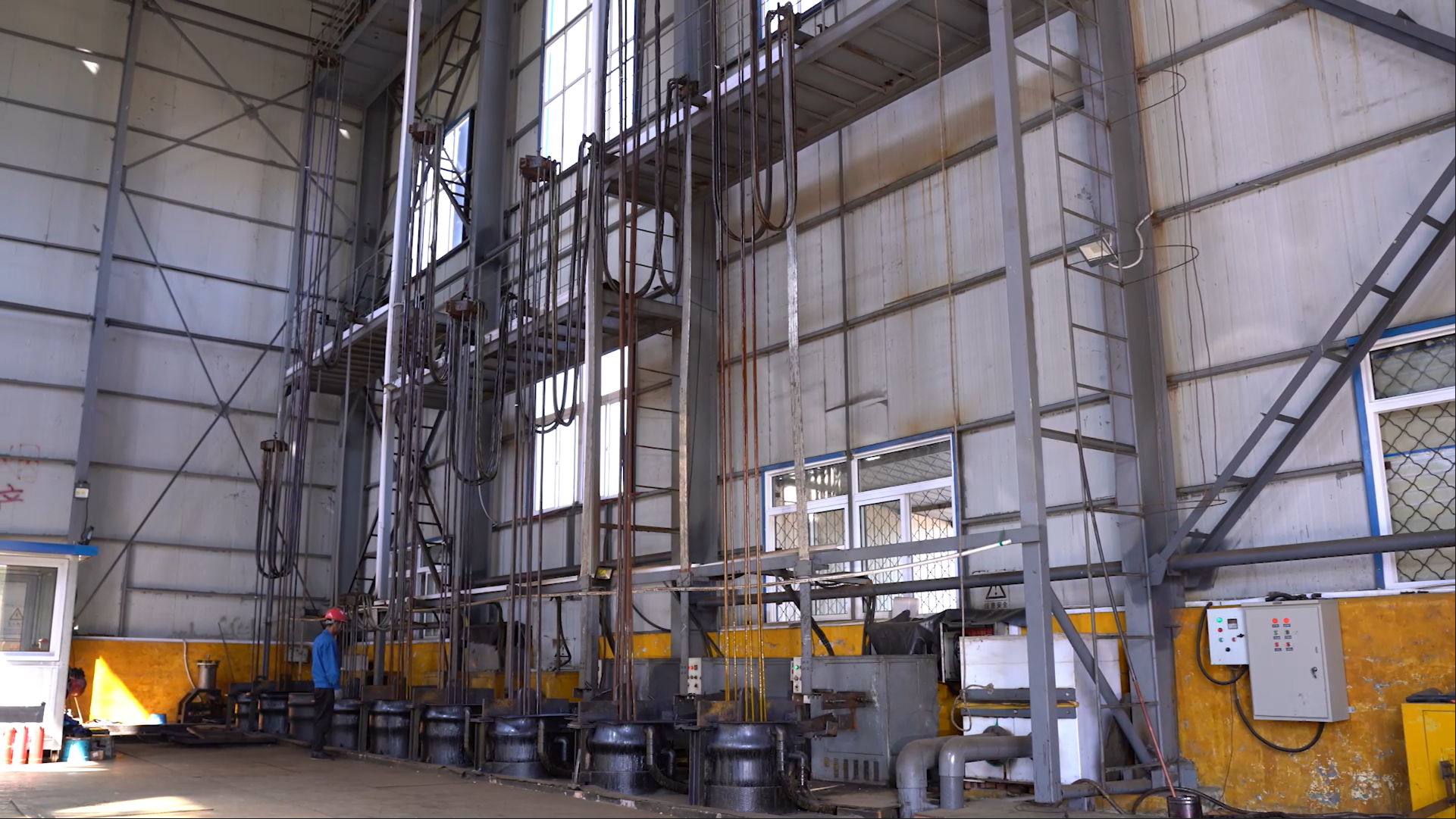
Factory
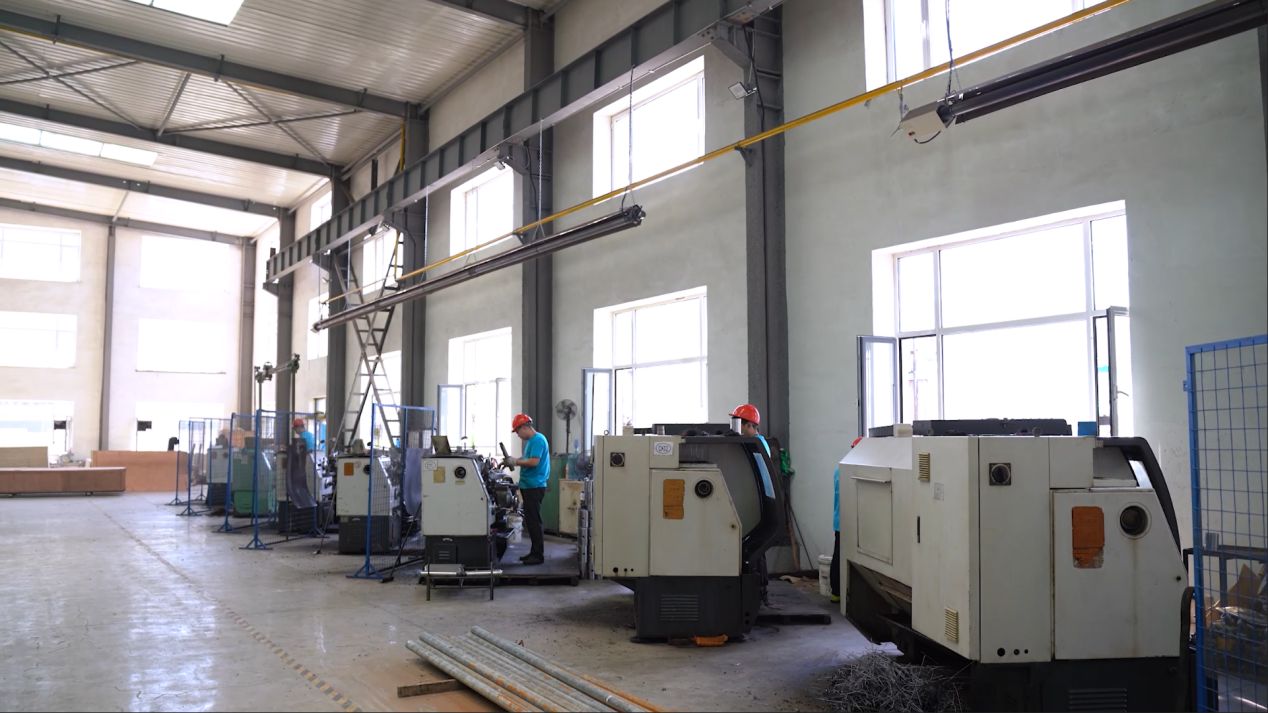
Factory
Pre-sales consultation: provide the insert pump for artificial lift selection plan that closely matches your oil well requirements, ensuring the highest performance.
Installation guidance: The expert team can give you the installation support of a pump for artificial lift remotely or on-site. Besides that, they also carry out the completion of the commissioning in a very short time.
After-sales guarantee: technical support and supply of spare parts (such as wear-resistant pump barrels and plungers) remain the main focus, with efforts being made to simplify the insert pump for artificial lift maintenance process.