

In oil and gas production, selecting the correct pump directly impacts lifting cost, production efficiency, and long-term well profitability. From drilling operations to artificial lift systems, different pump types are required at each stage of field development.
Choosing the wrong equipment can lead to frequent workovers, premature failures, and unnecessary operating expenses. This guide explains what pumps are used in oilfield operations and how selecting the right oil rod pump can improve single-well ROI.
1. Main Pumps Used in Oil & Gas Production
Oilfield operations rely on multiple pump systems throughout the production lifecycle, each designed for specific operational conditions.
To better understand their differences, the following table summarizes the most commonly used pump types in oil and gas production:
Pump Type Comparison in Oilfield Operations
| Pump Type | Best Application | Key Advantages | Main Limitations |
| Mud Pump | Drilling stage | High-pressure circulation, solids handling | High wear under abrasive conditions |
| Injection Pump | EOR / pressure maintenance | Stable high-pressure output | Corrosion risk in chemical injection |
| ESP (Electric Submersible Pump) | High-production wells | Very high flow capacity | Gas-sensitive, costly intervention |
| PCP (Progressive Cavity Pump) | Heavy oil / viscous crude | Excellent viscosity handling | Elastomer wear limitation |
| Oil Rod Pump System | Conventional onshore wells | Low OPEX, mature technology | Stroke speed and depth constraints |
As shown above, the oil rod pump system remains one of the most widely used artificial lift solutions in land-based oilfields due to its balance of cost and adaptability.
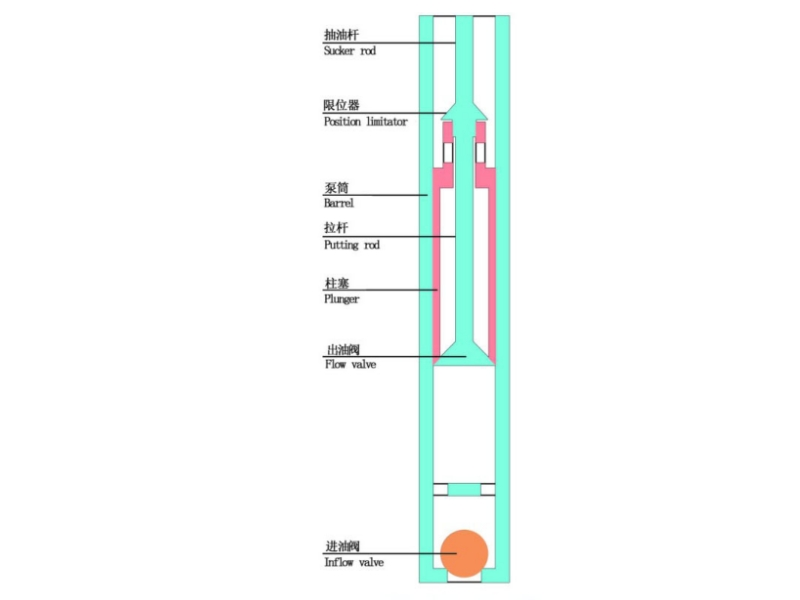
2. Why Oil Rod Pump Systems Are Widely Used in Onshore Wells
Compared with other artificial lift technologies, oil rod pump systems provide a strong balance between operational cost and field reliability.
Key advantages include:
Lower operating cost compared to ESP systems
Easier field maintenance and repair
Mature global supply chain and standardization
Strong adaptability across different well conditions
For conventional onshore oilfields, rod pumping often delivers the best balance between CAPEX and OPEX, especially in mature fields with declining reservoir pressure.
3. Tubing Pump vs Rod Pump: How to Choose the Right Configuration
Within the oil rod pumpsystem, two main configurations are commonly used: tubing pumps and insert (rod) pumps. Each is designed for different production strategies.
Tubing Pump — Best for Higher Production Wells
Tubing pumps are installed as part of the tubing string, allowing larger plunger diameters and higher displacement per stroke.
Recommended for:
Higher production wells
Moderate depth wells
Stable wells with low intervention frequency
Advantages:
Larger fluid displacement per stroke
Higher volumetric efficiency
Lower lifting cost per barrel in stable production
Dongsheng tubing pumps are manufactured to API 11AX standards and can be configured with wear-resistant barrel and plunger systems for abrasive production environments.
Rod Pump — Best for Deep Wells and Frequent Service Conditions
Rod pumps (insert pumps) are installed and retrieved with the rod string, eliminating the need to pull tubing during maintenance.
Recommended for:
Deep wells
High workover cost regions
Wells requiring frequent pump inspection
Remote oilfield operations
Advantages:
Faster pump replacement
Lower intervention cost
Reduced production downtime
In many field applications, a properly designed oil rod pump configuration significantly reduces maintenance-related production losses, especially in deep and mature wells.
4. Critical Well Conditions That Affect Pump Selection
Pump selection is strongly influenced by downhole conditions. Ignoring these factors often leads to premature failure and higher lifting costs.
The table below summarizes key well conditions and recommended engineering solutions:
Well Condition vs Pump Selection Strategy
| Well Condition | Primary Risk | Recommended Solution |
| High Sand Production | Abrasive wear on barrel & plunger | Hardened alloy barrel + tungsten carbide coated plunger |
| High H₂S / CO₂ | Corrosion failure | Nickel alloy components + corrosion-resistant coating |
| High Gas Ratio | Pump fillage reduction | Anti-gas-lock design + gas anchor system |
| Deep Wells | High mechanical load + intervention cost | Insert-type oil rod pump system |
| High Production Demand | Insufficient displacement | Tubing pump with larger plunger diameter |
This condition-based selection approach is critical for extending pump life and improving long-term well economics.
5. How Proper Pump Selection Improves Well ROI
Proper pump selection directly affects operational efficiency and long-term profitability.
Key benefits include:
Reduced workover frequency
Extended pump runtime
Lower lifting cost per barrel
Improved production stability
Increased recoverable reserves
Even small improvements in pump efficiency or service life can result in significant annual cost savings when applied across multi-well field developments.
6. Dongsheng Oil Rod Pump Solutions for Complex Well Conditions
Dongsheng supplies API 11AX-compliant oil rod pump systems engineered for complex production environments, including:
Deep wells
Heavy oil wells
High-sand production wells
Corrosive environments (H₂S / CO₂)
Customized artificial lift optimization projects
Our engineering support is based on real well conditions, including:
Well depth
Fluid viscosity
Gas-liquid ratio
Sand content
Corrosion severity
Target production rate
This allows operators to select a more reliable and cost-effective artificial lift configuration tailored to field conditions.
Conclusion
Oil and gas production requires different pumping systems across drilling, injection, and production stages. Among artificial lift technologies, the oil rod pump system remains one of the most widely used and cost-effective solutions for conventional onshore oilfields.
Selecting the right pump configuration based on actual well conditions is essential for maximizing production efficiency, reducing operating cost, and improving overall well economics.