

Introduction: The Silent Guardian of Artificial Lift Efficiency
In the demanding environment of an oil field, the longevity of a well depends on the harmony between the sucker rod string and the production tubing. As wells become more complex—transitioning from vertical to deviated and horizontal trajectories—the risk of "eccentric wear" skyrockets. This is where the Sucker rod centralizer becomes an indispensable asset.
A Sucker rod centralizer for oil well operations is not merely an accessory; it is a precision-engineered tool designed to keep the rod string centered, drastically reducing friction and preventing catastrophic tubing leaks. For B2B buyers, including importers, wholesalers, and OEM partners, understanding the technical nuances of these centralizers is the key to offering solutions that minimize downtime and maximize ROI for end-users. At DongSheng, our sliding sleeve and wheeled centralizers represent the pinnacle of wear-reduction technology, built on decades of petroleum engineering expertise.
1. What is a Sucker Rod Centralizer? Concept and Technical Framework
A Sucker rod centralizer is a mechanical device installed on the sucker rod string to prevent direct contact between the rod and the internal wall of the tubing.
The Evolution of the "Sliding Sleeve" Design
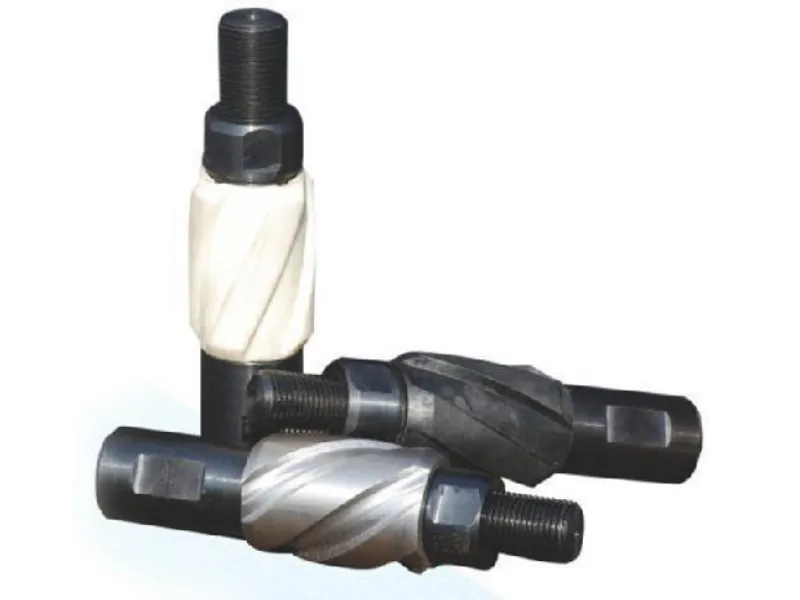
Traditional rod guides are often molded directly onto the rod. However, the modern sliding sleeve sucker rod centralizer (as featured on dsrodpump.com) introduces a sophisticated mechanism where the outer sleeve can rotate or slide relative to the inner core.
Technical Highlights:
Friction Reduction: By utilizing high-molecular-weight materials or wheeled mechanisms, the centralizer converts sliding friction into rolling or lower-coefficient friction.
Material Integrity: Professional centralizers are often crafted from reinforced Nylon 66, PPS (Polyphenylene Sulfide), or ultra-high-molecular-weight polyethylene (UHMWPE) to withstand high downhole temperatures and corrosive fluids.
Flow Dynamics: The "slotted" or "fluted" design of the centralizer body ensures that fluid flow (oil/water/gas) is not restricted, preventing pressure drops that could hinder pump efficiency.
2. Technical Advantages: Why Professional Engineering Matters
When sourcing a Sucker rod centralizer for oil well projects, technical buyers must look beyond the price tag to the engineering credentials.
Superior Wear Resistance and Longevity
The primary advantage of the DongSheng centralizer is its anti-wear capability. In deviated wells, the rod string naturally gravitates toward the "low side" of the tubing. Our centralizers act as a sacrificial barrier. Because the sliding sleeve can rotate, the wear is distributed evenly across the 360-degree surface of the sleeve rather than being concentrated on one spot, extending the life of the centralizer itself by up to 400%.
Torque and Drag Mitigation
In deep or horizontal wells, torque and drag are the enemies of production. A high-quality Sucker rod centralizer reduces the load on the surface pumping unit (the beam pump). By lowering the mechanical resistance of the rod string, operators see a measurable decrease in electricity consumption and a reduction in the stress placed on the gearbox and motor.
Chemical and Thermal Stability
Oil wells are harsh. Our centralizers are tested to remain structurally sound in temperatures exceeding 100°C (212°F) and are resistant to common oilfield chemicals, including H2S, CO2, and various acidizing fluids. This level of reliability is what establishes our authority and trustworthiness in the B2B market.
3. The Buyer's Perspective: Critical Questions & Concise Answers
As a B2B purchaser, you need quick, factual data to make informed decisions.
Q: Will the centralizer restrict fluid flow?
A: No. The fluted design ensures a large flow bypass area, maintaining volumetric efficiency.
Q: Can these be used in high-sand wells?
A: Yes. The sliding sleeve design helps prevent sand from jamming the mechanism compared to standard fixed guides.
Q: What is the installation process like?
A: Our centralizers are designed for quick field installation using standard tools, reducing workover time.
Q: Are they compatible with all API sucker rods?
A: Absolutely. They are manufactured to match API 11B rod diameters (5/8", 3/4", 7/8", 1", and 1-1/8").
4. Scenario Analysis: Solving Downhole Pain Points
Understanding the "why" behind the purchase is essential for wholesalers and OEM clients.
Scenario A: Frequent Tubing Leaks in Deviated Wells
The Pain: Operators in deviated wells often face tubing leaks every 3–6 months due to rod-on-tubing friction.
The Solution: Strategically placing a Sucker rod centralizer for oil well at the points of maximum deviation (doglegs) creates a "stand-off" distance, eliminating metal-on-metal contact.
Scenario B: High Electricity Costs in Mature Fields
The Pain: As wells produce more water, the rod string becomes heavier, and friction increases energy costs.
The Solution: The low friction coefficient of our sliding sleeve centralizers reduces the "peak polished rod load," allowing the surface unit to operate more efficiently.
Scenario C: Rod String Fatigue and Breakage
The Pain: Uneven stress distribution leads to rod fatigue.
The Solution: Centralizers stabilize the rod string, reducing harmonic vibrations and side-loading forces that cause rods to snap.
5. Selection Essentials and Parameter Suggestions
For an importer or OEM brand owner, providing the right specifications is vital for client satisfaction.
How to Select the Right Model:
Well Trajectory: For vertical wells, standard nylon centralizers are sufficient. For deviated or horizontal wells, the wheeled Sucker rod centralizer or sliding sleeve models are mandatory.
Fluid Chemistry: If the well has high H2S content, specify PPS or specialized alloy centralizers.
Tubing Size: Ensure the centralizer OD (Outer Diameter) provides enough clearance for fluid flow but is large enough to prevent the rod from touching the wall.
Suggested Technical Parameters:
Feature | Standard Specification | Premium / Harsh Environment |
Body Material | Reinforced Nylon 66 | PPS / Carbon Fiber Composite |
Max Temperature | 80°C | 150°C+ |
Friction Coeff. | < 0.20 | < 0.12 (Wheeled) |
API Compatibility | API 11B | API 11B & Custom OEM |
6. Common Errors in Centralizer Implementation
Even the best Sucker rod centralizer will fail if misused. Avoid these three common pitfalls:
Under-Spacing: Placing centralizers too far apart. In a deviated well, the rod will "sag" between centralizers, leading to tubing wear despite the presence of guides.
Wrong Material Choice: Using standard nylon in a high-temperature steam-injection well. The material will soften, deform, and eventually migrate down the rod string.
Ignoring the "Pump Action" Area: Failing to install centralizers near the traveling valve of the pump, where the highest turbulence and mechanical stress occur.
7. Professional Reliability: The DongSheng Difference
As a B2B partner, you are looking for more than a supplier; you are looking for an authority. DongSheng brings:
Industry Experience: Decades of data-driven design focused on reducing "lifting costs" for global oil producers.
Quality Control: Every Sucker rod centralizer for oil well undergoes rigorous stress and heat testing to ensure it meets our "Zero Failure" philosophy.
OEM Excellence: We work with brand owners to develop custom sleeve colors, materials, and branded packaging that meet specific market needs.
FAQ
Q1: What is the primary difference between a fixed rod guide and a sliding sleeve centralizer?
A: A fixed guide is static; the wear occurs on one spot. A sliding sleeve Sucker rod centralizer allows the rod to rotate inside the sleeve or the sleeve to rotate against the tubing, distributing wear across the entire surface and significantly increasing the tool's lifespan.
Q2: How many centralizers should be installed per rod?
A: This depends on the well's "dogleg severity" (curvature). Generally, in vertical sections, one per 2-3 rods is sufficient, but in deviated sections, you may require 2-3 centralizers per single rod.
Q3: Can these centralizers be used with Fiberglass Sucker Rods?
A: Yes. In fact, centralizers are crucial for fiberglass rods as they are more susceptible to abrasion damage than steel rods. We offer specialized internal diameters to fit the unique dimensions of fiberglass couplings.
Q4: Do the sleeves ever come off the rod downhole?
A: Our centralizers feature high-strength locking mechanisms (either snap-on or pin-secured) to ensure the centralizer remains exactly where it was placed, even under high-vibration conditions.
Conclusion: The Strategic Value of Centering Your Production
In the competitive world of oilfield supply, the Sucker rod centralizer represents a small investment that delivers massive returns. By effectively mitigating friction, preventing tubing wear, and reducing energy consumption, the Sucker rod centralizer for oil well operations becomes the cornerstone of a sustainable artificial lift strategy.
For B2B buyers, partnering with a manufacturer like DongSheng ensures that you are delivering a product rooted in technical authority and proven field performance. Whether you are stocking a warehouse or building an OEM brand, choosing the right centralizer is the first step toward centering your business for success in the global energy market.