

Mechanical pumping systems in oilfields heavily rely on tubing pumps, which are basically the core component of these systems. They not only dictate the downhole lifting efficiency but also determine how often the maintenance is needed and the running costs for each well. Although conventional tubing pumps have been the main type used in the vast majority of the oil wells, API type tubing pumps are now getting a lot of attention from buyers since they will be able to better handle ever more challenging well conditions. Labor costs are rising and the demand for more stable operational cycles is also going up in modern oilfields.
Typically, at an early stage of an oilfield's development, wells aren't that deep, sands are not that high, and corrosion is quite limited. Practically, the conventional tubing pump works well most of the time. However, the proportion of medium-deep wells has increased in the oilfields, and there are more and more sand-containing and high-frequency stroke wells, so the equipment is increasingly getting overloaded.
Many field engineers have mentioned that conventional tubing pumps are already exhibiting their limitations in the following points:
There is only so much to the thickness of the cylinder wall, and wear becomes more severe because it has been run on high loads for a long time.
Insufficient plunger matching leads to poor sealing performance.
It is very complicated to disassemble and assemble vulnerable components, which cause maintenance cycles to be longer.
Changing operations frequently entails the use of hoisting equipment, thus it is difficult to reduce well downtime.
With oil prices being volatile and the per-well costs being tightly controlled, companies have seriously considered frequent operations as the last resort.
The design concept of API type tubing pump is evolving.
The new generation of API type tubing pump fundamentally breaks from the old-style models by putting a bigger emphasis on re- making its high-load capability and maintenance efficiency as the main features to attract the customers right from the design phase. For example, the DongSheng's CYB-[d]TL (F1) API type tubing pump series is intended for slightly corrosive and high-wear environments. It boasts an integrated thickened cylinder structure with precision-machined components that ensure the plunger-pump barrel alignment reaches the optimum level. A bigger inner diameter means that the stroke displacement is boosted, hence the output of the fluid is more stable even if the strokes are the same.
Regarding materials, besides the normal, wear-resistant and corrosion-resistant versions are also offered. Some components come with high-performance composite coatings and special alloys to take care of situations where it is necessary to have sand-containing wells and high-frequency operation wells at the same time. Work carried out at some oilfields has confirmed that the conventional product lives could be extended by 1-3 times through the application of these new models, which consequently leads to fewer down holes operations.
Operation and maintenance logic from "repair equipment" to "reduce downhole operation"
Another difference is in the maintenance practice.
One of the issues with traditional tubing pumps is that they are typically constructed as a single piece. So, if a part like the valve assemblies or the plungers wears out, then the whole pump has to be taken out for repair, which considerably prolongs the maintenance window. On the contrary, API-type tubing pumps have a modular design that enables wear-prone parts to be dismounted and re-mounted by hand at the wellhead without using heavy lifting equipment.
This kind of structure not only decreases the well shut-down time but it also allows the less staffed remote oilfields to carry out the most basic maintenance operations. For oilfields that put a premium on uninterrupted production, the very maintenance model has become one of the key criterion in equipment selection.
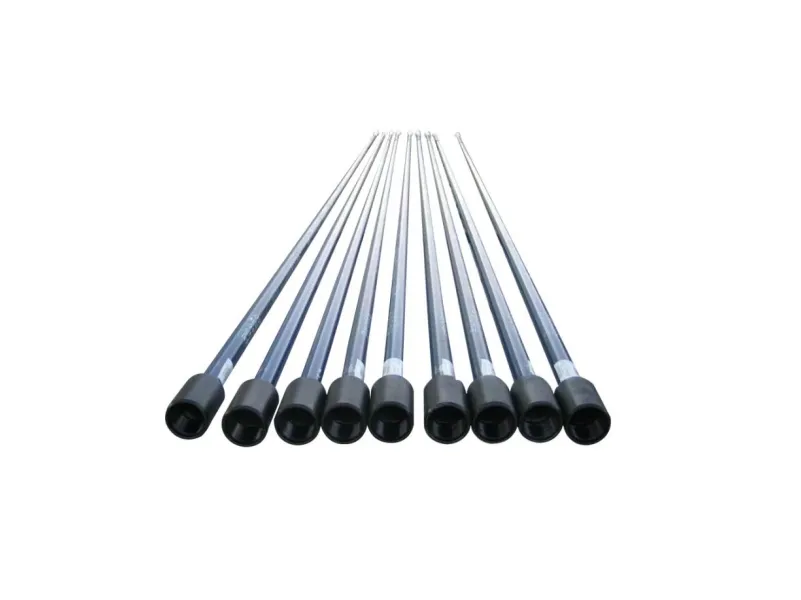
The critical structure is better suited to complex operating conditions.
Structurally, the API type tubing pump is made of the essential components that include the sucker rods, the upper and lower flow valves, the plunger, the barrel, and the inlet valve. These parts have a very high level of compatibility that allows them to be used interchangeably with tubing and sucker rod systems of different brands and types.
From the point of view of the operation of the plant, this style allows less restrictive changeover of the wells of different types, and at the same time, it makes it easier a common planning for the stock management and distribution of the spare parts in the oil fields, whose use scenarios are getting more and more obvious.
There are several situations where an API-type oil pump is the first consideration:
oil well with severe sand content and rapid wear
blocks with low corrosion but requiring long-term operation
Remote Oilfield with Limited Technical Capacity and Need to Reduce the Number of Well Visits
cost sensitive well site seeking to extend equipment life within budget
The CYB-[d]TL (F1) series API type tubing pump, API type tubing pump can offer various pump diameters with different configurable parameters to meet the diverse production demand. Their pump constants, connection dimensions, and sucker rod interfaces all follow the API standards, providing well-defined on-site selection guidelines.
Industry trends are emerging
A study of procurement changes in the oilfields shows that the criteria of pump selection have changed from the initial emphasis on the price to the operational attributes such as the length of service life, the number of maintenance times, and the compatibility. The increasing demand for API type tubing pumps is not only because of the structural upgrading but also because these pumps help to change the operational concept - they reduce the unplanned well shutdowns and ensure the stable production per well.
Later on, if the number of wells that are of high-frequency and those that are of medium-depth keeps on growing, the competition among the tubing pump products will not be based on a single performance metric but on factors such as wear resistance, field maintenance efficiency, and overall lifecycle cost.