

As the global oil industry enters 2025, the demand for oil rod pumps shows no signs of slowing down. Many onshore fields continue to rely on rod lift systems because they’re stable, economical, and easy to maintain. With higher well intervention activity and more brownfield upgrades worldwide, buyers have become more selective when choosing rod pumps.
Questions related to oil rod pump lifespan, deviation wear, API standards, materials, and price trends continue to rise. buyers want practical answers—not textbook explanations.
To help procurement teams, dealers, and oilfield operators make better decisions, this article breaks down 2025's most-searched oil rod pump questions, explains how these issues impact real-world production, and offers straightforward guidance based on industry facts.
1. What really affects the lifespan of an oil rod pump?
Here's what truly determines how long an oil rod pump lasts:
1️⃣ Well Conditions Matter More Than Anything Else:
The pump stays inside a harsh environment 24/7, so the well decides its fate.
High sand content speeds up barrel and plunger wear.
CO₂ and H₂S accelerate corrosion.
High water cut reduces lubrication.
Deviated or horizontal wells cause friction and contact points.
One buyer once asked: “Why did the pump fail in 6 months while another lasted over a year?”
The answer almost always lies in the well environment, not in manufacturing quality.
2️⃣ Material Grade Decides Strength & Corrosion Resistance:
Chinese manufacturers now offer high-grade materials that meet or exceed API 11AX standards:
AISI 4130 steel / AISI 8630 alloy steel.
Nickel-based alloy steels.
Tungsten-carbide coated components.
Ceramic-coated plungers.
3️⃣ Surface Treatment Extends Pump Life Dramatically
A nitrided barrel paired with a tungsten-carbide plunger can last 2–3× longer than untreated parts.
4️⃣ Operation Parameters Directly Affect Wear:
Higher SPM (Strokes Per Minute) → faster wear.
Poor lubrication → more friction.
Industry expectation: 6–18 months in typical conditions.
Optimized setups: 18–36 months in controlled wells.
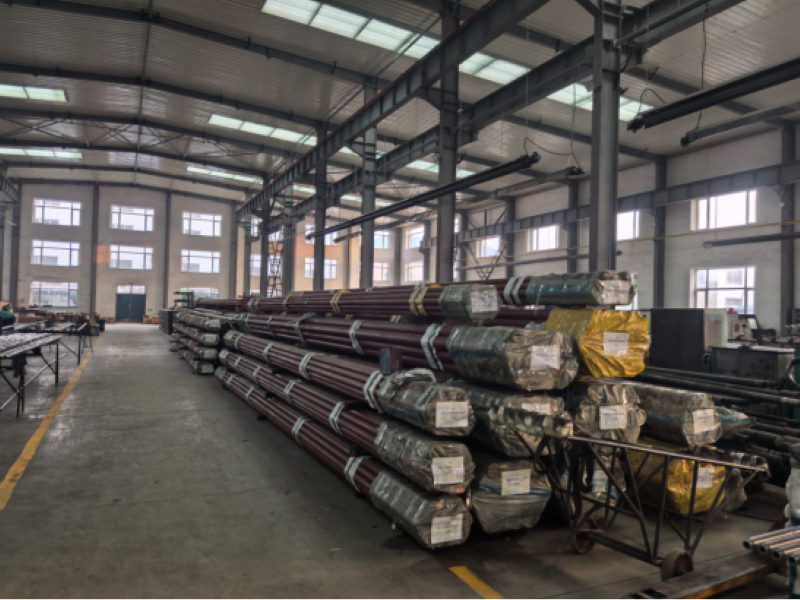
2. How do you reduce deviation wear and rod failures in 2025?
1️⃣ Install Rod Centralizers
This prevents rods from rubbing against the tubing wall. Centralizers alone can reduce deviation wear by 30–50%.
2️⃣ Use Wear-Resistant Barrels
Hard chrome or tungsten carbide barrels survive abrasion from sand and scale much better than standard carbon steel.
3️⃣ Choose Lightweight Composite Rods
In highly deviated wells, reducing the weight of the rod string significantly lowers friction and bending stress.
4️⃣ Improve Well Cleanliness
Removing scale, sand, and iron sulfide can massively reduce wear. A clean well is always cheaper than a damaged pump.
3. Which rods should you use—steel, alloy, or composite?
Here's the simplified decision guide buyers love:
Rod TypeBest ForAdvantagesLimitations
Carbon Steel RodsShallow, sweet wellsAffordable, widely availableWeak corrosion resistance
High-Strength Alloy RodsDeep wells, moderate corrosionHigher fatigue strengthHigher cost
Composite Rods (FRP), Deviated, corrosive wells, Lightweight, corrosion-proof , Temperature <100°C preferred
Quick rule:
Deep well → Alloy rods.
Corrosive well → Composite rods.
Normal well → Carbon steel rods.
4. How API 11AX Compliance Standards Are Tightening in 2025:
While the official API 11AX text doesn't change every year, the industry enforcement and compliance standards have tightened significantly in 2025. Buyers are no longer just asking "Is it API certified?"—they are validating the process.
What are major buyers checking now?
1️⃣ Stricter Material Traceability
It is no longer enough to just have a certificate. Manufacturers must provide full traceability from raw material to finished product, including:
Heat numbers for every batch.
Chemical composition reports.
Detailed machining records.
2️⃣ Tighter Barrel Hardness & Clearance Control
Markets now demand stricter adherence to clearance fits (e.g., -0.002 to -0.005 inches) that remain stable across extreme temperature changes. This requires higher precision honing machines than used in the past.
3️⃣ Enhanced Quality Management Systems (API Q1)
Buyers are prioritizing factories that integrate API 11AX product standards with the rigorous API Q1 quality management system, ensuring consistency across large orders.
5. What do buyers worry about when importing rod pumps from China?
1️⃣ "Is the quality reliable?"
Reality: The gap has closed. Leading Chinese manufacturers are now tier-one suppliers for global giants like Schlumberger and Halliburton. If these major service companies trust the quality for their global projects, independent operators can too.
2️⃣ "Are the API certificates real?"
Solution: Professional factories now support instant verification. You should always ask for:
Online certificate verification (API Composite List).
Third-party audits (SGS / BV / Moody).
3️⃣ "Will the delivery be delayed?"
Standard models: 15–25 days.
Customised models: 25–45 days.
Tip: Always confirm if the price includes export-grade packaging (reinforced wooden cases) to prevent damage during sea freight.
6. How should buyers select the right oil rod pump?
Many buyers feel confused because catalog specs don't reflect real well needs. Use this 6-step method to simplify the process:
Analyze well data: Depth, temperature, deviation, sand, water cut.
Choose pump type: Tubing pump vs. Insert pump.
Match barrel material: Chrome? Nitrided? Carbide-coated?
Match plunger style: Heavy-duty, Sand control, or Spray metal.
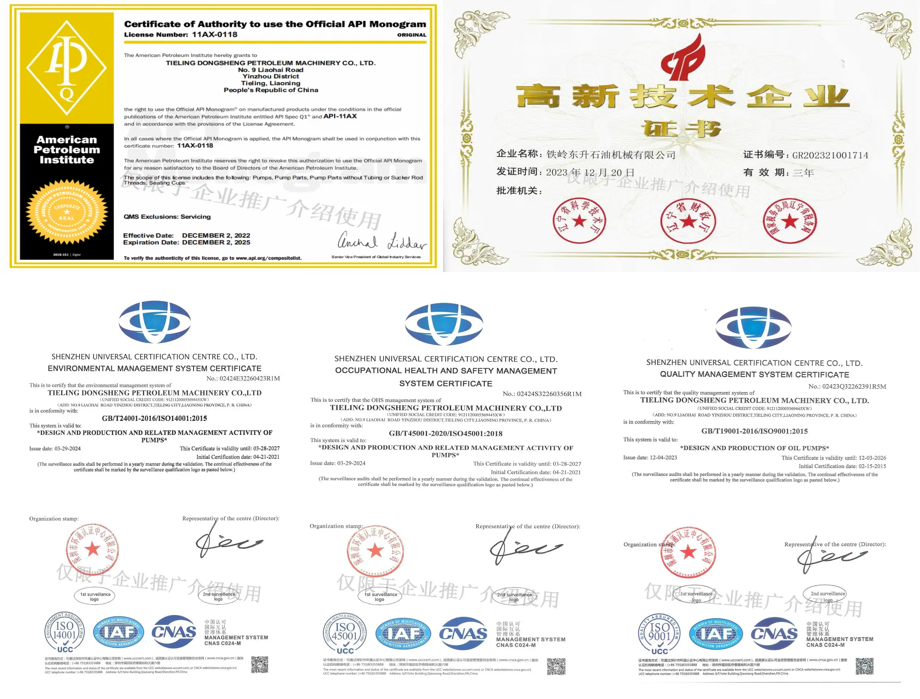
Verify API compliance: API 11AX + API Q1 preferred.
Start with small-batch testing: This is the smartest way to reduce risk.
7. What is the price trend of oil rod pumps in 2026?
Raw Materials: Steel prices have seen a slight global increase (3–8%), impacting barrel and plunger costs.
Surface Treatments: Costs for high-end coatings (Chrome, Carbide) are rising due to environmental regulations.
Freight: Sea freight rates to South America, the Middle East, and Africa remain volatile.
Supply Chain: Despite these factors, China remains the most cost-effective source for API-compliant pumps.
Forecast: Expect a moderate price increase of 2–5% overall in 2026.
🚀 Need a Custom Solution for Your Well?
Choosing the right pump isn't just about buying a product; it's about optimizing your production.
Unsure which pump specs fit your specific well conditions?
[Contact Us Today] – Send us your well data (depth, fluid properties, deviation), and our senior engineers will provide a FREE simulation analysis and pump recommendation within 24 hours.
Don't guess—engineer your success.
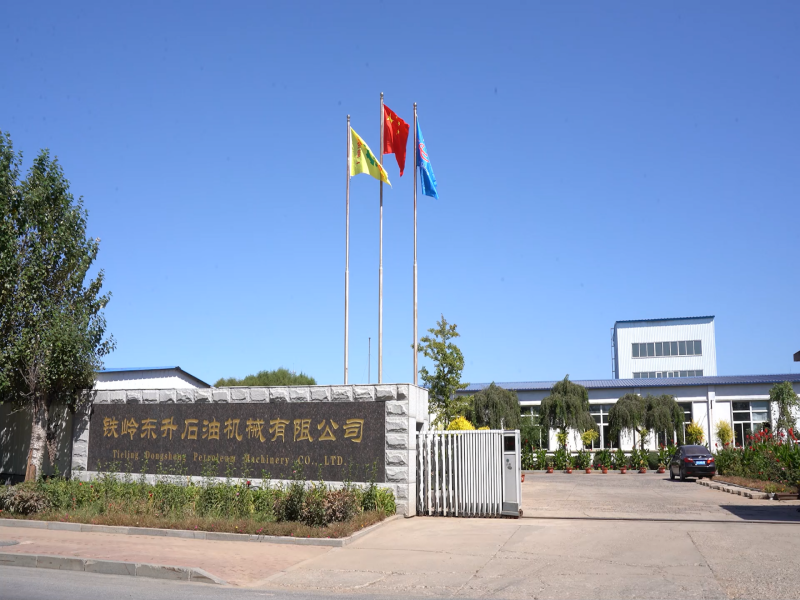
This market analysis and technical guide is curated by DONGSHENG, a dedicated API 11AX rod pump manufacturer committed to solving global production challenges.
Unlike general trading companies, we operate our own API Q1-certified facility with full traceability control. Whether you need standard pumps for low-cost fields or customised carbide-coated barrels for corrosive environments, our engineering team ensures your procurement meets both budget and lifespan goals.
Experience: 25 Years in oil rod pump Manufacturing.
Certifications: API 11AX, ISO 9001.