

There are significant differences between API Type Tubing Pumps and API Type Rod Pumps in terms of structure, workover method, operational adaptability, and life-cycle cost. Proper selection helps enterprises improve oil production efficiency, reduce maintenance frequency, and extend the pump inspection cycle.
This document provides a multi-dimensional comparison to assist you in making the right selection.
Structure and Working Principle
API Type Tubing Pump:
The pump barrel, piston, and valve assembly are directly connected to the lower end of the tubing string and run into the well together with the tubing. The surface pumping unit drives the plunger via the sucker rod to perform a reciprocating motion, allowing well fluid to be drawn in through the standing valve and traveling valve and lifted to the surface.
API Type Rod Pump:
This pump features a nested inner-and-outer barrel structure. The outer barrel is run into the well with the tubing and fixed at the designed depth. API Type Rod Pumps are generally designed with an insert-type structure. The outer barrel is fixed in the well with the tubing, while the inner barrel assembly, including the plunger and valve system, is run and retrieved with the sucker rod.
Workover Method and Operational Efficiency
API Type Tubing Pump:
During workover, the pump must be pulled out of the well together with the tubing, requiring a workover rig to retrieve the entire tubing string. This results in long operation time, high labor intensity, and a increased operational complexity and production downtime. In deep or directional wells, these risks and costs increase further.
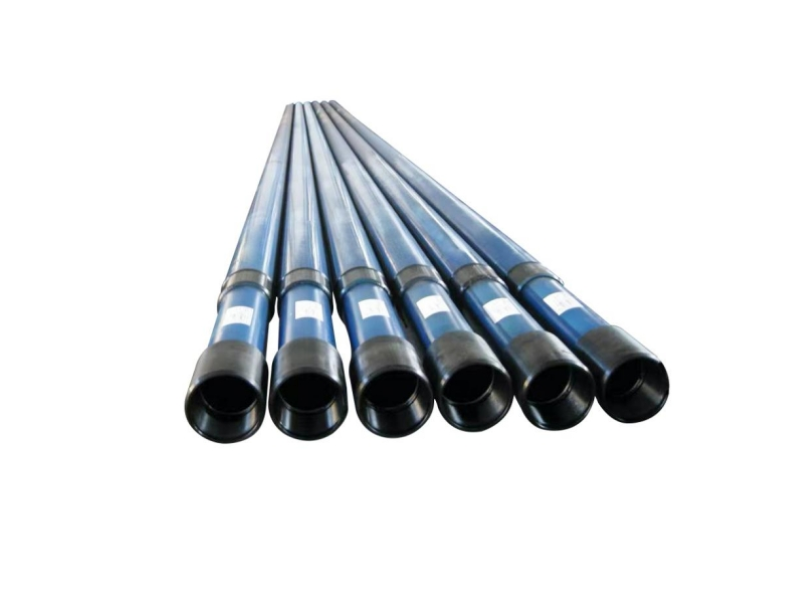
API Type Rod Pump:
For routine pump inspection and replacement, the tubing can usually remain in the well.. The inner barrel can be retrieved simply by pulling the sucker rod to complete the repair or replacement. This method offers short operation time, low workover cost, and minimal disturbance to the formation. It is particularly suitable for wells that require frequent workover due to sand production, wax deposition, or corrosion.
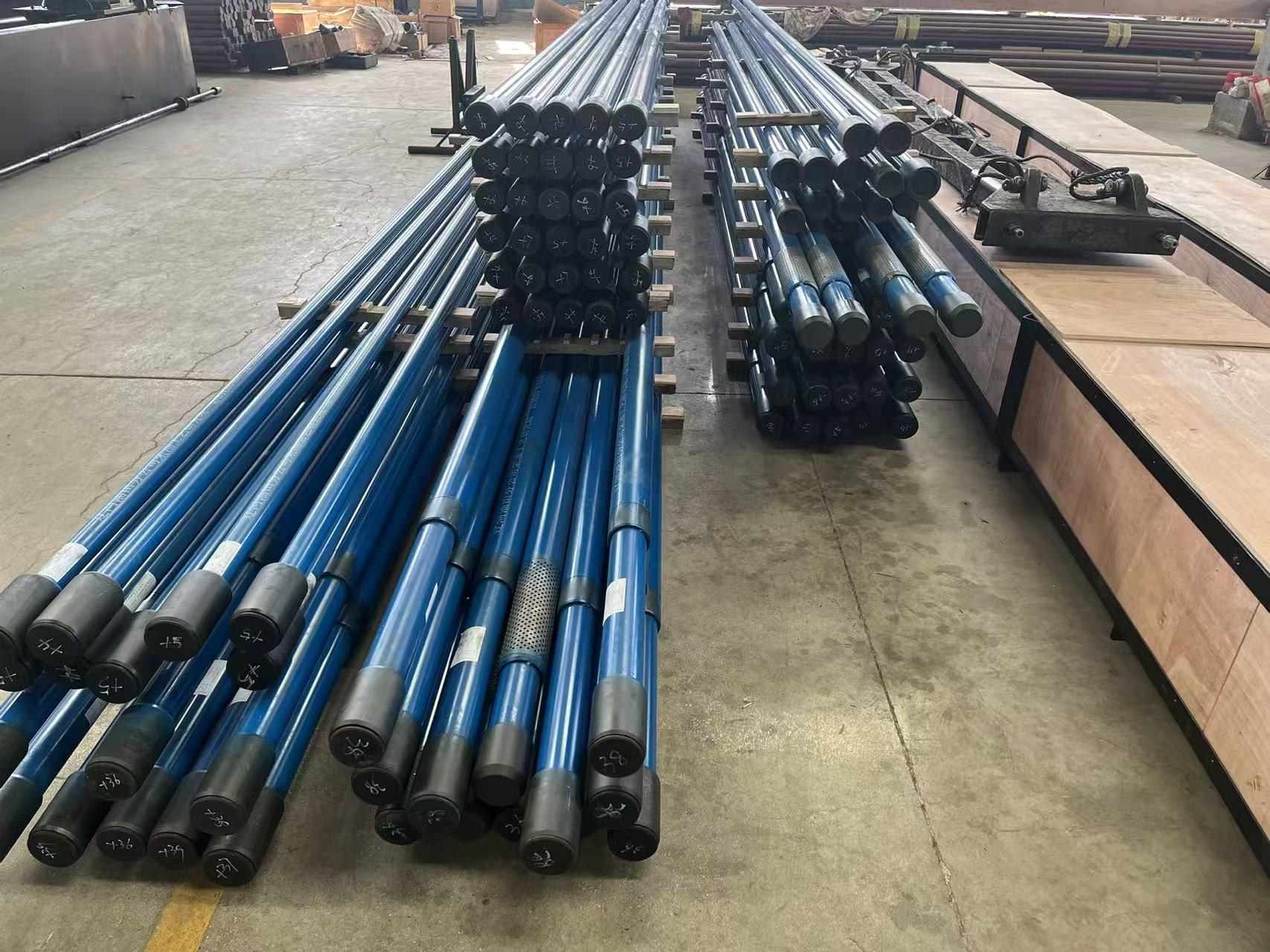
Applicable Conditions and Displacement Capacity
API Type Tubing Pump:
The pump diameter is not restricted by the internal fit of the tubing, allowing for larger displacement designs. It is suitable for conventional light oil wells with high fluid production and moderate to shallow pump setting depths.
API Type Rod Pump:
Under the same tubing diameter, the pump diameter is relatively smaller, limiting theoretical displacement. However, its compact structure makes it adaptable to complex well conditions such as deep wells, directional wells, gas-bearing wells, and sand-producing wells.
Operational Stability and Maintenance Cost
API Type Tubing Pump:
The structure is simple, and the manufacturing cost is low. However, under conditions involving sand production, wax deposition, or high water cut, wear between the pump barrel and plunger intensifies, making the pump prone to sticking or leakage.
API Type Rod Pump:
The structure is relatively more complex, and the manufacturing cost is higher. However, the inner barrel can be periodically pulled out for surface maintenance or replacement without disturbing the outer barrel in the well. This significantly reduces single-event maintenance costs and production loss.
Comprehensive Comparison Table
| Comparison Item | API Type Tubing Pump | API Type Rod Pump |
| Applicable well depth | Moderate to shallow wells | Deep wells, directional wells |
| Theoretical displacement | Large | Moderate |
| Workover method | Requires pulling tubing | Pulls the inner barrel without pulling the tubing |
| Workover operation time | Long | Short |
| Well-conditioned adaptability | Conventional light oil | Sand, wax, gas, corrosion |
| Manufacturing cost | Lower | Slightly higher |
| Life-cycle maintenance cost | Higher | Lower |
| Production time efficiency | Largely affected by the pump inspection cycle | Fast recovery, high efficiency |
Selection Recommendations
API Type Tubing Pump:
Suitable for conventional light oil production in moderate-to-shallow wells with high fluid production and simple well conditions. It remains economically advantageous for projects where initial investment and theoretical displacement are the primary considerations.
API Type Rod Pump:
Suitable for complex well conditions such as deep wells, directional wells, gas-bearing wells, and wells with sand production or wax deposition. It is the more reasonable choice for development models that pursue high production time efficiency, low workover frequency, and optimal life-cycle cost.
Tieling Dongsheng Petroleum Machinery Co., Ltd. was founded in 2000, Tieling Dongsheng Petroleum Machinery Co., Ltd. has extensive experience in the selection, supporting equipment, and technical services of API Type Tubing Pumps and API Type Rod Pumps. If you encounter any difficulties in selecting oil production equipment, please feel free to contact us. The company provides full-process support ranging from well condition analysis and pump type recommendation to after-sales technical service.