

Introduction: The Stakes of Pump Selection
In the competitive landscape of artificial lift, selecting the optimal subsurface pump is not merely a technical choice—it is a financial strategy. Whether you are managing a mature field or a new completion, the debate between Rod Pumps (Insert Pumps) and Tubing Pumps remains central. The wrong choice can lead to excessive workover costs, deferred production, and inflated lifting costs per barrel.
This comprehensive guide dives deep into the mechanical differences, API 11AX designations, and the total cost of ownership to help you maximize your oil well’s Return on Investment (ROI).
1. Mechanical Architecture: A Comparative Overview
Understanding the fundamental structural differences is the first step toward effective selection.
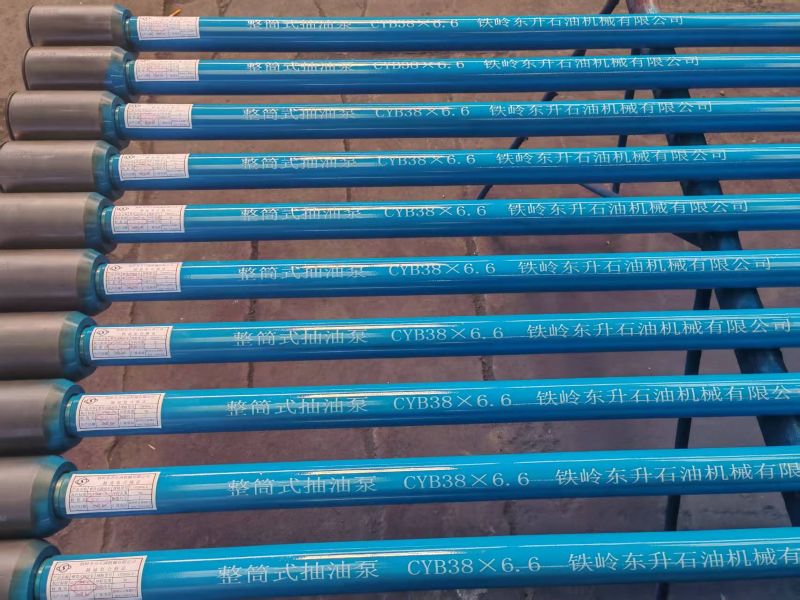
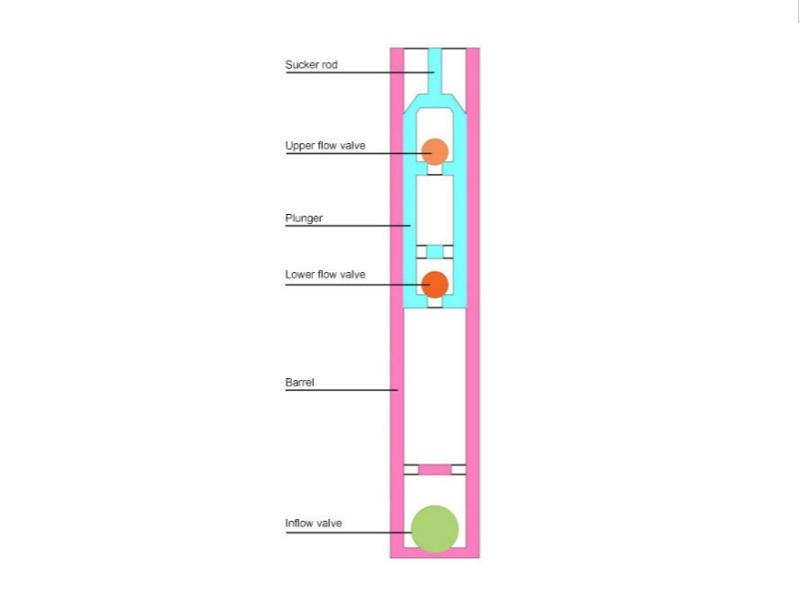
Tubing Pump: The pump barrel is an integral part of the tubing string. It runs into the well on the bottom of the tubing. The plunger is subsequently lowered on the sucker rod string.
Rod Pump(Insert Pump): This is a self-contained unit. Both the barrel and the plunger are run into the well together on the sucker rod string. It "seats" into a pre-installed seating nipple in the tubing.
2. Technical Comparison: Rod Pump vs. Tubing Pump
To help you make a quick decision, here is a breakdown of the key performance indicators:
| Feature | Rod (Insert) Pump | Tubing Pump |
| Installation | Run as a complete unit on rods. | Barrel run on tubing; plunger on rods. |
| Production Volume | Moderate (Limited by plunger size). | Highest (Larger bore possible). |
| Maintenance | Easy. Pull rods only to replace the pump. | Hard. Must pull entire tubing string. |
| Workover Cost | Low (Fast and simple). | High (Requires workover rig). |
| Max Depth | Suitable for deep wells. | Better for shallow to medium depths. |
| Initial Cost | Slightly higher (Complex assembly). | Lower for the pump itself. |
3. Deep Dive into API 11AX Designations
To choose the right pump, one must understand the API 11AX coding. This is where technical expertise meets field application.
RH (Heavy Wall Barrel): Best for deep wells. The heavy wall resists the high pressure found at depth, preventing barrel "breathing," which reduces efficiency.
RW (Thin Wall Barrel): Ideal for shallow to medium wells where high production volume is needed within a smaller tubing ID.
Stationary vs. Traveling Barrel:
Stationary Barrel (Top Anchor): Best for sandy wells, as it prevents sand from settling around the pump.
Traveling Barrel: Ideal for gaseous wells, as the movement helps break up gas pockets.
4. Material Science: Extending Pump Life
The "Difference" isn't just in the design; it's in the metallurgy. When selecting either pump, consider the environment:
Chrome-Plated Barrels: The industry standard for abrasive environments with low corrosion. It offers high surface hardness.
Spray Metal Plungers: For highly corrosive environments containing H2S or CO2, spray metal coatings (like Monel or Nickel-based alloys) offer superior resistance compared to standard steel.
Brass Barrels: Preferred in high-salinity water environments where steel would succumb to galvanic corrosion.
5. Financial Analysis: CAPEX vs. OPEX
The true cost of a pump is not its purchase price, but its Total Cost of Ownership (TCO).
Capital Expenditure (CAPEX):
A Tubing Pump is generally 20-30% cheaper upfront because it lacks the complex seating mechanism of an insert pump.
Operating Expenditure (OPEX):
This is where the Rod Pump wins. If a pump fails at 8,000 feet:
Rod Pump: A simple rod-pull unit can replace the pump in 12 - 24 hours.
Tubing Pump: You must mobilize a full workover rig to pull the entire tubing string. Rig rates and downtime can cost 5x to 10x more than a rod pull.
The Verdict: If your well requires frequent maintenance (due to sand or scale), the Rod Pump is the most cost-effective long-term investment.
6. Decision Logic: Which One to Install?
Use this logic to guide your procurement:
1. Is your production goal > 500 BPD?
Yes: Choose a Tubing Pump (Larger bore capacity).
2. Is the well depth > 7,000 ft?
Yes: Choose a Rod Pump (Reduces the stress on the tubing string during maintenance).
3. Does the well produce significant sand or scale?
Yes: Choose a Rod Pump (Stationary Barrel, Top Anchor) to prevent the pump from getting "sanded in."
4. Are workover rig costs high in your region?
Yes: Choose a Rod Pump to minimize rig intervention.
7. FAQ: Addressing Common Technical Hurdles
Q: Can I convert a Tubing Pump well to a Rod Pump system?
A: Yes. By installing a seating nipple (cup or mechanical) on your tubing string during your next workover, you can switch to an insert rod pump for all future replacements without pulling the tubing again.
Q: How does gas interference affect these pumps differently?
A: Tubing pumps generally have more "dead space" which can lead to gas locking. If your well has a high Gas-Oil Ratio (GOR), we recommend a Rod Pump with a Variable Speed Drive (VSD) and a specialized anti-gas valve.
Q: Which pump is better for deviated wells?
A: Rod pumps are generally preferred in deviated wells because specialized "soft" seating subs can be used to minimize rod and tubing wear in the build-up section.
There is no "one-size-fits-all" in oilfield production. The Tubing Pump remains the king of volume, while the Rod Pump is the champion of maintenance efficiency. By understanding your well’s depth, fluid composition, and economic constraints, you can select the tool that ensures long-term profitability.
Looking for a customized pump selection?
[Contact Dongsheng Rod Pump's Engineering Team] for a detailed well-bore analysis and API 11AX certified solutions.