

Deep-well sucker rod pumps still form the backbone of artificial lift systems, and the industry is abuzz with various discussions. On the one hand, the global sucker rod pump market is expanding steadily. The most recent report indicates that the deep well sucker rod pump market globally was valued at nearly $4.2 billion in 2024 and is set to hit $8.3 billion by 2033, at a CAGR of around 7.8%. The main driving force behind this growth is the need for efficient lift equipment in mature oil wells, while the adoption of digital control is becoming a standard practice gradually.
On the other hand, automation and digitalization keep popping up as the major industry trends. The market figures reveal that automatic control technology has been part of more than 27% of the sucker rod pump systems, thus enabling real-time monitoring of the operating status and drastically cutting down the maintenance costs.
1. Industry Hot Topics: Technological Innovation and the Rise of Smart Equipment
What the industry writings are mostly about is the technological evolution of sucker rod pump systems that include the co-packaging of intelligent monitoring and data acquisition features, coupled with remote control capabilities. Smart pump systems not only show the data of well condition on their displays in real time but they also change their running status automatically, thus minimizing interruptions and prolonging the life of the pump system.
Moreover, the fresh modular design of the sucker rod pump along with the plug-in parts that shorten the maintenance time have become the topics that were eagerly discussed at the exhibition by the buyers. It is in line with the report's claim that "the modular and standardized design is becoming the focus of product competitiveness".
2. Increasing Uses in Thin-Layer Oil Wells
As a result of continuous efforts to devise new deep-well sucker rod pump structural configurations, more and more attention is being drawn to them so as to be able to tap adequately low-pressure, low-fluid-level, and thin-layer oil wells.
The product developers highlight that not only do the double-layer pump barrels, the independent modular designs, and the use of replaceable conventional tools together contribute to the field maintenance turning into a more efficient process, but also, in particular, the optimized design of equipment in low-pressure wells and oil wells with production instability can less the downtime caused by the failure of equipment.
A large number of technical pieces published by the industry point out that in complicated well circumstances, the traditional single-layer pump barrels are always subjected to pump expansion and leakage which ultimately becomes a barrier for efficiency enhancement. By using a double-layer design, it is possible to significantly improve the confining pressure and sealing, thus, it is more stable that oil is extracted.
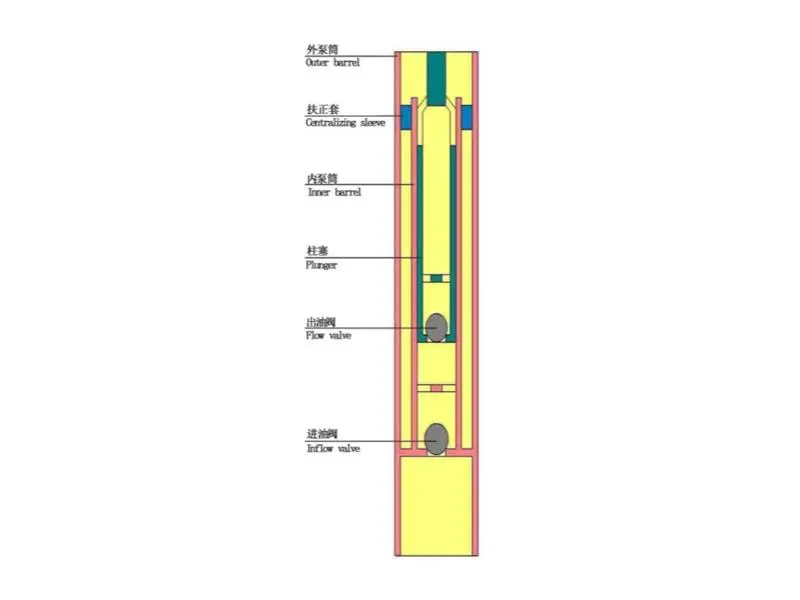
3. Global Market Layout and Material Competitiveness
It is gradually becoming clear that locally made in China is a rising force in the global sucker rod pump market. China has a mature steel material supply chain and a manufacturing system that fulfills the API standards, which is why Chinese pump products are competitive not only in China but also in oilfields in markets such as the Middle East, South America, and Africa.
During discussions about the exports of sucker rod pump and the field projects, the focus is mainly on Chinese component suppliers who have managed to combine the quality standards with cost-effectiveness.
The market trend report also notes that the use of high-strength alloys and composite materials in deep well pump systems is rapidly increasing. This helps to extend the life and reliability of pump parts exposed to very high-pressure and sometimes highly corrosive environments. This is also one of the focal issues in materials technology discussions.
4. Industry Challenges and Future Planning
However, the sucker rod pump industry, along with the market, is still challenged in several ways. People througout the industry have pointed to the high cost of maintenance, wear and tear from material fatigue, and pump's poor performance in somewhat complex well conditions as common issues. The studies suggest that old equipment puts too much pressure on regular maintenance cycles which leaves companies no choice but to look at ways of improving the reliability and durability of their pump components.
In the future, the industry is expected to move away from the question "how to improve individual performance?" to "overall system optimization," including the implementation of better downhole monitoring solutions, the arraying and analysis of field operation data, and the consideration of intelligent control strategies. The focus on these has been intensively deepened due to quite a lot of people learning it first hand in various field operations including engineers and procurement personnel in the company.
In essence, deep-well sucker rod pumps, the indispensable artificial lift system component, are at the moment standing at the intersection of both technological innovations and the requirements of the market. Modular structures promoting field maintenance, incorporation of intelligent control systems, and the advent of products tailored to well conditions are the major points of debate in the industry, which are in line with data and industry insights from reliable market trend reports.