

In artificial lift systems, the API tubing pump stands as one of the critical components determining the production efficiency of an oil well. When selecting tubing pumps, many oilfield operators often assume that a larger pump size will automatically result in higher production output. However, this is not the case in practice. Improper size selection not only fails to boost production but can also lead to a host of issues, including gas locking, fluid hammering, increased energy consumption, rod string overloading, and frequent well workovers.
The selection of API tubing pump dimensions should take into account a comprehensive range of factors, including well depth, daily fluid production volume, crude oil viscosity, gas content, and sand content. Typically, well depth determines the system load, while the daily fluid production volume dictates the final pump diameter specification; therefore, priority should be given to balancing production requirements with equipment reliability during the selection process.
TH-Type API Tubing Pump Well Depth Selection Reference Table
| Well Depth Range | Recommended TH Pump Specifications | Typical Operating Conditions | Selection Recommendations |
| 500–1000 m | TH125、TH150 | Shallow wells, low loads, low fluid production | Prioritize economic efficiency and low energy consumption. |
| 1000–1500 m | TH150、TH175 | Medium-shallow wells, medium-to-low production | Ensure efficient fluid filling while avoiding excessively large pump diameters. |
| 1500–2000 m | TH175、TH225 | Conventional production wells | Balance fluid displacement requirements against the rod string load. |
| 2000–2500 m | TH225、TH275 | Medium-deep wells | Adjust the pump diameter based on the daily fluid production volume. |
| 2500–3000 m | TH275、TH325 | Deep wells, high-load conditions | Prioritize pump barrel strength and overall system stability. |
| 3000–3500 m | TH325 | Deep wells, heavy-duty pumping systems | Verify the sucker rod loads and ensure proper power matching. |
| Above 3500 m | TH325、TH375 | Ultra-deep wells or special operating conditions | It is recommended to conduct a specialized design tailored to the specific well conditions. |
Selection Reference for TH Tubing Pumps Based on Daily Fluid Production Volume
In practice, many engineers prioritize the daily fluid production volume over well depth.
| Daily Liquid Production | Recommended Specifications |
| < 20 m³/d | TH125, TH150 |
| 20–50 m³/d | TH150, TH175 |
| 50–100 m³/d | TH175, TH225 |
| 100–200 m³/d | TH225, TH275 |
| 200–350 m³/d | TH275, TH325 |
| > 350 m³/d | TH325, TH375 |
What Constitutes API Tubing Pump Sizing?
When inquiring about tubing pumps, many procurement professionals initially focus primarily on the pump diameter. However, in reality, API tubing pump sizing encompasses far more than just the pump barrel diameter; it involves a set of several critical parameters.
Typically, tubing pump sizing primarily includes the following specifications:
Pump Bore
Plunger Diameter
Barrel Length
Compatible Tubing Size
Collectively, these parameters determine the tubing pump's theoretical displacement, volumetric efficiency, and operating load.
Taking the API Type TH tubing pump as an example, its common specifications include:
| Pump Diameter | Millimeter Dimensions |
| 1.25" | 31.75 mm |
| 1.50" | 38.10 mm |
| 1.75" | 44.45 mm |
| 2.25" | 57.20 mm |
| 2.75" | 69.90 mm |
| 3.25" | 82.60 mm |
| 3.75" | 95.30 mm |
Different specifications correspond to varying fluid production capacities and well condition requirements; therefore, equipment selection must be analyzed in conjunction with actual production conditions.
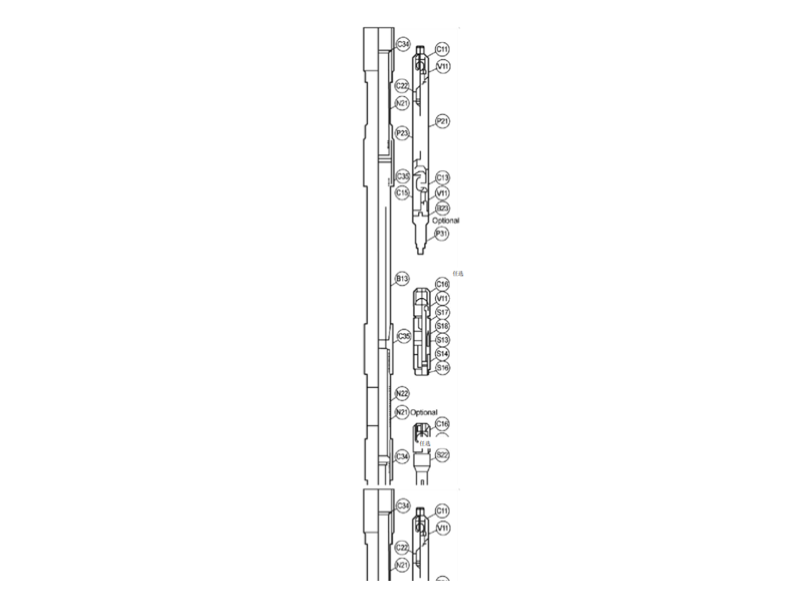
Five Key Factors Influencing the Selection of API Tubing Pump Sizes
1. Well Depth
Well depth is one of the critical factors in determining the appropriate size of a tubing pump.
As well depth increases, the length of the sucker rod string extends, leading to increased system loads and significantly higher pressures exerted on the tubing pump. Blindly selecting an oversized tubing pump solely to pursue higher production rates can result in increased sucker rod loads, accelerated equipment wear, and even issues such as rod breakage.
For deep-well applications, it is paramount to strike a balance between fluid displacement and structural load capacity.
The TH-type thick-walled tubing pump features a reinforced barrel structure; compared to standard designs, it offers superior mechanical strength, making it ideally suited for long-term operation in deep-well and heavy-load environments.
2. Daily Fluid Production
Daily fluid production serves as the most direct reference metric during the tubing pump selection process.
Wells with varying production levels exhibit distinct differences in their fluid displacement requirements.
Generally speaking:
| Well Types | Recommended Pump Diameter Range |
| Low-Yield Wells | 1.25" – 1.75" |
| Medium-Yield Wells | 2.25" – 2.75" |
| High-Yield Wells | 3.25" – 3.75" |
It is important to note that while a larger pump diameter can theoretically provide a higher displacement volume, this potential can only be realized when the formation's fluid supply capacity is sufficient.
If the formation's fluid supply is inadequate, blindly increasing the pump diameter will instead lead to a reduced pump fillage rate, thereby lowering overall production efficiency.
3. Oil Viscosity
Crude oil viscosity directly impacts fluid flow characteristics.
In wells producing highly viscous, heavy oil, the rate at which fluid enters the pump barrel is relatively slow. If an oversized tubing pump is selected, it is highly likely that the pump barrel will suffer from insufficient fluid fillage.
The root cause behind the common field scenario—where "pump diameter is increased, yet production volume fails to rise"—lies in the failure to account for the impact of crude oil viscosity on fillage efficiency.
Consequently, under high-viscosity operating conditions, engineers typically adopt a comprehensive approach involving the simultaneous adjustment of:
Pump diameter
Stroke length
Pumping speed
rather than simply increasing the size of the pump barrel in isolation.
4. Gas Content
Wells with a high gas-liquid ratio represent one of the common complex operating conditions encountered in oilfield production.
When a large volume of free gas enters the tubing pump, it can easily lead to a phenomenon known as "gas lock." Gas lock prevents the pump from properly filling with liquid, resulting in a significant decline in production output.
Many people mistakenly believe that increasing the pump diameter will resolve issues of insufficient production; however, in reality, if the gas problem remains uncontrolled, a larger-sized tubing pump may actually exacerbate the gas-lock phenomenon.
Therefore, in wells with high gas content, particular attention should be focused on the following factors:
Gas-liquid separation efficiency
Pump filling efficiency
Actual fluid delivery capacity
Only after thoroughly evaluating these factors can an appropriate tubing pump size be determined.
5. Sand Content
Wells containing sand are a major contributor to wear and tear on tubing pumps.
Sand particles continuously abrade the following components:
Plunger surface
Inner wall of the pump barrel
Traveling valve assembly
Standing valve assembly
If the pump size is selected inappropriately—resulting in excessive fluid velocity—the rate of wear will accelerate even further.
Consequently, for oil wells with high sand content, pump selection must go beyond merely considering displacement capacity; it must also address the following aspects:
Selection of wear-resistant materials
Structural design of valve assemblies
Control of fluid velocity within reasonable limits
An appropriate pump size configuration can effectively reduce the rate of wear and extend the service life of the equipment.
How is the displacement of an API tubing pump calculated?
The theoretical displacement of a tubing pump is primarily influenced by factors such as the plunger area, stroke length, pumping speed, and volumetric efficiency.
Q = A × S × N × η
Where:
Q: Theoretical displacement
A: Plunger area
S: Stroke length
N: Pumping speed (strokes per minute)
η: Volumetric efficiency
As indicated by the formula, the larger the pump diameter, the greater the plunger area, and consequently, the higher the theoretical displacement.
However, in actual production operations, the process is also subject to the influence of the following factors:
Formation fluid supply capacity
Gas interference
Sand content
Crude oil viscosity
Pump filling efficiency
Therefore, the theoretical displacement does not equate to the actual production output.
What problems can arise from selecting the wrong API tubing pump size?
Oversizing
If the tubing pump is oversized, it may lead to:
An increased risk of gas locking
Frequent fluid hammering
Elevated sucker rod loads
Increased motor power consumption
Higher maintenance costs
Furthermore, in wells with insufficient fluid supply, oversized tubing pumps often fail to achieve the anticipated production rates.
Undersizing
If the tubing pump is undersized, the following issues may occur:
Insufficient displacement
Reduced production efficiency
Inadequate lifting capacity
Diminished returns on well development
Therefore, the fundamental principle of tubing pump selection is not "the bigger, the better," but rather ensuring a proper match with the specific well conditions.
Why is the TH-Type API Tubing Pump Suitable for Complex Oil Wells?
The TH-type tubing pump features a thick-wall barrel structure, conforming to the API 11AX standard.
Compared to standard designs, the TH-type offers the following characteristics:
Thick-wall pump barrel design
Higher mechanical strength
Superior wear resistance
Suitable for deep-well applications
Suitable for heavy-duty pumping systems
Supports various specification configurations
Compatible with a wide range of tubing sizes
Its size range spans from 1.25 inches to 3.75 inches, enabling it to meet the diverse production requirements of different oil wells.
For oil wells requiring long-term, stable operation, the TH-type tubing pump enhances equipment reliability and reduces maintenance frequency while simultaneously ensuring optimal production efficiency.
Russian Oilfield Project Case Study
In recent years, the Russian oilfield market has witnessed a continuous increase in demand for API-standard artificial lift equipment.
During a collaborative project involving a Russian oilfield, the client imposed stringent requirements on the artificial lift pumps, seeking equipment capable of sustaining long-term continuous operation while ensuring stable and reliable production performance.
To address the client's specific operating conditions, our technical team selected the most suitable products based on actual wellbore characteristics. We provided a comprehensive pumping solution fully compliant with API standards and strictly adhered to rigorous manufacturing, inspection, and quality control protocols throughout the process.
Upon completion of manufacturing, the pumps underwent thorough dimensional checks, performance evaluations, and factory acceptance tests before being successfully delivered to the client's site for deployment.
The successful execution of this project further validated the reliability of API-standard artificial lift pumps under complex oilfield operating conditions, while also laying a solid foundation for long-term future collaboration between both parties.
FAQ
Is a larger API tubing pump size always better?
No. The appropriate size of a tubing pump should be selected based on a comprehensive assessment of well depth, production volume, fluid supply capacity, and fluid properties.
Is a large-sized tubing pump mandatory for deep wells?
Not necessarily. For deep wells, it is essential to consider both the rod string load and equipment stability; simply choosing a larger size does not guarantee suitability.
How should one select the tubing pump size for high-gas-content wells?
For wells with high gas content, priority should be given to mitigating the risk of gas locking and ensuring an adequate pump fillage rate; one should avoid blindly opting for a larger pump diameter.
Are large-displacement tubing pumps suitable for wells containing sand?
This requires a comprehensive assessment based on the sand content and the associated risk of abrasive wear; effectively controlling the fluid velocity is often more critical than maximizing displacement.
For which operating conditions are TH-type tubing pumps suitable?
TH-type tubing pumps are designed for use in deep wells, heavy-load applications, and operating environments where high equipment reliability is a critical requirement.
What is the significance of the API 11AX standard?
API 11AX is a manufacturing standard for artificial lift pumps widely adopted throughout the international petroleum industry. It serves to ensure product interchangeability, reliability, and consistent quality.
The selection of an API tubing pump size directly impacts well production efficiency, equipment service life, and operational costs. A proper selection process requires a comprehensive assessment of key factors—such as well depth, daily fluid production volume, crude oil viscosity, gas content, and sand content—rather than merely pursuing the largest possible pump diameter. For oil wells operating under complex conditions, selecting a Type TH tubing pump—one that complies with the API 11AX standard, features a reliable structure, and is well-matched to specific well conditions—not only helps to enhance production efficiency but also reduces maintenance costs, thereby facilitating the achievement of more stable and economically viable oilfield development objectives.