

The key to reducing maintenance costs for Oil Tubing Pumps lies not merely in selecting lower-priced products, but rather in choosing pump specifications that comply with API standards—tailored to specific well conditions—and subsequently lowering long-term operating expenses by mitigating issues such as fluid hammer, gas locking, abrasive wear caused by sand, and unplanned well interventions. In common oilfield scenarios—including deep wells, wells with high sand or gas content, and heavy oil wells—maintenance costs typically far exceed the initial equipment procurement costs. Consequently, an increasing number of oilfield operators, when purchasing Tubing Pumps, look beyond just the product price to evaluate factors such as equipment reliability, maintenance intervals, spare parts replacement frequency, and the total Life Cycle Cost. For oil wells requiring long-term, stable production, proper equipment selection and scientifically sound maintenance practices are often far more effective in controlling overall costs than simply cutting the initial procurement budget.
Why Are Oil Tubing Pump Maintenance Costs Constantly Rising?
Many operators assume that rising maintenance costs are simply a result of equipment aging.
In reality, however, maintenance costs are typically influenced by a combination of factors, including:
Improper selection of the oil tubing pump
Variations in formation fluid supply capacity
Increased sand content
Gas interference
Wear and tear on valve components
Inappropriate maintenance cycles
Frequent well workovers
If these issues persist over time—even after replacing the equipment with new units—malfunctions are likely to recur.
Therefore, the key to reducing maintenance costs lies in minimizing the occurrence of malfunctions, rather than merely replacing individual components.
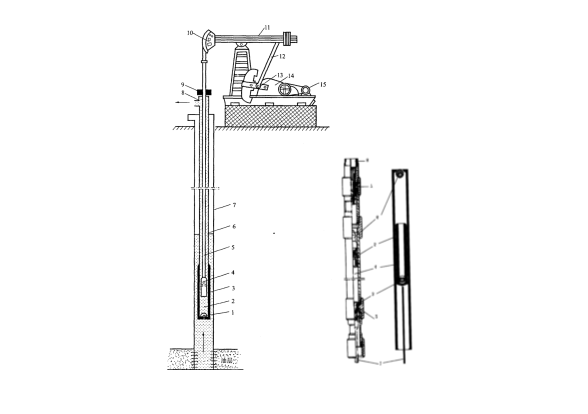
What are the primary sources of maintenance costs?
For most oil wells, the maintenance costs associated with tubing pumps typically comprise the following:
Well Workover Expenses
Well workover operations often necessitate a suspension of production and the deployment of specialized equipment.
Each additional workover not only incurs direct costs but also results in lost production.
Spare Parts Replacement Costs
Commonly replaced components include:
Plungers
Pump barrels
Valve balls
Valve seats
Seals
The frequent replacement of components leads to a continuous escalation of operating costs.
Downtime Losses
During periods of equipment malfunction, the oil well is unable to produce normally.
The longer the downtime, the greater the resulting economic loss.
Labor and Administrative Costs
Equipment maintenance requires the allocation of:
Technical personnel
Inspection resources
Administrative resources
These costs, too, are significant and cannot be overlooked.
Method 1: Select Tubing Pump Specifications Matched to Well Conditions
Many maintenance issues actually stem from errors made during the initial equipment selection phase.
For example:
The pump diameter is too large
Displacement is too high
Mismatch with the well's fluid supply capacity
These situations can lead to:
Fluid hammer (liquid shock)
Insufficient pump fillage
Increased rod string loading
Accelerated equipment wear
Therefore, when selecting equipment, the following factors should be comprehensively considered:
Well depth
Daily fluid production volume
Gas content
Crude oil viscosity
Sand content
Proper equipment selection is often the first step toward reducing maintenance costs.
Method 2: Control Fluid Hammer and Gas Locking Issues
Fluid hammer and gas locking are major causes of premature tubing pump failure.
Fluid hammer generates impact loads, while gas locking reduces pump efficiency and impairs the operation of valve components.
Common remedial measures include:
Optimizing the pumping rate (strokes per minute)
Adjusting the stroke length
Improving pump fillage efficiency
Minimizing gas interference
By reducing fluid hammer and gas locking, equipment operational stability typically improves significantly.
Method 3: Mitigate the Risk of Sand-Induced Wear
Wells with high sand content are a significant source of wear on tubing pumps.
Sand particles continuously erode:
The plunger
The pump barrel
The valve balls
The valve seats
Prolonged operation under these conditions can lead to degraded sealing performance and a loss of pump displacement.
For operations involving sand-laden fluids, priority should be placed on:
Controlling fluid flow velocity
Designing for wear resistance (structural design)
Regularly inspecting for signs of wear
By detecting wear issues early, larger repair expenditures can be avoided.
Method 4: Establish a Preventive Maintenance Program
Many oilfields currently employ a "repair-after-failure" maintenance model.
While this approach reduces the workload associated with routine inspections, it often results in higher overall maintenance costs.
In contrast, preventive maintenance allows for the early detection of potential issues.
It is recommended to regularly inspect:
The condition of valve components
The extent of plunger wear
Changes in pump efficiency
Changes in rod string loading
Proactive maintenance is typically less costly than repairing equipment after a failure has occurred.
Method 5: Utilize Production Data to Monitor Equipment Status
Modern oilfields are placing increasing emphasis on the analysis of operational data.
By monitoring:
Changes in production volume
Changes in pump efficiency
Changes in rod string loading
Power consumption
Anomalous trends can be detected early.
For example:
If pump efficiency shows a continuous decline, it may indicate:
Valve leakage
Pump barrel wear
Insufficient pump fillage
Addressing these issues in a timely manner can prevent minor faults from escalating into major failures.
Method 6: Select Reliable API-Standard Tubing Pumps
The manufacturing quality of equipment directly impacts long-term maintenance costs.
Tubing pumps that comply with the API 11AX standard typically exhibit excellent interchangeability and consistency, which facilitates subsequent maintenance and spare parts management.
Take the TH-type tubing pump as an example: it features a thick-walled barrel structure suitable for a wide range of well conditions, and its material configuration can be customized to meet specific client requirements.
For oil wells requiring continuous, long-term operation, selecting products with robust structural integrity and stable quality helps mitigate future maintenance risks.
It is important to note that reducing maintenance costs does not simply mean choosing the lowest-priced product; rather, it requires a comprehensive assessment of equipment quality, suitability for specific well conditions, and long-term operational performance.
Method 7: Minimize Unnecessary Well Interventions
In many oilfield projects, the costs associated with well interventions (workovers) often far exceed the cost of individual spare parts.
Consequently, one of the primary objectives in reducing maintenance costs is to decrease the frequency of such well interventions.
Achieving this goal typically requires:
Proper equipment selection
Optimized operational practices
Regular inspections
Proactive maintenance
By minimizing unplanned downtime and emergency repairs, equipment utilization rates can be significantly enhanced.
How can you determine if Oil Tubing Pump maintenance costs are high?
If an oil well exhibits the following conditions, it suggests that maintenance costs may have become too high:
A significant increase in the frequency of well workovers.
An accelerated rate of spare parts consumption.
A continuous decline in pump efficiency.
Increased downtime.
Maintenance expenses rising year over year.
At this juncture, the equipment selection and maintenance strategy should be re-evaluated.
FAQ
What constitutes the largest portion of Oil Tubing Pump maintenance costs?
Typically, this includes well workover expenses, losses incurred due to downtime, and the cost of replacing critical components.
Does high maintenance cost necessarily indicate a problem with equipment quality?
Not necessarily. Improper equipment selection, changes in well conditions, and unreasonable operational parameter settings can also lead to increased maintenance costs.
How can the frequency of Oil Tubing Pump workovers be reduced?
Proper equipment selection, preventive maintenance, and the timely detection of potential failure risks are key methods for reducing the need for well workovers.
Why are maintenance costs higher for wells containing sand?
Sand particles accelerate the wear of the plunger, pump barrel, and valve assemblies, thereby increasing the frequency of repairs.
What are the advantages of API-standard Oil Tubing Pumps?
Standardized designs facilitate quality control, ensure spare parts interchangeability, and streamline subsequent maintenance management.
Reducing the maintenance costs associated with Oil Tubing Pumps does not rely solely on replacing equipment; rather, it requires optimization across multiple dimensions—including equipment selection, operational management, and maintenance strategies. By appropriately matching pump specifications to well conditions, mitigating fluid hammer and gas locking, controlling wear risks, implementing preventive maintenance, and selecting reliable products that comply with API standards, oilfield operators can effectively lower maintenance expenditures, enhance equipment operational stability, and boost the overall economic efficiency of their oil wells.