

Early Diagnosis and Practical Solutions for Maintaining Stable Oil Production
Gas lock in API tubing pumps occurs when excessive free gas enters the pump barrel and prevents the traveling valve and standing valve from operating normally. If not diagnosed early, gas lock can reduce pump fillage, lower pumping efficiency, increase operating costs, and eventually stop fluid production altogether. The most effective way to minimize production losses is to identify gas lock symptoms before significant output declines occur and apply corrective measures such as improving gas separation, optimizing pump setting depth, and adjusting pumping parameters. In high gas-liquid ratio (GLR) wells, mature oil fields, deep wells, and horizontal wells, early diagnosis is often more cost-effective than frequent workovers and equipment replacement.
What is a gas lock in an API Tubing Pump?
Gas lock is one of the most common production problems in rod pump systems.
Under normal operating conditions, liquid enters the pump barrel, allowing the traveling valve and standing valve to function correctly and lift fluids to the surface.
However, when excessive free gas enters the pump barrel, the gas occupies space that should normally be filled with liquid. Because gas is highly compressible, it repeatedly expands and compresses during each pumping stroke instead of moving fluid upward.
As a result:
· Pump fillage decreases
· Pump efficiency drops
· Fluid production declines
· The pump may eventually stop lifting liquid
Although gas lock does not necessarily indicate mechanical failure, it can severely impact production performance if left unresolved.
Why Gas Lock Matters
Many operators do not recognize gas lock until production has already declined significantly.
However, gas lock can create several operational problems long before complete production loss occurs.
Reduced Pump Fillage
When gas occupies part of the pump barrel, less liquid enters the pump during each cycle.
Lower Production Rate
Insufficient liquid displacement directly reduces oil production.
Increased Energy Consumption
The pumping unit continues to operate while moving compressed gas instead of liquid.
More Frequent Workovers
Persistent gas lock often leads to repeated troubleshooting and corrective interventions.
Higher Operating Costs
Reduced efficiency and production losses increase the overall cost per barrel produced.
Which Wells Are Most Likely to Experience Gas Lock?
Some well conditions naturally increase the likelihood of gas lock.
Well Type | Gas Lock Risk |
High GLR Wells | Very High |
Horizontal Wells | High |
Mature Oil Fields | High |
Deep Wells | Medium |
Low Gas Wells | Low |
Mature oil fields are particularly vulnerable because declining reservoir pressure often causes gas-liquid ratios to increase over time.
Horizontal wells can also experience severe gas separation challenges, making gas lock more likely.
Early Warning Signs of Gas Lock
Early detection is the most effective way to prevent major production losses.
If one or more of the following symptoms occur, further investigation may be necessary.
Common Symptoms Checklist
✓ Unexpected production decline
✓ Reduced pump fillage
✓ Abnormal dynamometer card patterns
✓ Increased load fluctuations
✓ Intermittent fluid production
✓ Rising gas production at surface facilities
✓ Reduced pumping efficiency
✓ Frequent production instability
While these symptoms do not automatically confirm gas lock, they often indicate significant gas interference within the pumping system.
Gas Lock vs Fluid Pound: What Is the Difference?
Gas lock and fluid pound are frequently confused because both reduce pumping performance.
However, they are caused by different conditions and require different solutions.
Item | Gas Lock | Fluid Pound |
Root Cause | Excessive free gas | Insufficient fluid supply |
Pump Barrel Condition | Gas occupies barrel volume | Barrel not fully filled with liquid |
Main Symptom | Production decline | Impact loading |
Pump Behavior | Valve operation affected | Mechanical shock occurs |
Typical Solution | Improve gas separation | Adjust pumping parameters |
Correctly identifying the problem is essential before implementing corrective actions.
Common Causes of Gas Lock in API Tubing Pumps
High Gas-Liquid Ratio (GLR)
This is the most common cause of gas lock.
When large amounts of free gas enter the pump intake, liquid fillage decreases and gas compression interferes with valve operation.
Poor Downhole Gas Separation
Without effective gas separation, free gas enters the pump barrel and accumulates during pumping cycles.
Improper Pump Setting Depth
Incorrect pump placement may expose the pump intake to excessive free gas.
Horizontal Well Trajectory
Gas and liquid distribution can become uneven in horizontal sections, increasing gas entry into the pump.
Valve Leakage
Worn traveling valves or standing valves may worsen gas interference and reduce pumping efficiency.
How to Diagnose Gas Lock Before Major Production Loss
Accurate diagnosis should combine production data analysis and field observations.
Step 1: Analyze Production Trends
A sudden decline in production without obvious mechanical failure is often an early warning sign.
Look for:
· Production decrease
· Reduced fluid recovery
· Unstable production rates
Step 2: Monitor Pump Fillage
Declining pump fillage frequently indicates increasing gas interference.
Tracking fillage trends can help identify gas lock before production losses become severe.
Step 3: Review Dynamometer Cards
Dynamometer analysis remains one of the most reliable diagnostic tools.
Abnormal card patterns may indicate:
· Incomplete liquid fillage
· Gas compression effects
· Valve operation issues
Step 4: Observe Surface Gas Production
An increase in gas production at surface facilities may suggest more free gas is reaching the pump intake.
Step 5: Inspect Valve Conditions
Valve wear and leakage can mimic gas lock symptoms.
Always verify the condition of:
· Traveling valves
· Standing valves
· Valve balls
· Valve seats
before concluding that gas lock is the sole cause.
How to Fix Gas Lock in API Tubing Pumps
Once gas lock has been confirmed, operators can choose the most appropriate corrective action based on well conditions.
Solution 1: Install a Gas Anchor
Recommended For
· High GLR wells
· Mature oil fields
· Deep wells
A gas anchor helps separate free gas before it enters the pump intake.
Benefits include:
· Improved pump fillage
· Reduced gas interference
· More stable production
· Increased pumping efficiency
For many rod-pumped wells, installing a gas anchor is the first corrective measure considered.
Solution 2: Optimize Pump Setting Depth
Recommended For
· Wells with changing fluid levels
· Wells with excessive free gas near the pump intake
Adjusting pump depth can improve downhole pressure conditions and enhance natural gas separation.
Benefits:
· Reduced free gas entry
· Better liquid fillage
· Improved pump performance
Solution 3: Reduce Pump Speed
Recommended For
· Wells experiencing intermittent gas lock
· Wells with unstable fluid inflow
Excessive pumping speed can increase gas interference.
Reducing strokes per minute (SPM) may:
· Improve liquid fillage
· Increase separation time
· Reduce gas accumulation
Solution 4: Improve Downhole Gas Separation
Recommended For
· Horizontal wells
· High gas wells
Additional gas separation technologies can reduce the amount of free gas entering the pump.
Potential options include:
· Gas separators
· Gas anchors
· Specialized intake systems
The goal is to maximize liquid entry while minimizing gas entry.
Solution 5: Inspect Traveling and Standing Valves
Recommended For
· Older wells
· Wells with declining efficiency
Valve leakage often produces symptoms similar to gas lock.
Inspecting and replacing worn valve components can restore pumping efficiency and eliminate false gas lock diagnoses.
Solution 6: Select a Tubing Pump Suitable for High-Gas Wells
Recommended For
· Wells with persistent gas interference
· Long-term production optimization projects
Pump selection should consider:
· Gas-liquid ratio
· Well depth
· Production target
· Operating environment
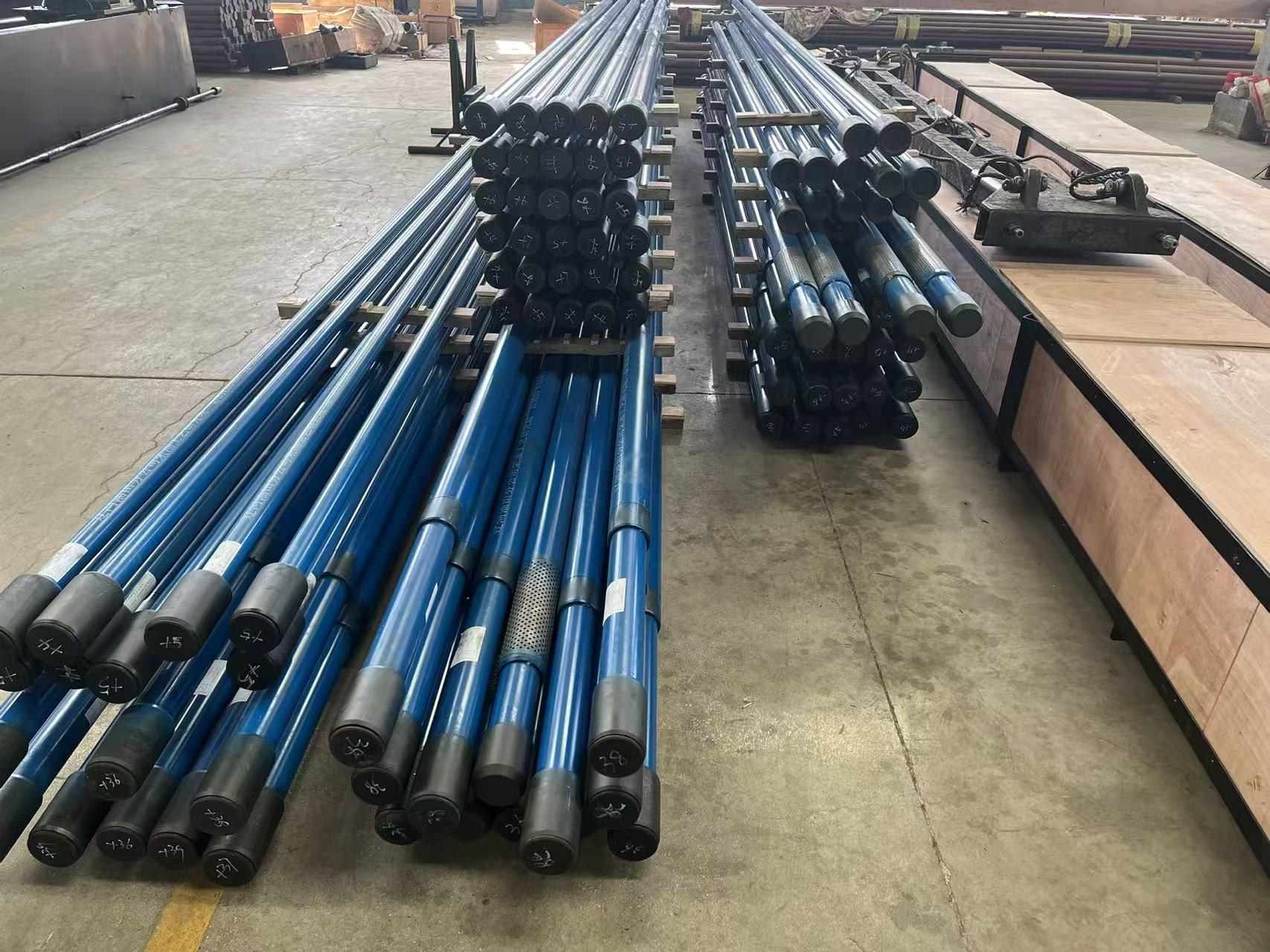
TH API tubing pumps are manufactured according to API 11AX standards and are available in multiple sizes for various well conditions. Material configurations can also be customized according to field requirements.
Selecting a pump structure compatible with actual operating conditions can contribute to improved production stability and reduced operational risks.
Gas Lock Troubleshooting Matrix
The following matrix can help operators quickly identify possible causes and corrective actions.
Symptom | Possible Cause | Recommended Action |
Production drops suddenly | Gas lock | Check gas separation efficiency |
Reduced pump fillage | Gas interference | Install a gas anchor |
Abnormal dynamometer card | Gas lock or fluid pound | Analyze card pattern |
Increased gas production | Free gas entering pump | Optimize pump setting depth |
Intermittent production | Gas accumulation | Reduce pump speed |
Declining efficiency | Valve leakage | Inspect valve components |
FAQ
Can gas lock stop oil production completely?
Yes. Severe gas lock can prevent the pump from moving liquid, causing production to stop temporarily.
Is gas lock more common in horizontal wells?
Yes. Horizontal wells often experience greater gas separation challenges, increasing gas lock risk.
Can gas lock damage a tubing pump?
While gas lock itself is not necessarily a mechanical failure, prolonged operation under gas lock conditions may contribute to increased component wear and reduced efficiency.
How do I know if my tubing pump has gas lock?
Common indicators include reduced production, declining pump fillage, abnormal dynamometer cards, and increased gas interference.
Does a larger tubing pump eliminate gas lock?
Not necessarily. Pump size alone does not solve gas lock. Proper matching between pump design and well conditions is more important.
Conclusion
Gas lock remains one of the most common production challenges in API tubing pump systems, particularly in mature oil fields, high-GLR wells, deep wells, and horizontal wells. Because production losses often begin long before operators recognize the problem, early diagnosis is essential.
By monitoring production trends, pump fillage, dynamometer behavior, and gas production patterns, operators can identify gas lock symptoms before major production declines occur. Combining accurate diagnosis with corrective measures such as gas anchors, optimized pump setting depth, improved gas separation, and proper tubing pump selection can significantly improve production stability while reducing unnecessary operating costs and workovers.
In many cases, early intervention is far less expensive than restoring lost production after a severe gas lock has already occurred.