

Sand content rises, salinity gets higher, and thermal recovery conditions become more frequent as old oilfields enter the mid-to-late stages of development. These changes put downhole lifting systems under a great deal of strain. Traditional pumps in these cases will easily get sand jamming, wear rapidly, and require well workovers at a high frequency. If you are changing the configuration, one of the first things a field engineer would probably think of is the long plunger sand control pump that can handle the complex media better and thus their operational life can be extended without making major changes to the wellhead equipment.
Side-entry structure changes the direction of sand particles
When the sand production is significantly high, the working life of the equipment is mainly decided by how the fluid brings the sand into the pump chamber. With a side-entry structure, the fluid gets into the working chamber circumferentially thus avoiding the accumulation of sand particles between the plunger and the cylinder, which is also the main reason for jamming. The tail-end sand-collecting pipe offers a buffer place for wells with slight sand production, enabling the impurities to settle at the bottom of the pump rather than the seals being directly scoured, which is advantageous for production on a continuous basis.
Long stroke design adapts well to production fluctuations
In situations where the daily fluid production fluctuates from 5–200 m³, it becomes very important to get the right combo between the pump diameter and the stroke. Long plunger sand control pumps obtain a higher stroke by using a longer cylinder. This means that they can produce a larger displacement during one single stroke while at the same time the suction remains stable. The sizes of the pump orifice vary from 32–70 mm thus giving the possibility to adjust the models according to the level of production and therefore the whole lifting system would not be replaced frequently. This is extremely useful for blocks with unstable well conditions.
Use wear-resistant materials to overcome highly mineralized and thermal recovery challenges
High-mineralized brine layers and steam-driven wells bring more rigorous demands for pump barrels and plungers than other components. The consumption of sandy conditions can be effectively slowed down by using a chrome plating layer of more than 0.15 mm thickness depending on the level of hardness that has to be HV800–1000. According to different working conditions, the manufacturers also pick Cr13 or 420 stainless steel barrels, Ni60 or tungsten-coated plungers and carburized or nitrided steel cylinders. Since temperature in thermal recovery wells can be as high as 150°C, surface erosion resistant coating shall be performed by using HVOF and other thermal spraying techniques.
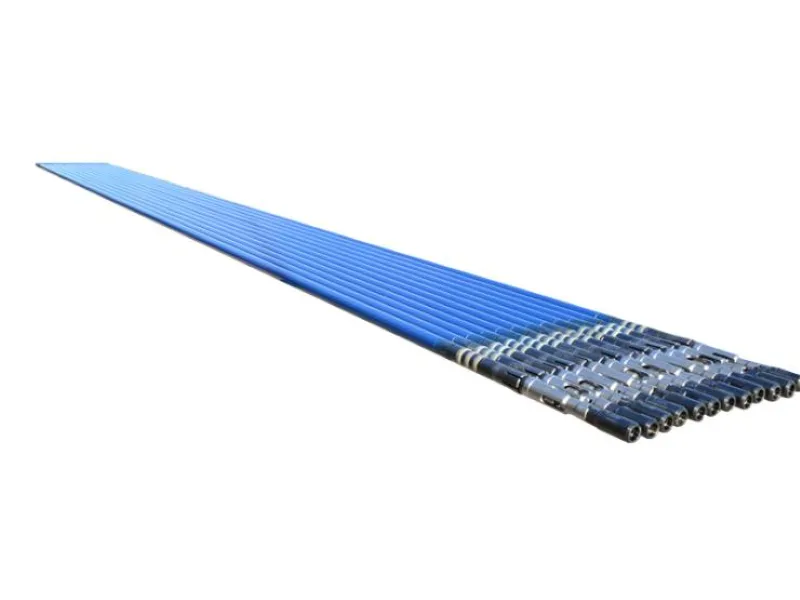
The structure determines operational stability
Outdoor casing is present to handle the overall pressure load while the machining accuracy of a cylinder to a greatest extent influences the seal performance. The sealing pair between the plunger and pump barrel is the main component responsible for the lifting efficiency. Flow valves and inlet valves regulate the inflow and outflow of well fluids; if the material is wrongly chosen, it is very easy that reverse flow or decrease in pump output after erosion will occur. The pair of an enlarged cylinder and modular parts make it possible to replace just the worn parts instead of changing a whole pump, which is very helpful especially when the well is deep or the sand content is high.
Data-driven monitoring becomes the basis for the configuration.
After calibrating, the pump constant (K value) can be connected with the oilfield SCADA system for live pump output monitoring. For production wells with sudden production changes, this information allows engineers to know from the data whether it is necessary to change the pump diameter, stroke, or stroke rate, thus transitioning from experience-based decision-making to data-driven analysis. Long plunger sand control pumps in this respect are more friendly to be integrated into existing monitoring systems.
Anyway, selection should account for API standards and material systems.
The Chinese rod pump manufacturers generally follow the API 11AX and API 11B standards, but different suppliers have very different ways of doing and testing. When buying equipment from abroad, it is common to require API stamps, third-party metallurgical reports, valve ball tests, and the results of barrel straightness and internal surface roughness inspections. Matching the material system with the well conditions is an extremely important step in avoiding the early failure of parts.
In blocks with sand-bearing, highly mineralized, and thermally recoverable situations, one pump type alone cannot cover all the operating conditions. By means of side entry chamber, long stroke, the use of wear-resistant materials, and online monitoring, long plunger sand control pumps, thus, provide the oilfield with a more flexible way of reconfiguring the well that has changing conditions. Typically, for the operators, a reduction on the number of well workovers and an increase in the continuous operating time are more beneficial than a one-time capital expenditure.