
— A Comprehensive, High-Value Guide for Global Oilfield Operators and Equipment Distributors:
As global demand for artificial lift technology continues to expand, more oil producers and procurement teams are turning to China as a key sourcing destination for oil rod pumps. In the last decade, China has not only scaled up production but has also significantly improved material science, manufacturing precision, and API-compliant quality management.
However, importing rod pumps is not simply a matter of choosing the lowest price. Overseas buyers must understand industry standards, well conditions, lifecycle costs, supplier capabilities, and international logistics risks in order to secure reliable equipment and avoid costly failures.
This guide provides a complete, practical, and truly international perspective for buyers preparing to import oil rod pumps from China in 2025 and beyond.
I. Why More Global Buyers Are Choosing China: Market Reality, Not Just Price:
Over the last five years, China has become one of the major global suppliers of rod pumps due to:
Mature steel and alloy materials industry.
Strong cost–performance ratio.
Scalable API-compliant manufacturing.
Experience exporting to Middle East, South America, Central Asia, Africa, and Eastern Europe.
Rod pumps remain the most widely used artificial lift method in onshore wells worldwide—especially in mature fields, heavy-oil zones, and high-water-cut operations—making China’s cost-efficient production increasingly attractive.
II. Before You Buy: Know Your Well Profile Clearly:
A rod pump can only perform reliably when properly matched to the well. Importers should prepare accurate technical data including:
Pumping depth and well deviation.
Gas-oil ratio and gas interference levels.
Sand content and particle size.
Fluid viscosity and water cut.
Corrosion level (CO₂, H₂S, chlorides).
Well temperature and pressure.
Expected production targets.
Providing full well data allows Chinese manufacturers to recommend the right material configuration, plunger–barrel clearance, valve type, and coating technology to ensure long service life.
III. Understanding API Standards and Material Options in China:
China’s rod pump industry commonly works with API 11AX and API 11B specifications. But not every supplier operates at the same level of quality.
1. API-Relevant Verification for Overseas Buyers:
API-monogrammed parts or factories.
Third-party metallurgical testing reports.
Dimensional inspection and valve-ball tests.
Barrel straightness and internal finish checks.
2. Material and Coating Technologies Available in China:
To match different well environments, manufacturers offer combinations such as:
Cr13 / 420 stainless barrels for corrosion.
Ni60 / tungsten-coated plungers for heavy wear.
Carburized or nitrided steel barrels for deep wells.
Tungsten-carbide balls & cages for sand production.
HVOF and thermal spray coating for ultra-abrasive wells.
Understanding the material system is essential to avoid mismatching and premature failures.
IV. Quality Assurance in China: What You Must Verify:
A professional rod pump manufacturer in China should be able to provide:
Heat-treatment records and furnace logs.
Plunger–barrel clearance measurements.
Hardness and metallography reports.
Pressure and leakage test results.
Serial numbers and complete traceability.
Consistent quality inspection reports for every batch.
This is the difference between OEM-grade factories and low-cost workshops.
V. Lifecycle Cost (LCC) — The True Economics of Rod Pump Decisions:
The biggest mistake overseas buyers make is focusing only on unit prices. A better metric is Total Lifecycle Cost (LCC).
Example Comparison (Hypothetical Case).
Pump Type Upfront Price Average Runtime Annual Failures Downtime Cost.
Standard Barrel/Plunger Low 6 months 2–3 High.
High-alloy + Coating Higher 18–24 months 0–1 Much Lower.
In a typical mature oilfield, one failed pump can cost 8,000–20,000 USD in deferred production and workover fees—far exceeding the price difference between standard and premium models.
A well-matched Chinese high-alloy pump often reduces total annual costs dramatically.
VI. International Logistics & Import Risks Often Overlooked:
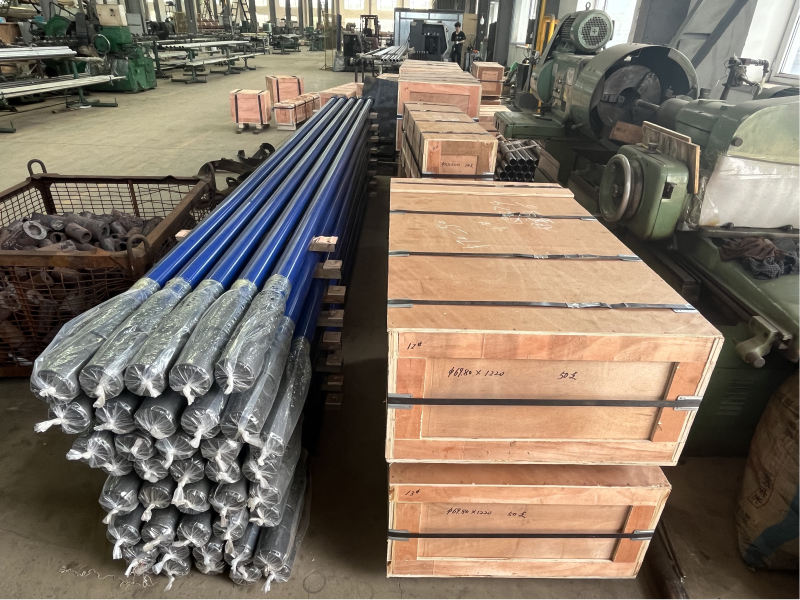
Rod pumps must be shipped with strong export protection due to weight, precision, and corrosion sensitivity.
Key Considerations:
Anti-corrosion coating and moisture-proof packaging.
High-strength wooden crates for heavy components.
Correct HS Code classification to avoid customs delays.
Country-specific requirements (CO, Form E, SASO, etc.).
Optional SGS/third-party inspection before shipment.
Checking for vibration or internal impact during transport.
A reliable exporter will prepare all paperwork to ensure smooth clearance.
VII. Common Field Failures — FAQ Format:
What Common Rod Pump Failures Should Overseas Buyers Be Aware Of?
Q1: Why do plungers wear out quickly in some wells?
A: The most common cause is incorrect plunger–barrel clearance or selecting materials that cannot handle high sand or high viscosity. Proper profiling and matching can significantly extend pump life.
Q2: What leads to early barrel corrosion?
A: This typically occurs when barrel metallurgy does not match the wells' CO₂, H₂S, or chloride levels. Choosing Cr13, high-alloy steel, or coated barrels can prevent corrosion-related failures.
Q3: What causes gas lock and how can it be avoided?
A: High gas-oil ratio or poor valve design can lead to gas interference. Anti-gas lock valves or improved valve-ball configurations help maintain stable pumping cycles.
Q4: Why does sand scoring occur on the plunger surface?
A: Improper surface hardness or unsuitable coating technology can result in abrasive wear. HVOF coatings and tungsten-carbide options provide better sand resistance.
Q5: Why do valve balls get stuck in some wells?
A: Incompatible materials or inadequate testing may cause sticking. Using high-hardness tungsten-carbide balls or corrosion-resistant cages solves most valve-related issues
VIII. How to Identify a Real Manufacturer (Not a Trader)
To ensure long-term reliability, buyers should evaluate suppliers using the following checklist:
Own machining and heat-treatment facilities.
API testing equipment.
In-house inspection laboratory.
Stable production capacity.
Ability to customize for special well conditions.
Proven export history.
Rapid spare-parts supply capability.
A direct manufacturer can also provide more accurate engineering advice and consistent production quality.
IX. Red Flags: Stop Immediately If You See These Signs:
Avoid suppliers that show:
No heat-treatment or material traceability.
Large fluctuations in plunger-barrel clearance
“API-style” but not API-compliant products.
Weak or damaged export packaging.
Inability to explain material differences.
Highly inconsistent delivery schedules.
These are clear indicators of unreliable production.
X. Conclusion: Importing Rod Pumps from China Can Be Highly Reliable — With the Right Partner:
China has become a strong and trustworthy source for oil rod pumps.
With competitive pricing, improved materials, and mature manufacturing, Chinese products offer excellent value—but only when the buyer selects a capable, experienced, and transparent supplier.
By focusing on well conditions, API compliance, material configuration, lifecycle cost, and supplier capability, overseas buyers can significantly reduce equipment failures and achieve long-term operational efficiency.
About Dongsheng Petroleum Machinery :
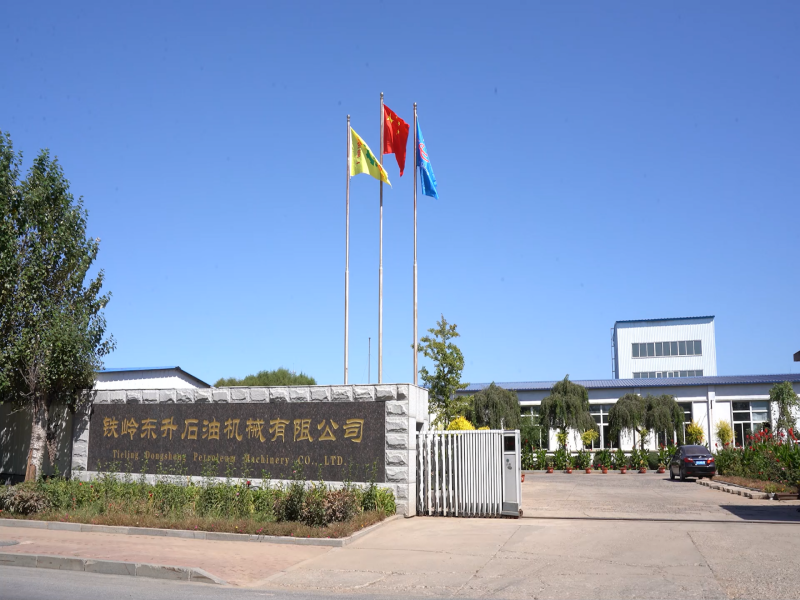
Founded in 2000, Tieling Dongsheng Petroleum Machinery Co., Ltd. is a vertically integrated manufacturer of API-standard sucker rod pumps, specialty rod pumps, plungers, barrels and downhole components, serving both major domestic oilfields and overseas operators.
Covering roughly 20,000 m² of factory space with some 116 employees (including about 20 engineers) and a registered capital of RMB 56 million, Dongsheng reports an annual production capacity measured in the tens of thousands — more than 20,000 pumps and thousands of full-tube pump sets per year.
The company implements a documented quality system (ISO 9001) and holds API11AX licensing while also maintaining ISO14001 and ISO45001 certifications and measurement/inspection capabilities to ensure traceability and process control.
Dongsheng's factory is equipped with advanced machining, hardness and metallurgical testing, electroplating and spray-coating lines, honing and straightening equipment, and other inspection tools that support its material control and coating processes for wear-resistant and corrosion-resistant components.
With exported case histories and customers across markets such as the Middle East, North America, and Southeast Asia.