
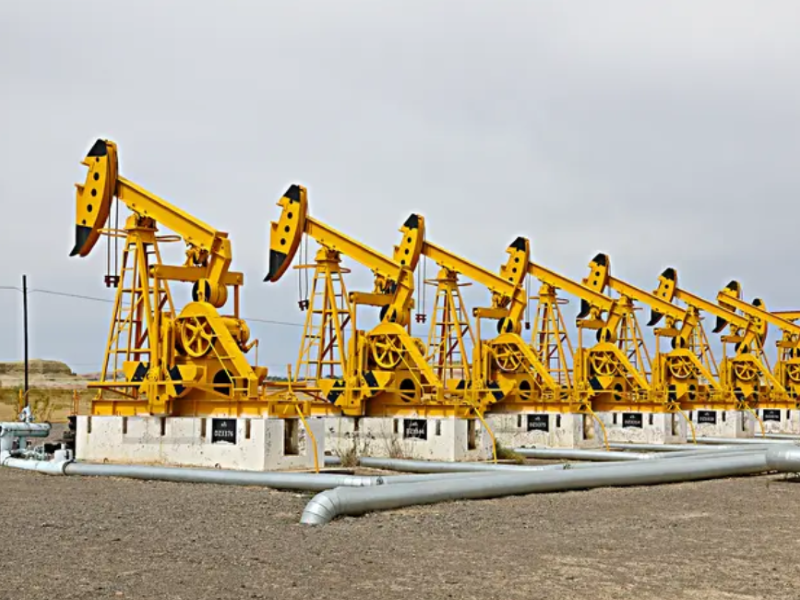
Introduction: Why Choosing the Right Oil Rod Pump Matters More Than Price:
In most onshore oilfields, oil rod pumps remain one of the most common and cost-effective artificial lift methods. For procurement and operations teams, selecting the right oil rod pump is not just about buying equipment. It directly affects well production, downtime, maintenance workload, and long-term costs.
One wrong choice can lead to frequent pump inspections, high operating expenses, and even long-term impacts on daily production stability.
This article provides a systematic framework for evaluating and selecting an oil rod pump from a corporate procurement perspective. We cover well assessment, fluid properties, materials and manufacturing, lifecycle cost (LCC/TCO), supplier evaluation, procurement processes, and risk control. We also provide a practical checklist to help teams balance technical and commercial factors, avoiding extremes of “expensive but unnecessary” or “cheap but failure-prone.”
1. Start With Data: Build Complete Well and Production Records:
Before buying an oil rod pump, gather and verify accurate well data. Without precise information, all decisions are guesses.
Essential well and historical data (at a minimum):
1. Well depth: TVD (True Vertical Depth), MD (Measured Depth), casing and tubing sizes.
2. Well trajectory: max deviation, doglegs, directional sections.
3. Daily production and fluid fluctuations: 12-month production curves (oil, water, gas) and short-term variations.
4. Well fluid properties: viscosity (at different temperatures), density, sand content, gas content (GOR), water cut, corrosive media (H₂S, CO₂, chloride concentration).
5. Historical failures: pump inspections, rod breaks, valve failures, rod/tubing wear locations and rates.
6. Surface equipment constraints: existing pumpjack stroke, frequency, max torque, and mounting interfaces.
7. Maintenance and spare parts: on-site team availability, delivery lead time, and spare parts stock strategy.
With these objective data points, teams can communicate with suppliers, match pumps and materials, and calculate risks and costs more accurately.
2. Map Well Conditions to Pump Requirements:
Translate well conditions into clear technical requirements.
2.1 Deep Wells & Rod Loads – Rod and Pump Barrel Strength
Deep wells (>1500–2500 m) increase rod tension and bending stress. Operators should select higher-grade rods (better yield strength, impact toughness) and use high-hardness coatings or surface hardening inside the pump barrel.
Procurement specs should state max tensile and compressive loads and minimum material performance at extreme temperatures.
2.2 Sand and Abrasive Wells – Pump Material & Coatings
For sandy wells, choose hard-coated plungers (tungsten carbide, ceramic, or chrome) and high-hardness barrels. Use wear-resistant or self-lubricating valve seats.
Specs should include max sand concentration (mg/L), particle size range, and expected material life based on experience or case studies.
2.3 Gas-Cut Wells – Pump Type & Gas Handling
High-gas wells may experience gas lock. Use gas anchors, short-stroke high-speed pumps, or special valves to prevent pump failure.
List max allowable gas content and recommended anti-gas-lock designs in procurement documents.
2.4 Corrosive Fluids (H₂S/CO₂/High Chloride) – Corrosion Resistance
Wells with H₂S or high CO₂ require alloys or surface treatments certified for sulfide stress cracking (SSC) and corrosion resistance.
Specify material chemical composition, L80/N80/H2S rating, or NACE certification. Request traceable material inspection reports (composition, hardness, heat treatment).
2.5 High Viscosity & Heavy Oil – Pump Size & Clearance
High-viscosity oil reduces suction efficiency and causes plunger slip. Define recommended pump diameter, clearance range, and sealing/coating solutions.
Note if heating, dilution, or circulation is required.
2.6 Wellhead & Surface Equipment Compatibility
Confirm tubing size, wellhead interface, and pumpjack stroke. Specify installation length tolerance, base type, and special hooks or connectors if needed.
Include modification costs in procurement evaluation if surface equipment changes are required.
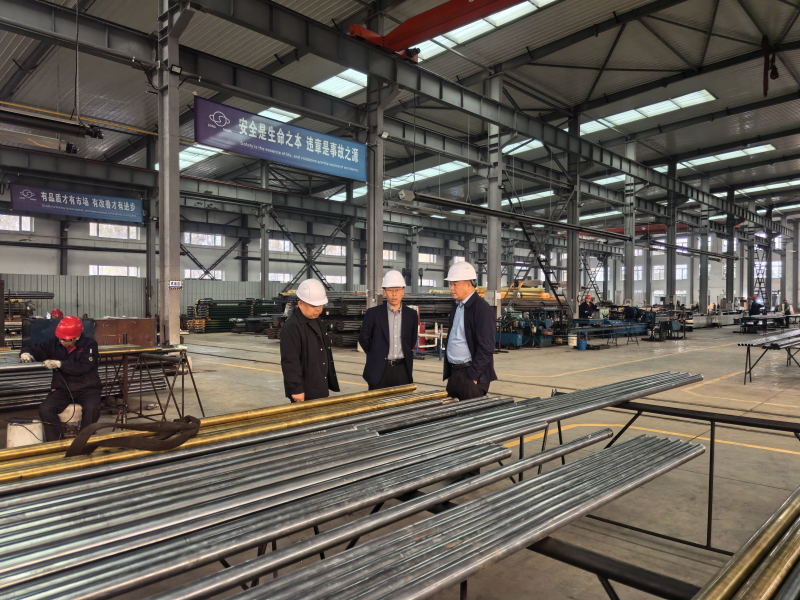
3. Materials and Manufacturing: Key Specs to Include
Good design and proper materials are only the first step. Precise manufacturing and quality control determine pump performance.
Pump Barrel & Plunger Materials & Coatings
Specify alloy grade or chemical composition, surface hardness (HRC or HV), coating type (chrome, nitriding, tungsten carbide spray), and coating thickness tolerance.
Require data on coating adhesion, surface finish, and wear resistance (Taber abrasion or field examples).
Valves, Balls, and Seals
Use wear-resistant, ceramic, or hard-alloy inserts for valve balls and seats. Specify seal materials (PU, FKM, PTFE) with max operating temperature and chemical compatibility.
Require life assessment under specified solid content and cycles.
Heat Treatment, Machining Accuracy & Tolerance
Specify heat treatment and hardness uniformity checks for critical parts (plunger, barrel).
Define tolerances for key dimensions (ID, concentricity, surface roughness Ra) to avoid unpredictable wear.
Quality Control & Inspection
Require chemical analysis, hardness testing, surface coating inspection, and NDT (ultrasonic/magnetic particle).
Require full inspection reports and batch traceability.
For exports, note international standards (e.g., API 11AX, NACE).
4. Lifecycle Cost: Think Beyond Initial Price
Procurement decisions should be based on total cost, not just upfront price.
4.1 Cost Elements:
1. CAPEX: purchase and installation, including pump price and surface modifications.
2. OPEX: energy, regular maintenance, lubrication, inspections.
3. Pumping and workover cost: labor, downtime, replacement parts.
4. Lost production: calculated as daily production × downtime.
5. Spare parts inventory: capital tied in stock and storage cost.
6. Depreciation & residual value: expected pump life and recoverable value.
4.2 Example Calculation:
Prepare a 5–10 year cash flow comparison. Include different pump types and material options with total cost including lost production.
High-wear or complex-valve pumps have higher CAPEX but reduce inspection frequency and downtime, often cheaper long-term.
In sandy or corrosive wells, cheap standard pumps often cost more over time than higher-grade, wear/corrosion-resistant pumps.
4.3 Key Financial Metrics:
Unit production cost ($/bbl): measure impact on field economics.
Payback period: when added cost is offset by reduced downtime/maintenance.
MTBF & MTTR: quantify reliability, compare supplier commitments and past performance.
5. Supplier Evaluation: Focus on Deliverable Results
Suppliers compete by delivering long-term, stable results, not just showing documents.
5.1 Supplier Capability Dimensions (Suggested Scoring)
Technical capability (25%): custom solutions, engineer expertise, documentation depth.
Manufacturing & quality control (20%): inspection, traceability, prototype/batch consistency.
Field support (20%): rapid on-site response, resident engineers, dispatch speed.
Delivery & supply chain (15%): on-time delivery, spare availability, international shipping.
Price & after-sales (10%): warranty, replacement, on-site support.
Case studies & reputation (10%): field cases under similar conditions, references.
5.2 Materials & Evidence to Request
Case studies, videos, or operation records.
Factory audit reports, key process documentation.
Test or third-party reports (wear, chemical compatibility).
Spare parts delivery commitments and pricing.
SLA: response time, on-site support, training.
6. Procurement Process: Key Stages From RFP to Acceptance
Avoid focusing only on price. Follow these stages:
Stage 1 – Define Requirements
Collect well data, define required conditions and KPIs.
Set financial model (LCC baseline) and acceptable payback/downtime.
Stage 2 – Issue RFP
Include all well data, material and inspection requirements, delivery, and SLA.
Request BOM, manufacturing process, material certificates, and at least 2 field cases.
Stage 3 – Technical Review & Sample Testing
Test key parts or use third-party inspection.
Consider factory audit or supplier technical demo.
Stage 4 – Trial Installation & Small Batch Test (Optional)
For high-risk wells, install a small batch for 3–6 months. Track wear, seals, and inspection frequency.
Stage 5 – Acceptance & Tracking
Evaluate first 90 days of operation, not just certificates.
Build supplier performance file (MTBF, response time, spare delivery) for future procurement.
7. Common Procurement Mistakes and Solutions
Mistake 1: Only compare price, ignore TCO.
Solution: Use 5–10 year LCC to highlight lost production costs.
Mistake 2: Assume pump “fits” is enough
Solution: Require compatibility review and pre-installation check.
Mistake 3: No spare parts or long lead times
Solution: Sign spare parts agreements or keep critical stock based on inspection cycles.
Mistake 4: Skip trial installation
Solution: Use trial + performance metrics for high-risk wells to reduce large-scale failure risk.
8. Practical Checklist
1. Complete well data: TVD/MD, deviation, sand, gas, water, corrosive indicators.
2. Production targets: daily rate, allowable fluctuation, max downtime.
3. Technical spec: material grade, surface treatment, valves, heat treatment, tolerances, inspections.
4. LCC model: CAPEX, OPEX, maintenance, lost production quantified.
5. Supplier scoring: tech, manufacturing, service, case studies, delivery.
6. Small batch trial plan (if needed): duration, performance metrics, acceptance criteria.
7. Spare strategy: critical stock, emergency delivery, pricing.
8. Contract terms: warranty, SLA, training, material traceability.
9. Buying an oil rod pump is about engineering judgment, supply chain control, and cost modeling to ensure long-term stable production.
Operators should:
Base pump selection on data and testing, not only experience or price.
Evaluate suppliers on deliverable field results, not just documents.
Focus on lifecycle cost and risk minimization, not one-time purchase price.
We can create a P-Spec and LCC comparison based on your well conditions (TVD, sand, gas, production target, surface equipment). We provide 2–3 preferred solutions with estimated lifespan and inspection frequency. This can attach directly to your RFP to minimize technical risk.
Dongsheng Petroleum Machinery Co., Ltd., Founded in 2000, Dongsheng has over 20 years of experience in oil rod pump R&D and manufacturing.
We serve all types of oilfields: onshore, deep, high-sand, high-gas, and high-corrosive wells, with rich engineering experience and field applications.
Our products are exported worldwide and cooperate with international oil companies, including ZPEC, China Shipbuilding, SLB, Weatherford, Sinopec, and PetroChina.
With reliable products and full after-sales service, Dongsheng provides solid support for stable field production.