
In oilfield operations, purchasing a sucker rod pump often appears to be a standardized process.
However, based on our internal tracking across 500+ well projects, many procurement decisions fail to deliver the expected production and cost performance.
In many cases, the issue is not whether the pump works, but whether it performs efficiently over time.
If your decision is based mainly on price comparison and API 11AX certification, the real risks often appear later:
Declining pump efficiency
Unplanned workovers
Increased maintenance costs
Production loss
Below are three common procurement mistakes that directly impact oil well uptime and long-term profitability.
Mistake 1: Focusing on Purchase Price Instead of Cost per Barrel (The Price Trap)
Many buyers prioritize lower upfront cost (CAPEX), often choosing a supplier that is 10–20% cheaper.
But in reality:
The initial pump cost typically represents only 10–20% of the total lifecycle cost.
The majority of expenses come from:
Pump lifespan
Efficiency decline
Workover operations
Daily production loss
Real-World Scenario:
If a lower-cost pump experiences premature wear within 6 months:
Pump efficiency may drop by 15%–25%
A workover may be required earlier than planned
Continuous production loss accumulates daily
These losses often exceed the initial savings from a lower purchase price.
Recommendation (For Any Supplier Selection):
Evaluate Total Cost of Ownership (TCO), not just unit price
Compare expected lifespan and maintenance frequency
Pay close attention to material quality and wear resistance
Dongsheng’s Approach:
At Dongsheng, we focus on long-term performance rather than price competition.
We provide:
Lifecycle cost (TCO) analysis
Material optimization based on well conditions
For example:
Pumps with reinforced tungsten carbide liners typically achieve 2–3× longer service life than standard chrome-plated options.
This can help:
Avoid at least one unplanned workover
Reduce overall operating cost
Mistake 2: Assuming Standard API Pumps Fit All Well Conditions (The Standardization Myth)
Many suppliers emphasize:
“Fully compliant with API 11AX standard.”
While this is important, it is essential to understand:
API 11AX mainly ensures dimensional compatibility — not performance optimization for specific well conditions.
Potential Risks:
Standard configurations may not perform well in:
High sand wells → accelerated wear
High gas wells → gas lock issues
Corrosive environments (CO₂ / H₂S) → material degradation
Heavy oil wells → poor fluid movement
Example:
In high sand conditions, standard valve components may show significant wear within 30–60 days.
Recommendation (General Best Practice):
Confirm pump selection is based on actual well conditions
Check if customized configurations are available
Review similar field application cases
Dongsheng’s Approach:
Dongsheng provides application-based pump selection, not just product supply.
Before quotation, we typically evaluate:
Well depth and stroke
Sand and gas content
Fluid characteristics
Based on this, we offer:
Optimized clearance design
Material selection tailored to working conditions
The goal is to reduce downtime — not just deliver a pump.
Mistake 3: Relying on Certificates Without Verifying Production Transparency (The Trust Gap)
For international buyers, a common challenge is:
How to verify whether the supplier’s actual production matches their claims?
In some markets, potential risks may include:
Unclear material sourcing
Inconsistent quality control
Certificates not fully reflecting actual production
While not universal, these risks should be carefully evaluated in cross-border procurement.
Recommendation (For Any Supplier):
Before placing an order, consider confirming:
Availability of third-party inspection (SGS, Intertek, etc.)
Material traceability (Mill Test Certificates)
Visibility into production process
Stability of quality control system
Dongsheng’s Transparency Measures:
To reduce procurement risk, Dongsheng provides:
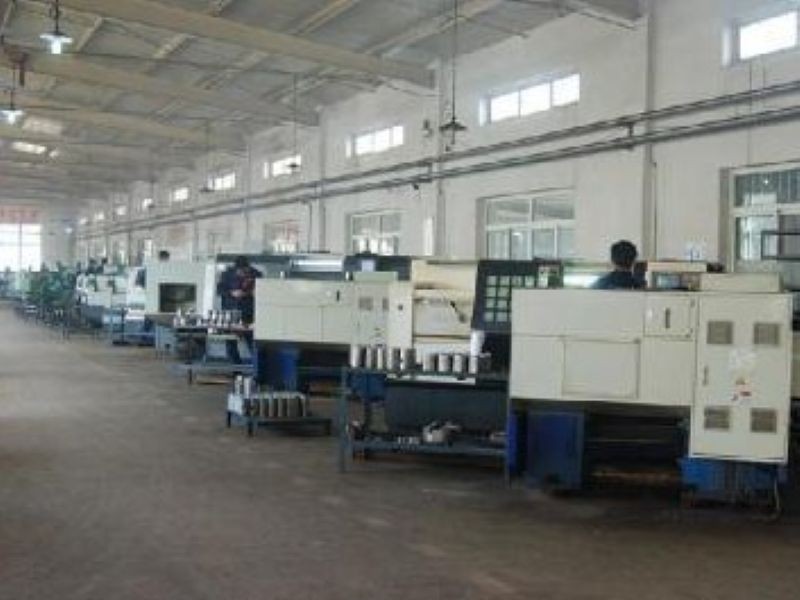
Live video access to production (upon request)
Support for third-party inspections
Full material traceability (MTC documentation)
Multi-stage quality inspection process
Helping buyers move from “trusting documents” to “verifying processes”.
Conclusion: You Are Not Buying a Pump — You Are Buying Uptime
The goal of procurement is not to buy the cheapest equipment.
It is to secure maximum oil well uptime.
A well-matched pump can deliver:
Stable production
Fewer workovers
Lower lifecycle cost
A poor decision may result in:
Frequent downtime
Uncontrolled maintenance cost
Increased operational risk
Next Step: Reduce Your Procurement Risk
If you are evaluating sucker rod pump options, you can start with:
Download Procurement Checklist
Get our Sucker Rod Pump Selection & Risk Assessment Checklist
Identify hidden risks before placing an order
Request Cost Comparison
Send us:
Current pump price
Average service life
Basic well conditions
Our engineers will estimate:
Your cost per barrel after optimization
Schedule a Production Review
See how Dongsheng ensures quality through controlled manufacturing processes
In oilfield operations:
The most expensive cost is not the equipment —
it is the downtime you didn’t plan for.