

Introduction
The purchase order looks straightforward. You need a sucker rod pump — or fifty of them — and you want to know what it's going to cost. But any procurement specialist, production engineer, or oilfield operations manager who has been through this process knows that the sticker price on a pump is only the beginning of the conversation.
Sucker rod pump cost is one of those topics that generates endless forum debates, supplier negotiation headaches, and post-installation regrets — almost always because buyers treated it as a product price question when it's really a total cost of ownership problem. The pump that saves you $800 per unit at purchase can cost you $15,000 per workover when it fails prematurely in a sand-producing well. The pump that seems expensive from a specialty manufacturer can run for three years without a service call in the same conditions that destroy a budget alternative in four months.
This guide was written for serious buyers: procurement teams at E&P companies, oilfield equipment distributors, production engineers specifying pump packages for new well programs, and operations managers trying to optimize artificial lift costs across a producing field. We've compiled insights from industry forums, engineering communities, procurement discussions, and manufacturer-level technical knowledge to give you a framework that moves beyond per-unit pricing and into the decisions that actually determine what a sucker rod pump program costs over its operational life.
What you'll find here is the complete picture: what drives pump pricing, how to evaluate cost against well conditions, what specifications matter most for cost efficiency, and where buyers consistently lose money by optimizing for the wrong variable.
Why Sucker Rod Pump Pricing Is More Complex Than It Appears
Ask three suppliers for a price on a sucker rod pump, and you'll likely receive three quotes that look very different — not just in dollar amount but in what they include, what they exclude, and what assumptions they make about your operating conditions.
This pricing complexity is not arbitrary. It reflects genuine technical variation in how pumps are built, what conditions they're designed for, and what engineering choices went into their construction.
The Variables That Drive Base Pump Cost
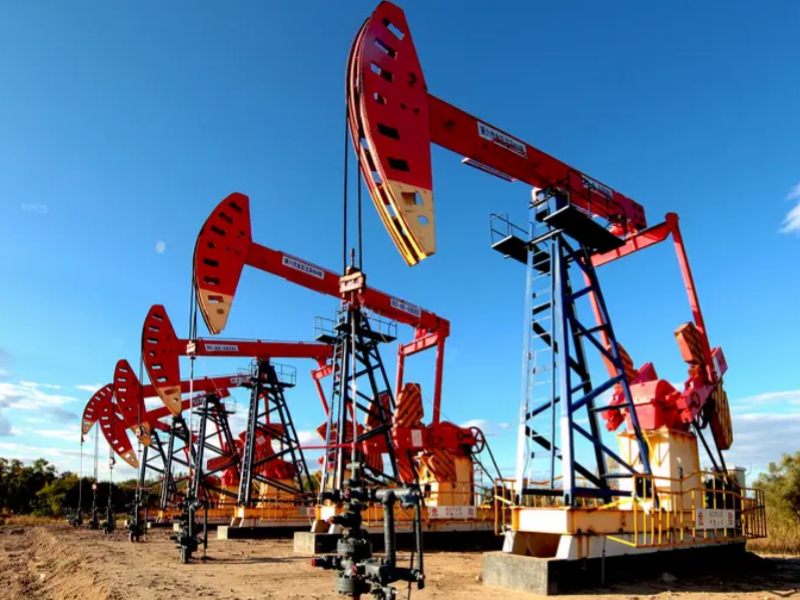
Pump type: The fundamental split between insert (rod) pumps and tubing pumps carries a significant cost implication. API insert rod pumps can be retrieved and replaced without pulling the production tubing — a design advantage that reduces workover costs substantially in wells that require frequent pump servicing. Tubing pumps have larger bore diameters and higher volumetric efficiency for the same tubing size, but require pulling the full tubing string for any pump service. The cost calculus between these types depends heavily on your well workover economics, not just the pump purchase price.
Pump bore diameter: Pump diameter (expressed in inches: 1.25", 1.50", 1.75", 2.00", 2.25", 2.50" being the standard API range) directly correlates with fluid production capacity and unit cost. Larger diameter pumps handle higher production rates but cost more to manufacture due to material requirements and machining tolerances.
Pump barrel length: Longer barrels provide greater stroke efficiency and are typically specified for deep wells or high-productivity applications. Longer barrels require more precision manufacturing and command higher prices.
Material specifications: The difference between a standard carbon steel pump and one built with corrosion-resistant alloy internals, hardened barrel, or specialty plunger metallurgy can represent 30-60% of base unit price. In corrosive or abrasive well environments, this premium is not optional — it's the difference between a pump that runs and one that fails.
API compliance and certification: API 11AX is the governing standard for sucker rod pump design, material specifications, inspection, and testing. Pumps manufactured and tested to full API 11AX compliance carry a cost premium over non-certified alternatives. That premium is real. So is the performance and reliability difference.
The Real Cost Equation: Beyond the Unit Price
Here is the framework that experienced procurement specialists and production engineers use when evaluating sucker rod pump cost — and it's fundamentally different from comparing per-unit prices.
Total Cost of Ownership (TCO) Components
1. Purchase price: The pump unit cost, including any accessories, connections, and ordered variants. This is typically 20-35% of the true total cost of pump ownership in moderate-to-difficult operating conditions.
2. Installation cost: Includes rig time, crew costs, and any tubing manipulation required. For insert rod pumps that can be run and retrieved on the rod string, installation cost is substantially lower than for tubing pumps requiring full tubing operations.
3. Operational efficiency losses: An undersized or improperly specified pump running below volumetric efficiency is losing you production — that's revenue, not just cost. A pump with a properly matched plunger-to-barrel fit in your specific fluid gravity and temperature conditions runs measurably more efficiently than a generic specification.
4. Workover frequency and cost: This is where total cost of ownership diverges most dramatically from purchase price. In a well with average workover costs of $30,000-$80,000 (rig, crew, chemicals, lost production), the difference between a pump that runs 8 months and one that runs 24 months is not a $500 per unit price difference — it's $60,000 to $160,000 in workover cost difference over a three-year program.
5. Rod and tubing wear costs: Mismatched pump operation, excessive fluid pound, or improper pump depth setting can accelerate rod wear, cause sucker rod fatigue failures, or damage production tubing. These downstream costs are real, attributable, and preventable with correct pump specification.
6. Replacement parts and inventory: For multi-well programs, the cost of carrying replacement pump inventory — plungers, valves, cages, traveling assemblies — is a real operational cost that varies with pump design standardization.
A procurement manager on an industry forum captured this calculation precisely: "We cut pump purchase cost by $350 per unit one year by switching to a lower-grade supplier. We calculated eighteen months later that we'd spent an additional $420,000 on workovers compared to the previous year's program on the same wells. Our 'savings' cost us 67x what we saved."
The Price Ranges Buyers Actually Encounter
While exact pricing varies by configuration, order volume, regional market, and supplier, the following ranges reflect current market reality for B2B procurement of sucker rod pumps at volume. These are directional benchmarks, not quotes.
Standard API Sucker Rod Pumps
API insert rod pumps (standard metallurgy, API 11AX certified): Entry-level market pricing for standard API insert rod pumps from certified manufacturers in China typically ranges from $200–$600 per unit for mid-bore sizes (1.5"–2.0") at volume. Premium North American or European manufactured equivalents run $800–$2,000+ for similar specifications.
The China-manufactured segment, when sourced from API 11AX certified manufacturers with documented inspection processes, delivers engineering-comparable product at significantly lower unit cost — which is why procurement teams at major international operators including CNPC, Sinopec, Weatherford, and SLB source from qualified Chinese manufacturers.
API tubing pumps (standard metallurgy): Tubing pumps generally price 15-25% above insert rod pump equivalents at the same bore diameter, reflecting the larger material volume and the different barrel construction requirements.
Specialty Sucker Rod Pumps
Long plunger sand control subsurface pumps: Sand control pump configurations carry a 30-60% premium over standard API equivalents, reflecting the extended plunger length, tighter clearance tolerances, and materials engineering required for abrasive service. In high-sand-cut wells, this premium is almost always cost-justified by extended run life.
Anti-gas sucker rod pumps: Gas-handling pump configurations — which incorporate mechanical open-close inlet valve structures, corrosion-resistant alloy valve materials, and streamlined flow channel designs to prevent gas lock — price 40-80% above standard API equivalents. In high gas-oil-ratio wells, the alternative to paying this premium is gas lock, pump inefficiency, and production loss.
Steam injection thermal recovery pumps: Purpose-built steam injection pumps for thermal recovery operations, incorporating high-temperature alloy internals capable of continuous 350°C steam service, are specialty-engineered products with correspondingly higher unit costs. The Inconel 625 alloy channeling, ±0.01mm tolerance cone surface seals achieving 15MPa metal sealing pressure, and mechanical linkage systems are precision-manufactured components that justify their pricing in thermal recovery applications where conventional pumps simply cannot function.
Deep-well sucker rod pumps: Deep-well configurations incorporating enhanced structural integrity and optimized clearance management for high-pressure, high-temperature bottomhole conditions price at a premium that reflects the additional engineering margin built into the design.
What Determines Whether a Pump Is Actually Worth Its Price
This is the question that experienced production engineers ask before procurement teams generate purchase orders — and it's the right sequence. The pump specification should drive the cost conversation, not the other way around.
Matching Pump Type to Well Conditions: The Cost Consequence
Every mismatched pump specification creates a cost consequence that compounds over the pump's operating life. Understanding these mismatches helps buyers make decisions that optimize actual operational cost.
Sand production: Wells producing sand at any significant rate need sand control pump design — specifically, the long plunger configuration that maintains sealing contact even when sand particles accumulate in the annular clearance between plunger and barrel. Running a standard API pump in a sand-producing well is one of the most expensive specification mistakes in artificial lift: the abrasive sand accelerates plunger-barrel wear, reduces volumetric efficiency progressively, and triggers workovers at a fraction of the expected run life. The incremental cost of a sand-control pump — typically $300-$600 per unit at volume — is recovered in the first extended run life month.
High gas-oil ratio: Wells with gas-oil ratios above approximately 300 SCF/BBL require anti-gas pump design consideration. Conventional pump valve geometry allows gas to accumulate in the pump cavity during the downstroke — when sufficient gas accumulates, it compresses and re-expands without moving fluid, a condition called gas lock. Gas lock doesn't just reduce production — it can create "liquid hammer" impacts that damage pump internals and sucker rods. The mechanical open-close valve structure in anti-gas sucker rod pumps uses the reciprocating motion of the pump rod itself to force gas through the valve, eliminating gas lock as a failure mode and maintaining stable fluid flow.
Heavy oil and thermal recovery: Viscous crude above approximately 50 cP at bottomhole temperature creates artificial lift challenges that standard pump designs don't handle effectively. Steam injection thermal recovery operations — where steam is injected to reduce reservoir fluid viscosity and then production pumping resumes — require pumps that can withstand repeated thermal cycling, maintain sealing integrity at high temperatures, and integrate steam injection functionality with production capability. The steam injection thermal recovery pump design, which uses mechanical linkage to simultaneously connect steam injection channels and maintain production capability, represents purpose-built engineering for this application category.
Deep wells: Wells below approximately 6,000 feet impose increasingly demanding conditions on pump operation: higher bottomhole temperatures, elevated hydrostatic pressures, and the mechanical stress effects of long sucker rod strings operating under high tension and compression cycling. Deep-well pump specifications need to account for these conditions through appropriate material selection, clearance engineering, and structural design margins.
The API 11AX Standard: What It Actually Means for Cost and Performance
The API 11AX certification is the most important piece of documentation to request from any sucker rod pump supplier — and the most commonly misrepresented by suppliers who don't hold it.
API 11AX establishes requirements for:
Materials of construction (minimum tensile strength, hardness, and impact requirements for pump barrels, plungers, cages, and valve components)
Dimensional tolerances (plunger-to-barrel clearance specifications that directly determine pump volumetric efficiency and wear rate)
Inspection and testing procedures (including dimensional verification, hardness testing, and surface finish measurement)
Marking requirements (traceability from manufacturer to installed pump)
A sucker rod pump from an API 11AX licensed manufacturer has been produced under a documented quality system audited by API. The manufacturer's license number is verifiable. The pump's production records link to specific inspection results. This documentation is not administrative overhead — it is the chain of evidence that the pump you're buying meets the engineering specifications that determine how it will perform in the wellbore.
Tieling Dongsheng Petroleum Machinery Co., Ltd. holds API 11AX license (API 11AX-0118), ISO 9001 Quality Management System certification, and ISO 14001 Environmental Management System certification. These are not marketing claims — they are audited, verifiable credentials that represent a documented quality management system covering raw material incoming inspection, in-process controls, finished product testing, and traceability through the entire manufacturing process. The company's status as a qualified material supplier to CNPC, Sinopec, and Weatherford reflects the operational validation of that quality system under real-field conditions.
Volume Purchasing and Its Effect on Unit Cost
For buyers purchasing sucker rod pumps at scale — whether for multi-well drilling programs, field maintenance inventory programs, or distribution and resale operations — volume purchasing dynamics significantly affect total program cost.
Volume Discount Thresholds
Most manufacturers structure pricing with volume break points that reflect genuine manufacturing economics:
Single unit to 10 units: Sample and trial purchase pricing. Typically the highest per-unit cost, reflecting setup, documentation, and shipment costs that don't scale proportionally with unit count. Appropriate for initial qualification and field trials.
10-50 units: Small program pricing. Some volume consideration, particularly with established supplier relationships. Useful for initial field programs where results will determine future larger orders.
50-200 units: Mid-volume pricing. Meaningful volume discounts typically activate at this range, reflecting optimized material procurement and production scheduling on the manufacturer's side. This is the range where Chinese manufacturers' cost advantages over North American alternatives become most pronounced.
200+ units: Large program pricing. Manufacturers can plan dedicated production runs, optimize raw material orders, and commit to fixed production scheduling — savings that can be shared with buyers in the form of further unit cost reduction or enhanced lead time guarantees.
Tieling Dongsheng produces more than 20,000 sucker rod pumps annually, with a monthly capacity of 3,000 sets — a production scale that supports large program purchasing without lead time penalties. The 20,000+ square meter manufacturing facility, 150+ staff, and 20+ engineering staff represent a production infrastructure sized for sustained volume output rather than boutique specialty manufacturing.
Delivery Lead Time as a Cost Factor
An often-underestimated cost variable in sucker rod pump procurement is lead time and its effect on operational scheduling.
Standard delivery for Dongsheng's sucker rod pump line is 8-10 weeks from order confirmation. For planned well programs with advance scheduling, this is a manageable lead time that can be built into procurement planning. For emergency pump replacements following unexpected failures, it represents a production deferral that has real revenue cost.
Experienced procurement teams managing sucker rod pump programs address this by maintaining appropriate safety stock at field locations — typically 10-15% of program quantity in on-site inventory — sized to bridge the period between ordering replacement pumps and receiving delivery. The cost of carrying this inventory is almost always justified by the production revenue protected against unexpected failure scenarios.
Customs, Logistics, and Import Cost Considerations
For international buyers purchasing from Chinese manufacturers, the pump's ex-works price at the factory is the beginning of the landed cost calculation, not the end. Buyers need to account for:
Ocean freight: Typically the most significant logistics cost component. Pump packages are heavy industrial equipment; freight cost is meaningful on a per-unit basis, though it improves significantly with volume (full container load vs. less-than-container-load pricing).
Import duties: Vary by destination country and product classification. Oilfield equipment import duty rates range from 0% (in countries with active oilfield development incentive policies) to 15%+ (in countries with protective manufacturing policies). Knowing your applicable import duty rate before benchmarking international supplier pricing against local supplier pricing is essential — a 10% import duty on a $400 pump is $40 per unit before any other landed cost is calculated.
Inspection and certification costs: Some importing jurisdictions require third-party inspection at the manufacturing facility prior to shipment. These costs — typically $1,500-$5,000 per inspection visit — are amortized across the order quantity and can be significant for small orders but negligible for large ones.
Insurance: Standard cargo insurance for industrial equipment is typically 0.5-1% of insured value. For a $200,000 pump order, insurance adds $1,000-$2,000 to landed cost.
The complete landed cost calculation — factory price plus freight, duties, inspection, and insurance — provides the true cost basis for comparing international supplier pricing against domestic alternatives.
Common Buying Mistakes That Inflate Real Pump Program Costs
The pickleball paddle community has its equipment mistakes. The sucker rod pump procurement world has its own recurring errors — and they are more expensive.
Mistake #1: Specifying Standard API Pumps for Non-Standard Well Conditions
This is the most expensive mistake in sucker rod pump procurement, and it happens constantly. A standard API sucker rod pump is engineered for "normal" well conditions — moderate sand content, moderate GOR, moderate temperatures, moderate depths. The moment your wells deviate significantly from these parameters, a standard pump is the wrong specification.
The cost consequence: standard pump run life in sand-producing, high-GOR, or high-temperature wells is a fraction of properly specified pump run life. A well that destroys a standard pump in 4 months and requires a workover to replace it is spending $30,000-$80,000 in workover cost plus production deferral — when a properly specified sand-control or anti-gas pump at 40-60% higher purchase price would have run for 18-24 months.
Mistake #2: Purchasing Non-API Certified Pumps to Save Unit Cost
API 11AX certification is not a bureaucratic requirement. It is a technical standard that specifies the material properties, dimensional tolerances, and inspection procedures that determine whether a pump will perform as designed in the wellbore. Pumps manufactured without API 11AX compliance may have:
Substandard plunger-to-barrel clearances that reduce volumetric efficiency or accelerate wear
Inferior valve materials that fail under corrosive or abrasive conditions
Barrel hardness specifications below API minimums, accelerating wear-out
No traceability documentation connecting the pump you received to the quality testing that was (or wasn't) performed
The per-unit savings on uncertified pump purchases regularly disappear within the first pump service cycle.
Mistake #3: Ignoring Plunger Fit and Clearance Specifications
The clearance between the plunger and pump barrel is one of the most consequential specifications in sucker rod pump performance — and it's also one of the most commonly underspecified in procurement.
API 11AX defines multiple plunger fit classes (from close-tolerance to loose) for different well conditions. The correct plunger fit for a given well depends on:
Produced fluid viscosity (heavier crudes need looser clearances to prevent plunger seizure)
Sand content (tighter clearances improve sealing but can seize in sandy conditions)
Well depth and temperature (thermal expansion affects running clearance)
Pump speed and stroke characteristics (faster operation generates more heat, affecting running clearances)
Specifying "standard clearance" without understanding the applicable well conditions is a specification gap that shows up in performance data — a pump running with wrong clearance loses volumetric efficiency progressively as the plunger wears faster than expected.
Mistake #4: Evaluating Supplier Price Without Evaluating Supplier Capability
Procurement processes that compare supplier unit prices without investigating production capacity, quality management systems, API certification status, and delivery reliability are optimizing a variable that represents 25-35% of true cost while ignoring the variables that represent the remaining 65-75%.
Questions that belong in every sucker rod pump supplier evaluation:
Is the manufacturer API 11AX licensed? What is the license number and when was it last audited?
What is the annual production capacity and current delivery lead time?
What is the manufacturer's raw material inspection process and supplier qualification program?
Can the manufacturer provide inspection records and material test reports for a sample order?
Who are the manufacturer's current major customers, and are reference contacts available?
What is the manufacturer's warranty policy and how are warranty claims handled?
Dongsheng's credentials — 24+ years of manufacturing experience since 2000, API 11AX-0118 license, ISO 9001 and ISO 14001 certifications, status as qualified supplier to CNPC, Sinopec, and Weatherford, and an annual production capacity of 20,000+ units — represent the kind of supplier capability profile that answers these questions affirmatively and verifiably.
Mistake #5: Ordering Only What You Need Right Now
Pump procurement for active well programs benefits from forward planning. The cost of placing three separate orders for 20 units each over a year is higher than one order for 60 units — in per-unit cost, in procurement administrative cost, and in the risk of supply disruption if market conditions change between orders.
For established well programs with predictable pump consumption rates, annual volume agreements with quarterly delivery schedules are a procurement structure that captures volume pricing while managing inventory carrying costs.
Evaluating Suppliers: The Due Diligence Framework for Sucker Rod Pump Procurement
Qualified supplier selection is a formal process in the procurement practices of major operators for good reason. The sucker rod pump that goes into a wellbore operates in conditions that cannot be directly supervised or easily corrected. Selecting the right manufacturer protects against failure modes that are expensive, sometimes irreversible, and always disruptive.
Technical Qualification Checklist
API 11AX License: Verify the license number directly against the API licensee database. Do not rely on a certificate image — search the API database for the manufacturer's current license status.
Quality Management System: ISO 9001 certification documents a company's quality management system — its process controls, inspection procedures, non-conformance management, and continuous improvement activities. Request the certificate and confirm the certifying body and validity period.
Production Capability Assessment: Understand the manufacturer's production capacity relative to your program requirements. A manufacturer with 3,000 sets per month production capacity has meaningful headroom above a 200-unit order — a manufacturer whose practical capacity is 500 units per month for your pump type may struggle with delivery commitments on a large order.
Inspection and Testing Capability: Ask what inspection equipment the manufacturer operates in-house. Dimensional measurement capability (coordinate measuring machines, bore gauges, surface finish profilometers), hardness testing equipment (Rockwell, Brinell), and pressure testing equipment are the minimum expectation for an API 11AX manufacturer.
Reference Verification: Request customer references in your market segment — operators or distributors who have purchased comparable products and can speak to delivery performance, product quality in service, and post-sale responsiveness.
Commercial Qualification Checklist
Payment Terms and Conditions: Standard international trade terms (Letter of Credit, T/T with deposit, open account for established relationships) and their implications for your procurement financing.
Warranty Terms: What is covered, for how long, and what is the claim process? A pump warranty that requires returning the pump to China for evaluation is functionally worthless for most operators. A warranty that provides replacement pump or credit within defined timeframes after documentation of failure is commercially useful.
Export Documentation: For international purchases, confirm the manufacturer's capability to provide complete export documentation — commercial invoice, packing list, certificate of origin, material test reports, inspection certificates, and API certification documentation.
Minimum Order Quantity: Understand the manufacturer's MOQ for different pump types. Some specialty configurations have minimum production quantities that affect the economics of small orders.
Budgeting for a Sucker Rod Pump Program: A Practical Framework
For production engineers and procurement managers building a budget for a sucker rod pump program, the following framework provides a structured approach to cost estimation.
Per-Well Annual Pump Cost Components
Pump consumption rate: Estimate based on expected average run life for your well conditions. Conservative planning uses:
Standard wells (low sand, low GOR, moderate depth): 1.0–1.5 pumps per well per year
Moderate challenge wells (some sand, moderate GOR, or depth): 1.5–2.5 pumps per well per year
High-challenge wells (heavy sand, high GOR, high temperature, or deep): 2.5–4.0+ pumps per well per year
Pump unit cost (landed): Apply the landed cost calculation including pump purchase price, freight, duties, and inspection costs.
Workover cost per pump replacement: The major cost driver. Estimate based on your local rig and crew costs for the specific pump type (insert pump vs. tubing pump workover costs differ substantially).
Production deferral during workover: Every workover takes production offline during the operation. Estimate lost production at your current production rates and oil price for the average workover duration.
Parts and inventory carrying cost: Safety stock investment and carrying cost at applicable cost of capital.
Total per-well annual program cost: Sum of pump consumption cost, workover cost, and production deferral cost.
This framework makes explicit what per-unit pump price optimization obscures: in most operating scenarios, pump purchase cost is the smallest lever for reducing total artificial lift cost. Workover frequency is the largest lever, and workover frequency is driven by pump specification quality and well condition matching — both of which are influenced by pump manufacturer quality and technical capability, not just unit price.
Conclusion
The sucker rod pump cost conversation that matters is not the one that starts with "what's your price per unit?" It's the one that starts with "what are my well conditions, what run life should I expect from the right pump specification, and what does a workover cost when a pump fails early?"
Buyers who frame the question correctly — total cost of ownership across the pump's operating life in specific well conditions — consistently arrive at different decisions than buyers who optimize for unit purchase price. They specify the right pump type for their well challenges (anti-gas, sand control, deep-well, thermal recovery) rather than defaulting to standard API. They source from manufacturers with verifiable API 11AX certification and documented quality systems. They engage suppliers with production capacity and delivery reliability that match their program requirements. And they recognize that the premium for proper specification and certified manufacturing is recovered many times over in extended run life and avoided workover costs.
The sucker rod pump market offers genuine cost efficiency opportunities for buyers who source internationally from qualified manufacturers — but those opportunities require proper supplier qualification, not just price comparison. The companies that have successfully optimized their artificial lift costs at scale are the ones that treat pump procurement as a technical decision first and a commercial negotiation second.
That sequencing is the real insight. Get the specification right, source from a qualified manufacturer, then negotiate the commercial terms. Reverse that sequence, and you're optimizing for a number that represents a minority of your actual program cost — while leaving the majority of the cost opportunity untouched.
FAQ
Q: What is a typical price range for a sucker rod pump from a Chinese API-certified manufacturer?
A: For standard API insert rod pumps (1.5"–2.0" bore) from API 11AX licensed Chinese manufacturers, volume purchase pricing typically ranges from $200–$600 per unit depending on configuration, bore size, barrel length, and material specifications. Specialty configurations — sand control, anti-gas, deep-well, and thermal recovery pumps — carry premiums of 30-80% above standard API equivalents, reflecting the additional engineering and materials required. Landed cost (including ocean freight, import duties, insurance, and inspection) adds $50–$150 per unit for typical international shipping scenarios. For accurate pricing on your specific configuration, request a formal quotation providing your pump type, bore diameter, barrel length, plunger fit class, and required quantity. Tieling Dongsheng responds to quotation requests within 12 hours and provides standard delivery in 8-10 weeks from order confirmation.
Q: Is there a meaningful quality difference between Chinese-manufactured and North American-manufactured sucker rod pumps?
A: API 11AX certification is the relevant quality benchmark — it establishes material, dimensional, inspection, and testing requirements that apply regardless of manufacturing location. A Chinese manufacturer holding a current, audited API 11AX license is producing pumps to the same technical standard as a North American API-licensed manufacturer. The meaningful difference between suppliers is not geography — it is whether they hold valid API 11AX licensing, whether their quality management system is effectively implemented (evidenced by ISO 9001 certification and major operator qualifications), and whether they have demonstrated production and delivery performance. Tieling Dongsheng's status as a qualified supplier to CNPC, Sinopec, Weatherford, and SLB — major international operators with rigorous supplier qualification programs — reflects operational validation of their manufacturing quality over 24+ years of production.
Q: What specialty sucker rod pump configurations are available, and when do they justify the cost premium?
A: Dongsheng's specialty pump line covers the major well challenge categories. The long plunger sand control pump is justified when sand cut levels cause accelerated plunger-barrel wear on standard pumps — typically recoverable within the first extended run life cycle. The anti-gas sucker rod pump is justified when GOR levels create gas lock conditions that reduce production efficiency or cause "liquid hammer" damage — its mechanical open-close valve structure forces gas through the pump rather than allowing it to accumulate and lock. The deep-well sucker rod pump provides the structural and clearance design margins needed for wells beyond conventional depth ranges. The steam injection thermal recovery pump is the only practical option for wells undergoing alternating steam injection and production cycles — its Inconel 625 alloy internals withstand 350°C continuous steam service, and its mechanical linkage system integrates steam injection with production capability. In each case, the premium is justified by comparing the cost of the specialty pump against the workover and production cost of running standard pumps in conditions they weren't designed for.
Q: How does insert rod pump pricing compare to tubing pump pricing, and which is more cost-efficient?
A: Tubing pumps typically price 15-25% above insert rod pump equivalents at the same bore diameter. However, the purchase price comparison is only meaningful in the context of workover economics. Insert rod pumps can be retrieved and replaced by pulling the rod string without disturbing the production tubing — a significantly faster and less expensive operation than the tubing pull required to service a tubing pump. In wells with moderate pump consumption rates (one to two pump replacements per year), the workover cost savings of insert rod pump design typically far exceed the purchase price premium of tubing pumps. Tubing pumps are most cost-efficient in wells where pump run life is very long (service is infrequent), where maximum production rate from a given tubing size justifies the larger bore diameter advantage, or where the well is already programmed for periodic tubing operations for other reasons.
Q: What documentation should I request with a sucker rod pump order for quality verification?
A: For any sucker rod pump purchase from a manufacturer claiming API 11AX certification, request: the manufacturer's current API 11AX license number and validity status (verifiable through the API licensee database); material test reports (MTRs) for the pump barrel and plunger showing chemical composition and mechanical properties; dimensional inspection records showing plunger-to-barrel clearances for the specific plunger fit class ordered; hardness test results for barrel and plunger; and the manufacturer's ISO 9001 certificate with certifying body and validity period. For export purchases, also request a certificate of origin, commercial invoice with HS code classification, and packing list with unit weights and dimensions for customs purposes. Tieling Dongsheng maintains complete inspection records for all manufactured pumps and provides full documentation packages with each order, consistent with their API 11AX licensing requirements and the documentation standards required by their major international customers.
Tieling Dongsheng Petroleum Machinery Co., Ltd. has manufactured sucker rod pumps and downhole equipment since 2000. API 11AX-0118 licensed. ISO 9001 and ISO 14001 certified. Qualified supplier to CNPC, Sinopec, Weatherford, and SLB. Production capacity: 3,000 sets per month. Product range: API standard insert and tubing pumps, long plunger sand control pumps, anti-gas pumps, deep-well pumps, steam injection thermal recovery pumps, plungers, pump barrels, and downhole accessories. Delivery: 8-10 weeks. Contact: WhatsApp +86 13052798822.