
Global oil markets are entering 2025 with steady momentum. Upstream spending is rising, well intervention activity is increasing, and multiple international agencies confirm that the investment cycle that began in 2023–2024 is far from over. Although the pace of growth has moderated, the overall direction remains positive. Oil demand stayed slightly above expectations in 2024, and most global forecasts point to moderate, stable consumption through 2025. As a result, major producers are maintaining high operating levels across their onshore assets, while several regions are preparing additional drilling programs, workover campaigns, and well-restoration projects.
For procurement teams, these developments matter. They shape supply-chain availability, influence technical decisions, and affect the timing and volume of each oil rod pump order. The oil rod pump remains one of the most widely deployed artificial-lift systems in mature and developing fields, which means even modest increases in well activity can create noticeable pressure on equipment supply.
Reliable Industry Indicators (All Based on Public Information)
1. Upstream investment continues to climb (IEA)
The International Energy Agency’s mid-2024 public outlook shows that global upstream investment continues to grow. While the rapid rebound that followed the pandemic has tapered off, total spending remains strong enough to fuel ongoing development across both conventional and unconventional reservoirs.
The IEA notes that operators are directing more capital toward sustaining production from existing assets — a trend that has historically resulted in greater workover activity and increased reliance on artificial-lift systems, including the oil rod pump.
What this means for buyers:
More wells entering or re-entering production → Higher demand for oil rod pumps, pump barrels, plungers, valves, and service components.
2. Middle East and North America maintain solid production levels (OPEC & EIA)
Public reporting from OPEC shows that member countries maintained stable output throughout late 2024. Several producers have signaled controlled increases aligned with regional development plans.
At the same time, the U.S. Energy Information Administration forecasts that U.S. production in 2025 will remain close to record levels. Shale activity continues to drive efficiency gains, and base-decline management remains an operational priority across all major basins.
Implications for artificial lift: The Middle East and North America operate millions of mature onshore wells. For these assets, the oil rod pump remains the dominant lift method, thanks to its mechanical simplicity, predictable failure modes, and broad adaptability to varied downhole conditions.
3. Major producers accelerate well workovers and secondary recovery
Development plans published across the Middle East, North America, South America, and South Asia highlight several consistent priorities:
Reactivation of idle wells.
Systematic wellbore maintenance.
Tubing and completion upgrades.
Secondary and enhanced oil recovery campaigns.
In these programs, operators require equipment that is reliable, predictable, easy to service, and cost-effective. The oil rod pump meets these requirements, making it one of the few artificial-lift technologies that scales economically across diverse reservoir types, from shallow heavy-oil wells to deeper deviated completions.
Why Buyers Focus on These Trends
Procurement teams are not simply watching global production figures. Their primary concern is how broader industry trends influence daily operational risk and procurement strategy. Based on publicly available data from 2024–2025, three issues stand out:
1. Lead times may extend as global activity rises
More drilling and more workovers naturally result in higher demand for pump systems and components. Even when manufacturing capacity is stable, pressure can appear in machining schedules, heat-treatment facilities, plating lines, and inspection cycles.
For oil rod pumps, specific bottlenecks often include:
Honing and machining of barrels.
Chrome-plating and nickel-plating lines.
Heat treatment and straightening of plungers.
Final assembly and API inspection.
When activity spikes, lead times for oil rod pumps, pump barrels, and replacement parts may lengthen. Buyers who plan ahead generally maintain better continuity at the wellhead.
2. Materials and specifications are becoming more critical
Higher well utilization places additional stress on equipment, making material selection increasingly important. In many regions, operators must address:
CO₂ and H₂S corrosion.
Abrasive solids, including sand and scale.
High-gas environments.
High-temperature intervals in deeper wells.
Each of these conditions influences oil rod pump selection. Barrel materials, surface treatments, pump metallurgy, clearance designs, and valve configurations can significantly affect run life. API compliance ensures baseline consistency, but buyers still need to match specific oil-rod-pump designs to actual downhole conditions. Choosing the wrong material increases failure rates and directly raises operating costs.
3. Supply-chain risks require earlier planning
Freight capacity has tightened in multiple regions due to higher global activity and broader logistics constraints. Even stable suppliers may face challenges if buyers place reactive, short-notice orders. Inconsistent supply can lead to well downtime — a risk that vastly outweighs the price difference between suppliers.
Selecting a reliable source for oil rod pumps and maintaining strategic inventory, helps mitigate these operational disruptions.
Actionable Advice for Oil Rod Pump Buyers
1. Build procurement plans for 2025–2026 early
Effective planning uses real field data: well age, decline curves, workover intervals, and expected production targets. This approach helps buyers develop accurate forecasts for pump assemblies, barrels, and spare components.
2. Prioritize API-certified, stable suppliers
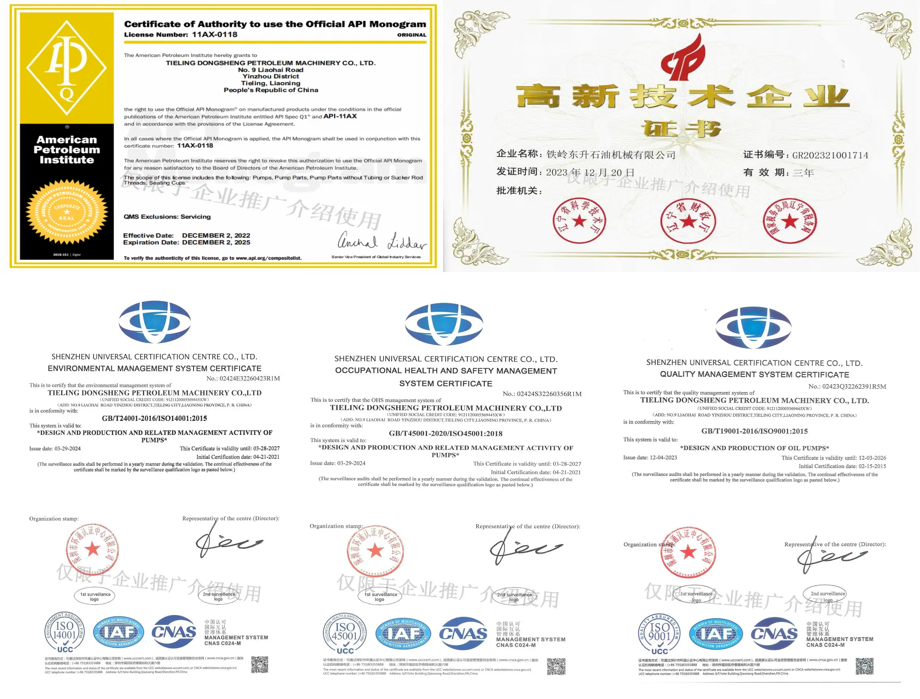
During an upcycle, supplier stability becomes a competitive advantage. API-11AX certification indicates traceability, controlled processes, and consistent machining standards, all of which reduce failure risk and procurement uncertainty. For oil rod pump buyers, the ability to maintain consistent specifications across multiple wells is crucial.
3. Match pump materials to actual well conditions
Material choice determines run life more than any other variable. Buyers should carefully assess:
Gas-to-liquid ratios.
Corrosive components like CO₂, H₂S, and organic acids.
Produced solids and abrasive content.
Required clearances and plunger-barrel pairing.
A well-specified oil rod pump withstands harsh conditions, minimizes pull frequency, and keeps maintenance costs predictable.
For buyers looking to mitigate these supply chain risks, partnering with vertically integrated manufacturers is key. An example of such capability is Tieling Dongsheng Petroleum Machinery, a well-established Chinese manufacturer of API-compliant sucker rod pumps and downhole components.
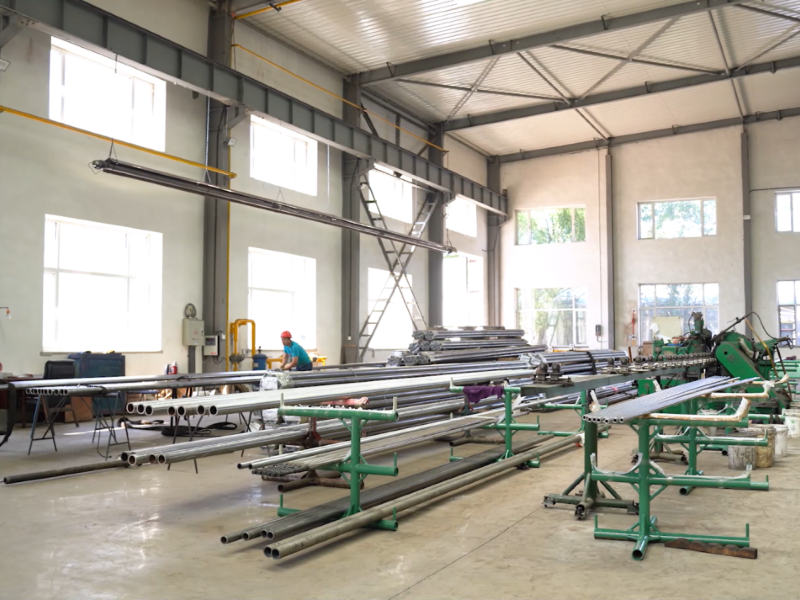
Founded in 2000, Dongsheng has developed into a vertically integrated operation focused on oil rod pump manufacturing. Its 20,000-square-meter facility employs more than one hundred staff, including a dedicated team of engineers responsible for product design, process development, and technical validation.
The company maintains a full suite of internationally recognized certifications — ISO 9001, ISO 14001, ISO 45001, and API 11AX — supported by documented measurement, traceability, and inspection procedures. These systems ensure consistency across machining, heat treatment, metallurgical testing, electroplating, coating, honing, and final assembly.
Dongsheng's manufacturing capacity reaches tens of thousands of pump assemblies per year. Its products are used in major domestic oilfields and in markets across the Middle East, North America, and Southeast Asia. As global well-work activity continues to climb, companies with established capabilities like Dongsheng illustrate how supply chains are preparing for higher demand for oil rod pumps in 2025 and beyond.