

Historically, rod pumps served as the primary equipment for downhole lifting in oilfield mechanized production systems. As the conditions in wells become more and more challenging, i.e. increasing proportions of sand-bearing, high-viscosity, steam-driven, and deep wells, it becomes obvious that the standard material limitations can't be taken for granted during long-term operations. Material upgrades for API type rod pump have been the subject of heated debates lately, with a wide range of topics such as wear and corrosion resistance of the upgraded materials.
Presence of high sand content along with frequent variations in pressure in the downhole have made it virtually inevitable for the pump barrel, plunger, and valve assembly to be the first parts to get worn-out in the aging oilfield blocks. After the sealing performance gets compromised, the lifting efficiency takes a hit, which in turn leads to more downhole operations and a longer operating window. For operators, deciding the durability of the equipment is no longer just a matter of solving a technical problem but it is also directly linked to the economics of their single well.
Material upgrades follow the changes of well conditions
Previously, it was understood that the use of conventional alloy steel was enough to cater to the operational requirements of the majority of light oil wells. However, in the case of heavy oil, steam-driven, and gas-bearing wells, the nature of the fluid media becomes more complex and temperature variations quite large, which is why simultaneous corrosion and erosion will be the main challenges. Few oilfields are already under the impression of any such combination of corrosion and erosion that results in the degradation of equipment, so they are prioritizing pump body materials and surface treatments as their next upgrade step. They expect the reengineering of materials to results in an extension of maintenance intervals thus reducing the number of tubing string trippings and saving the plant availability time.
On the other hand, the emerging API type rod pump is putting together wear-resistant coatings and special alloy structures for critical stress and friction areas. It is no secret that when a component like a plunger, pump barrel, or valve seat is subjected to wear, it is almost always treated by surface hardening; however, using such a strategy only for a single property of the component is a rather insufficient decision in nowadays qualification of either the corrosive environment or the long-lasting intervention.
Material requirements under the insert-type structure are even more rigorous
As opposed to the traditional integral method of tubing string tripping, insert-type sucker rod pumps may be introduced into the tubing together with the sucker rod and thus, there is no need to raise or lower the tubing for inspection or replacement.
The above-mentioned convenience, however, gives rise to the fact that the pump body, in the meantime, has to face higher load and more complex downhole environment during long-term operation. Even if the material's wear resistance is at an outstanding level, frequent replacements can over time deprive the structural design of its potential benefits. Thus, it goes without saying that one of the current major developmental thrusts of the API type rod pump is to upgrade the materials and surface treatments so as to promise a longer and stable operating cycle in sandy and high-viscosity media.
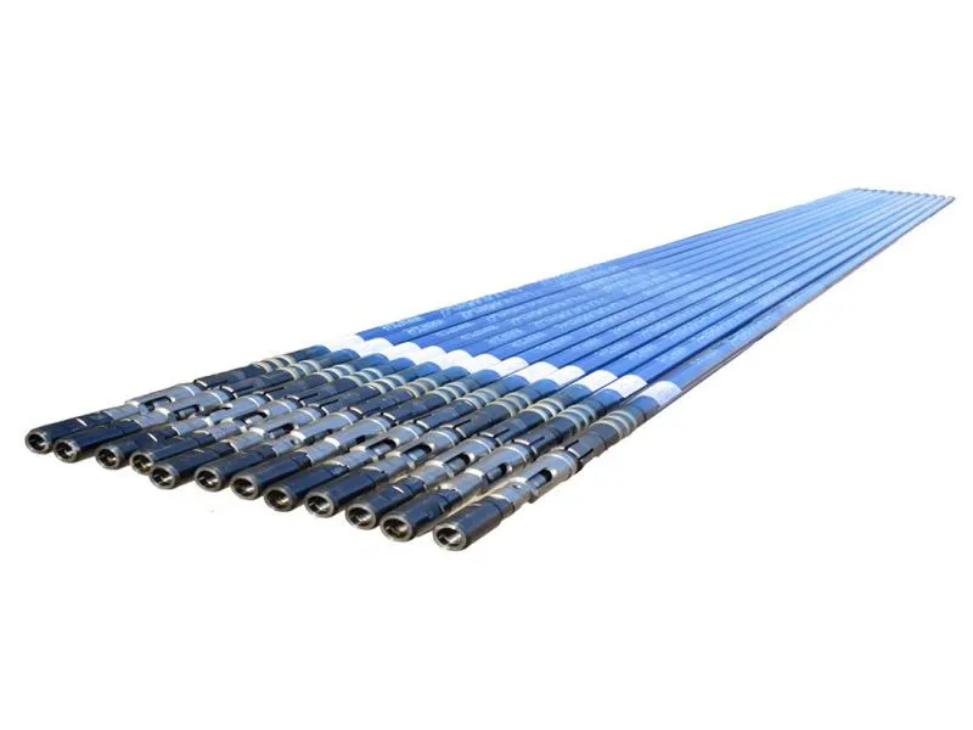
Modular Components Combined with Durability
Modern API type rod pumps structurally consist of a sucker rod, barrel, plunger, flow valve, inlet valve, and sand retainer ring, all arranged in a modular fashion. This allows the on-site replacement of wear parts to be done quickly, and it gives the user the flexibility to switch between different pump diameters. The sealing support joint can be exchanged for the tubing, so you do not have to reconfigure the tubing string each time you adjust the pump diameter. This is a key factor in maintaining low costs for maintenance.
The upgraded combination of the two: materials and the modular structure, hence, enables the pump to respond suitably to the condition of a deep and deviated well, and at the same time, maintain a longer operating cycle of a sand-producing well. Certain oilfields, based on their realization, tell of reaching a point, when picking up API type rod pump wear-resistant versions, which they trip in and out of the well significantly less often, downhole operation time is shortened, and the pressure on field dispatch is reduced.
Application Scope Continues to Expand
Now, these insertion-type API type rod pumps have been put into use in light oil wells, heavy oil wells, high-condensate oil wells, and steam-driven blocks, illustrating their ability to cope with well conditions that have severe sand production and large pressure fluctuations. They are designed according to the API and GB/T18607-2008 standards and are heavily utilized in domestic oilfields.
In terms of industry trend, oilfields are moving their attention from the equipment to the performance of the equipment. In the past, conversations mostly revolved around the costs of purchasing initially; now, focus is on the length of operating cycles, the frequency of operations, and how easy the maintenance is. Eventually, wear-resistant and corrosion-resistant materials will be the ones to define the difference between API type products on the market.
Against the backdrop of increasingly complex well conditions, the path for upgrading rod pump products is well defined—by strengthening the materials, optimizing the structures, and standardizing the designs, the chances of a well shutting down unexpectedly are minimized, thus making one-well operation more manageable. This is rapidly becoming a significant factor in decision-making for multiple oilfields.