

Introduction: The Lifeline of Artificial Lift Systems
In the global oil and gas industry, the quest for cost-effective and reliable extraction is unending. As reservoirs age and natural pressure declines, the need for robust artificial lift systems becomes paramount. Among the various methods, the Sucker Rod Pump (often referred to as an Oil Rod Pump) stands as the most enduring and widely utilized technology.
For B2B buyers—ranging from large-scale importers and wholesalers to OEM brand owners—selecting the right pump is not just a procurement task; it is a strategic decision that impacts the entire lifecycle of an oil well. This comprehensive guide explores the technical intricacies, selection criteria, and operational excellence of API 11AX standard sucker rod pumps, drawing on the industry-leading expertise of DS Rod Pump.
1. What is a Sucker Rod Pump? Understanding the Concept
A Sucker Rod Pump is a reciprocating positive displacement pump. It is the "downhole heart" of the beam pumping system. Its primary function is to mechanically lift crude oil from the bottom of the well to the surface.
The system consists of three main parts:
The Surface Unit (Pump Jack): Provides the reciprocating motion.
The Rod String: Transmits power from the surface to the downhole pump.
The Downhole Pump: The actual Oil Rod Pump that displaces the fluid.
The beauty of this technology lies in its simplicity. By utilizing a plunger, a barrel, and two check valves (the standing valve and the traveling valve), the pump creates a pressure differential that forces oil upward during each stroke.
2. Technical Superiority: Why API 11AX Standards Matter
When we discuss professional-grade oil extraction, "Standard" is the keyword. At DS Rod Pump, our products are engineered to exceed API Spec 11AX requirements. This ensures global interchangeability, safety, and predictable performance.
Premium Metallurgy and Material Science
The durability of an Oil Rod Pump depends entirely on its resistance to the downhole environment. We offer specialized materials:
Barrels: Available in carbon steel, alloy steel, and stainless steel. For corrosive environments involving H2S or CO2, we utilize chrome plating or nickel-carbide coatings to extend service life by up to 300%.
Plungers: We use spray-metal (SM) coatings and hardened steel to ensure the plunger maintains a tight seal against the barrel even under high-pressure conditions.
Valve Balls and Seats: Sourced from high-performance materials like Tungsten Carbide, Stellite, and Ceramic to prevent "washout" in high-sand or corrosive wells.
Precision Engineering Features
Optimal Clearance: Our plungers are machined to tolerances of 0.001 inches. This precision minimizes "slippage" (fluid leaking back past the plunger), maximizing volumetric efficiency.
Valve Cage Design: Engineered for high-flow capacity, reducing fluid turbulence and preventing gas interference.
3. The Buyer's Perspective: Quick Answers to Critical Concerns
As a procurement manager or wholesaler, you have specific questions. Here are the concise answers:
Q: How do I ensure compatibility with existing systems?
A: Ensure the pump follows API 11AX codes (e.g., RHAM, TH). These are universally compatible with standard rod strings and tubing.
Q: What is the lead time for OEM branding?
A: Standard lead times for OEM orders typically range from 4 to 8 weeks, depending on the complexity of the metallurgy.
Q: Is it suitable for deep wells?
A: Yes. By selecting "Heavy Wall" barrels (RH series), the Sucker Rod Pump can operate efficiently at depths exceeding 8,000 feet.
Q: How do you handle high-sand content?
A: Use a "Stationary Barrel, Bottom Anchor" design with specialized sand-control plungers and Tungsten Carbide valves.
4. Scenario Analysis: Solving Downhole Pain Points
Different oil fields present unique challenges. Choosing an Oil Rod Pump requires matching the pump type to the "pain point."
Scenario A: High Gas Interference (Gas Lock)
In gassy wells, gas can get trapped between the valves, preventing them from opening.
Solution: Use a short-stroke, high-compression ratio pump. DS Rod Pumps specialized valve cages reduce the "dead space" between valves, forcing gas through the traveling valve even at low pressures.
Scenario B: Corrosive Environments (H2S/CO2)
Standard carbon steel will fail within weeks in sour wells.
Solution: Specify Stainless Steel barrels with chrome plating and Monel or Ceramic valve components.
Scenario C: High Viscosity Heavy Oil
Thick oil creates massive drag on the rod string.
Solution: Use a Tubing Pump (TH type). These have larger bores than insert pumps, allowing for a wider flow path and reducing friction.
5. Selection Essentials: How to Choose the Right Pump Type
Choosing the right Sucker Rod Pump involves understanding the two main categories:
I. Insert (Rod) Pumps (RHAM, RHBM, RWA, RWB)
These are completely assembled at the surface and lowered into the tubing on the sucker rod.
Advantages: They are easy to service. To replace the pump, you only need to pull the rod string, not the tubing.
Best For: Deep wells where workover costs for pulling tubing are prohibitive.
II. Tubing Pumps (TH)
The barrel is connected directly to the tubing string, and the plunger is lowered on the rods.
Advantages: They have the largest possible bore for a given tubing size, meaning they can move more fluid than any other pump type.
Best For: High-production, shallow-to-medium depth wells.
6. Technical Parameter Suggestions for B2B Buyers
To get an accurate quote and ensure performance, buyers should provide the following parameters:
Pump Bore Size: Ranging typically from 1.06" to 3.75".
Barrel Type: Heavy Wall (RH) for high pressure; Thin Wall (RW) for lower pressure.
Seating Type: Top Anchor (prevents sand accumulation) or Bottom Anchor (better for deep wells).
Stroke Length: Ensure the barrel length is at least 2 feet longer than the surface unit’s maximum stroke to prevent "hitting the bottom."
7. Common Mistakes in SRP Procurement and Maintenance
Even the best Oil Rod Pump will fail if these mistakes are made:
Ignoring Plunger Clearance: In high-temperature wells, metals expand. If the clearance is too tight, the plunger will seize. Always specify downhole temperature.
Mismatched Metallurgy: Using cheap materials in corrosive wells is a "false economy." The cost of a single workover to replace a failed pump far exceeds the price of a premium chrome-plated barrel.
Improper Storage: Rod pumps are precision instruments. Storing them on the ground without support can cause the barrel to bend slightly, leading to rapid wear during operation.
Failure to Account for Rod Stretch: In deep wells, the sucker rods stretch. If the pump barrel is too short, the plunger may exit the barrel or strike the seating nipple.
8. Why Partner with DS Rod Pump? (Professional Credibility)
With decades of experience in the heart of oil country, DS Rod Pump has established itself as a beacon of authority in the artificial lift sector. Our manufacturing process integrates:
Full Traceability: Every Sucker Rod Pump comes with a material test report (MTR) ensuring API compliance.
Advanced Testing: Every valve is vacuum tested, and every barrel is checked for straightness using laser alignment.
OEM Flexibility: We understand that wholesalers need unique branding and customized packaging for international shipping.
FAQ
Q1: What is the difference between an RHAM and an RHBM pump?
A: Both are Heavy Wall, Stationary Barrel Insert Pumps. The "A" in RHAM stands for Top Anchor (best for sandy wells), while the "B" in RHBM stands for Bottom Anchor (best for deep wells, as it prevents the barrel from breathing).
Q2: Can your Sucker Rod Pump handle horizontal wells?
A: Yes. However, we recommend using rod guides and sinker bars in the rod string to minimize wear on the tubing and the Oil Rod Pump barrel in the curved sections of the well.
Q3: How do I identify a genuine API 11AX pump?
A: Genuine pumps will be stamped with the API monogram, the manufacturer's license number, and a unique serial number that matches the provided certification documents.
Q4: Do you provide specialized packaging for sea freight?
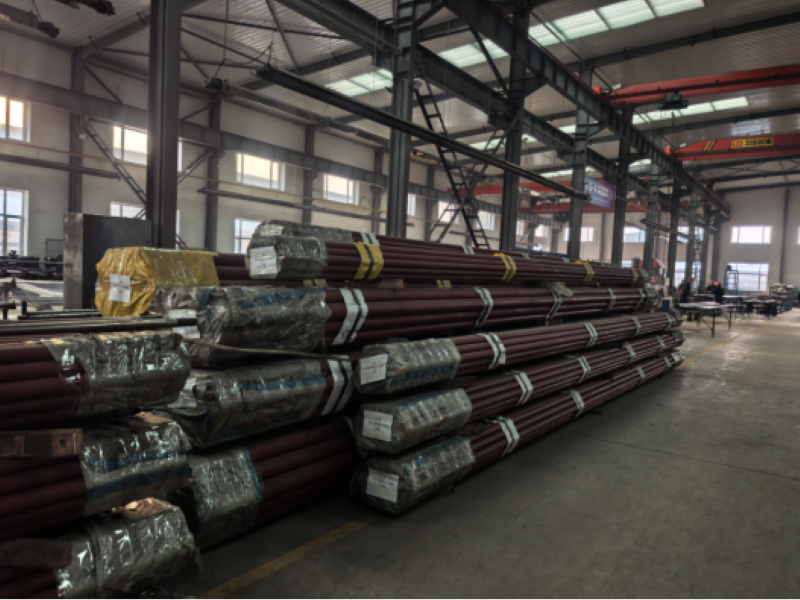
A: Absolutely. We use vacuum-sealed plastic sleeves and reinforced wooden crates to prevent rust and physical damage during long-distance transit.
Conclusion: Maximizing ROI Through Technical Excellence
The Sucker Rod Pump remains the backbone of global oil production because of its adaptability and efficiency. For the B2B buyer, success lies in the details—matching the metallurgy to the well chemistry and the pump type to the production volume.
By choosing an API-standard Oil Rod Pump from a trusted manufacturer like DS Rod Pump, you are ensuring that your clients receive a product that minimizes downtime, maximizes drawdown, and delivers a superior return on investment. Whether you are dealing with heavy oil, corrosive gases, or extreme depths, the right engineering choice today prevents the costly failures of tomorrow.