

Separate Layer Production Pump vs Conventional Rod Pump
In oilfield artificial lift systems, choosing the right pumping method directly affects production efficiency, reservoir management, and long-term operating costs.
Two commonly used systems are:
Conventional rod pump.
This article compares both systems in terms of structure, performance, and application scenarios.
1. What is a Conventional Rod Pump?
A conventional rod pump is a traditional artificial lift system that uses a sucker rod string to drive a downhole pump.
Key characteristics:
Produced from one reservoir zone.
Simple structure and easy maintenance.
Widely used in conventional oil wells.
Limited adaptability in complex reservoirs.
It works best in single-layer, stable pressure wells.
2. What is a Separate Layer Production Pump?
A separate layer production pump is designed for multi-zone oil wells, enabling independent production from different reservoir layers within the same wellbore.
Key characteristics:
Produced from multiple reservoir layers
Uses isolation systems to prevent fluid mixing
Controls each zone separately
Suitable for complex reservoir conditions
It is mainly used in mature, heterogeneous, or multi-layer oilfields.
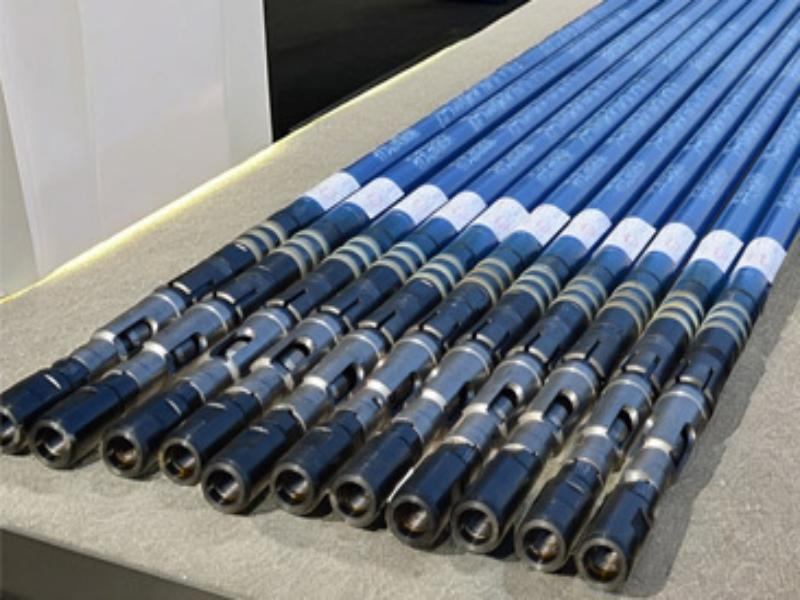
3. Structure Comparison (Visual Understanding)
Conventional Rod Pump Structure
Surface
│
│ Rod String
│
▼
Single Pump
│
Single Reservoir Zone
One production path
No layer separation
Separate Layer Production Pump Structure
Surface
│
│ Tubing System
│
┌───────────────┐
│ Upper Layer │ ← Oil Zone
└──────┬────────┘
│ Isolation System
┌──────┴────────┐
│ Lower Layer │ ← Water/Oil Zone
└───────────────┘
Multiple production zones
Independent flow control
Layer isolation prevents interference
4. Performance Comparison
| Feature | Separate Layer Pump | Conventional Rod Pump |
| Production zones | Multiple | Single |
| Crossflow control | Yes | No |
| Reservoir adaptability | High | Low |
| Water management | Advanced | Limited |
| Efficiency in mature wells | High | Low |
| aintenance complexity | Medium | Low |
5. Application Scenarios
Conventional Rod Pump is suitable for:
Single-layer oil reservoirs.
Stable pressure wells.
Low-complexity production conditions.
Shallow to medium-depth wells.
Separate Layer Production Pump is suitable for:
Multi-layer reservoirs.
Mature oilfields with declining pressure.
High water cut oilfields.
Offshore or high-cost wells.
Reservoirs requiring selective production.
6. Key Difference: Crossflow Problem
One of the biggest issues in multi-zone wells is crossflow.
What is crossflow?
It happens when fluid from a high-pressure layer flows into a low-pressure layer.
Results:
Oil dilution by water.
Reduced recovery efficiency.
Reservoir damage risk.
Conventional rod pumps cannot solve this.
Separate layer production pumps are specifically designed to eliminate this issue.
7. Which One Should You Choose?
Choose Conventional Rod Pump if:
Your well has a single production zone.
Reservoir conditions are stable.
You prioritize low cost and simplicity.
Choose Separate Layer Production Pump if:
Your well has multiple reservoir layers
You face high water cut problems
You need to improve recovery in mature fields
You want to maximize production from existing wells
8. Industry Trend
Modern oilfield development is shifting from:
single-zone production → multi-zone optimization
Key drivers:
Mature oilfield redevelopment
Cost reduction (avoid drilling new wells)
Improved reservoir efficiency
Digital and precision production systems
This makes separate layer production systems increasingly important.
9. Conclusion
The difference between the two systems is not only structural, but also strategic:
Conventional rod pump → simple, single-zone production
Separate layer production pump → advanced multi-zone reservoir optimization
For complex oilfields, the separate layer system provides significantly higher production efficiency and better reservoir control.
Need Help Selecting the Right Pump for Your Oil Well?
Every reservoir has different pressure, fluid, and layering conditions.
We provide:
Multi-zone production design solutions.
Pump selection based on well data.
Engineering support for complex reservoirs.
Contact us with your well parameters to get a customized solution.