
Get the latest price? We will reply as soon as possible (within 12 hours)

News

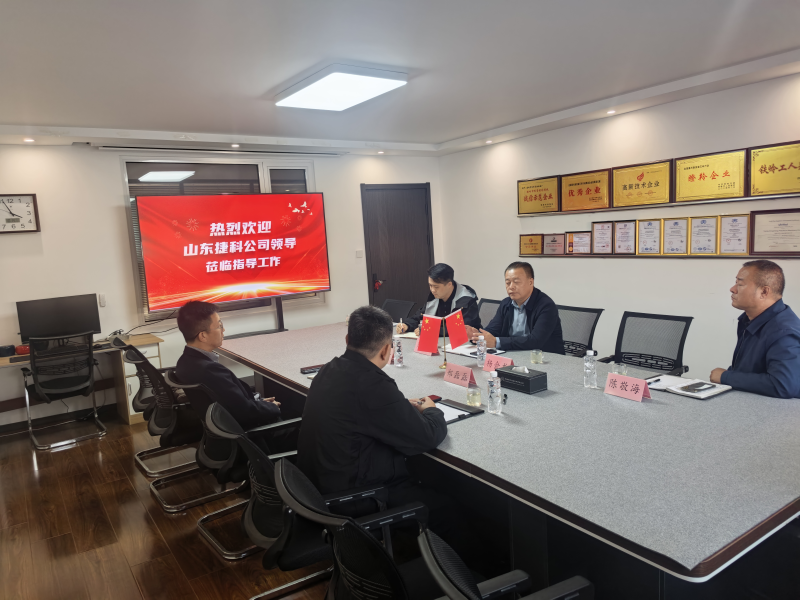
  • SLB Company Leaders Visit Our Company for Inspection and Exchange
    11-14/2025
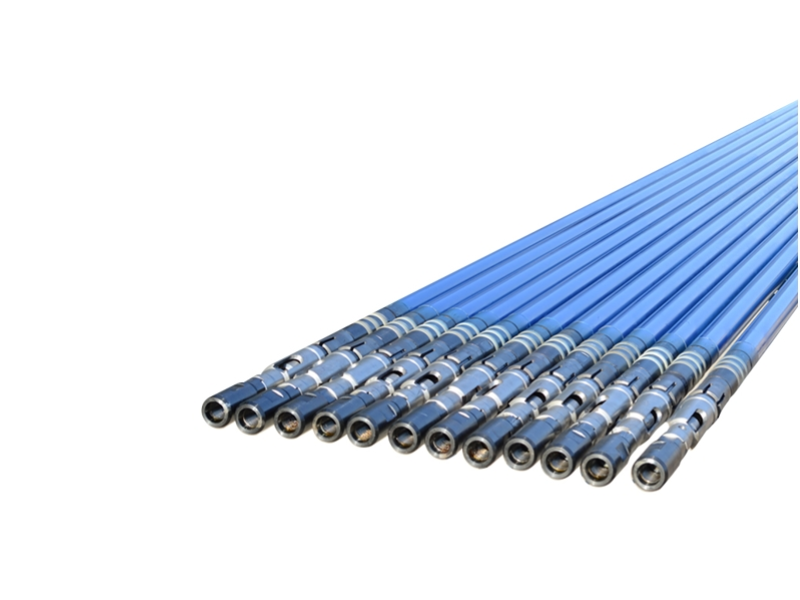
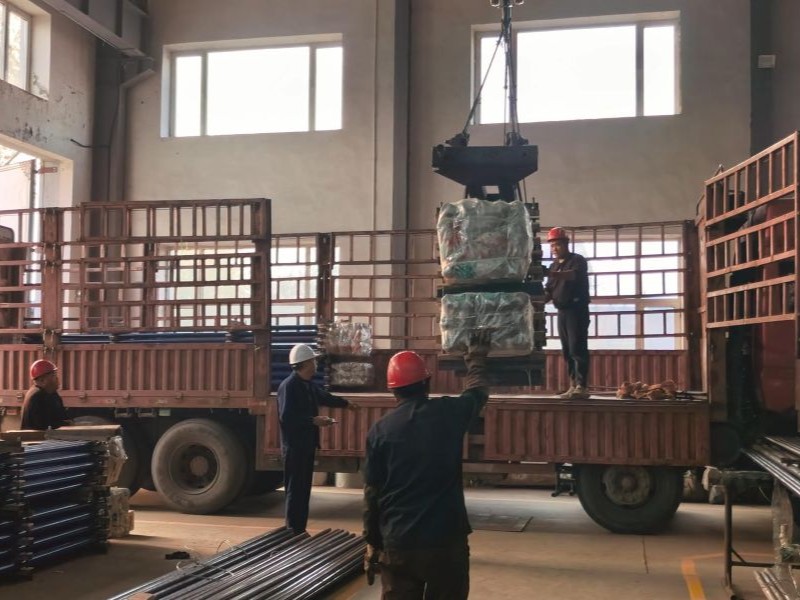
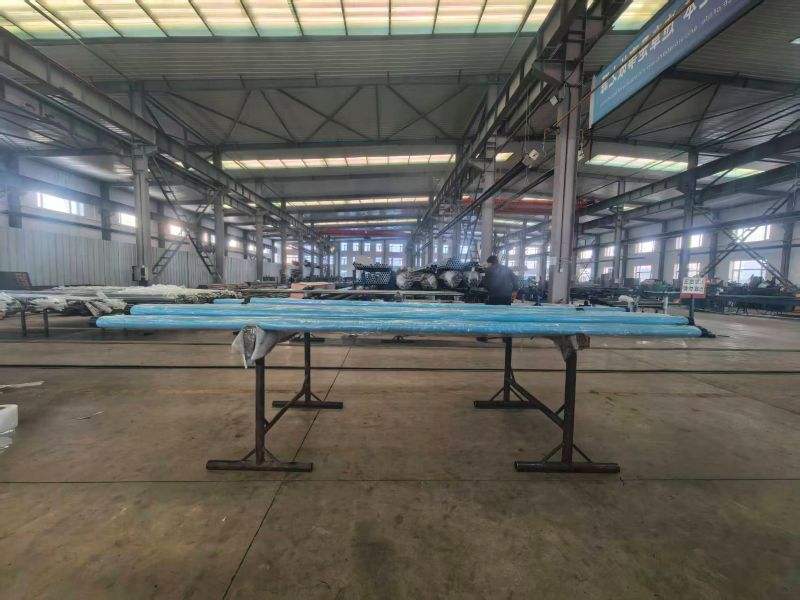
    Recently, a delegation from SLB Company visited our company for technical exchanges and on-site inspections. Our company has long been deeply involved in the oilfield services sector, primarily engaged in the research, development, production, and technical services of sucker rod pumps, special sucker rod pumps, and related accessories. This visit was an important step for both parties to further strengthen understanding and explore cooperation opportunities.
  • Oil Rod Pump Supplier: How to Evaluate
    07-18/2026
    Introduction Choosing a supplier for downhole pump equipment is a decision with consequences that extend well beyond the invoice. A poorly qualified vendor does not just deliver a product that fails to meet specification — they deliver that product to a location 2,000 meters underground, where the cost of correcting the problem starts at a five-figure workover and rises from there. For anyone sourcing an oil rod pump for oilfield operations, the evaluation of the supplier who manufactures it is as technically important as the specification of the pump itself.
  • Oil Rod Pump API 11AX: Buyer's Guide
    07-17/2026
    Introduction When you request a quote from a manufacturer, review a purchase order, or compare two downhole pumps on a datasheet, the most important string of characters you will encounter is a designation code that looks something like this: 25-175 RHBC-12-4-2-2. That sequence is not a model number or a product name — it is a standardized technical language defined by API Specification 11AX, the governing standard for every subsurface oil rod pump manufactured for oilfield service.
  • How to Buy Oil Rod Pump from China
    07-16/2026
    Introduction China is the world's largest manufacturer of oil rod pumps. Major oilfield operators including PetroChina, Sinopec, and international service companies have sourced downhole pump equipment from Chinese manufacturers for decades — not because it is the cheapest option on the market, but because the combination of manufacturing scale, API certification availability, and supply chain depth makes China a competitive source for this category of equipment at nearly every volume level.
  • Sucker Rod Pump Sizing: Step-by-Step
    07-15/2026
    Introduction Of all the engineering decisions in a rod lift installation, pump sizing carries the highest consequence for both production performance and equipment life. Size the sucker rod pump too small and the well underproduces — the reservoir delivers more fluid than the pump can lift, the fluid level rises, and you are leaving recoverable barrels in the ground. Size it too large, and the pump empties the wellbore faster than the reservoir can refill it, causing fluid pound that damages the rod string and valves with every stroke, running up workover costs that quickly dwarf any production gain.
  • How Long Does a Sucker Rod Pump Last?
    07-14/2026
    Introduction It is one of the most practical questions in rod lift operations — and one that rarely gets a straight answer. How long does a sucker rod pump actually last before it needs to be pulled, repaired, or replaced? The honest answer is: anywhere from 90 days to more than four years, depending on the well. That range is not a deflection — it reflects the real operational data from thousands of producing wells across the Permian Basin, the Middle East, South Asia, and China. In a clean, low-GOR, low-sand vertical well with properly matched equipment, a well-built pump running within design parameters can deliver well over 1,000 days of continuous service. In a deviated, sand-producing, corrosive well with the wrong pump specification, that same calendar year could see two or three workovers — each one costing upward of $90,000.
  • Sucker Rod Pump Corrosion: Prevention Tips
    07-12/2026
    Introduction Corrosion is the silent enemy of artificial lift systems. Unlike sand wear — which leaves visible scratches and measurable dimensional changes — or gas lock — which announces itself through dynamometer card anomalies — corrosion often progresses invisibly until a component fails suddenly and without the warning signs that allow proactive intervention.
  • Sucker Rod Pump Parts: What Wears First?
    07-11/2026
    Introduction Every sucker rod pump put into service begins a countdown. From the moment it starts cycling downhole — typically between 6 and 20 strokes per minute, 24 hours a day — its components are accumulating wear, fatigue, and corrosion damage at rates determined by the well conditions they're operating in. For production engineers and operations teams, understanding which parts wear fastest, why they wear in specific patterns, and what can be done to extend their service life is not academic knowledge. It is the practical foundation of artificial lift cost management.
  • How to Buy Sucker Rod Pump from China
    07-10/2026
    Introduction The decision to source sucker rod pumps from China is one that more international oilfield equipment buyers are making — and for reasons that go well beyond cost. China is now home to some of the most technically advanced sucker rod pump manufacturers in the world, holding full API 11AX certification, supplying equipment to CNPC, Sinopec, Weatherford, and SLB, and running production facilities that output tens of thousands of units annually with documented quality management systems.
  • OEM Sucker Rod Pump: What You Can Customize and How to Work With a Manufacturer
    07-09/2026
    Introduction The phrase "OEM sucker rod pump" gets used loosely in the oilfield equipment market — sometimes to describe a straightforward private-label arrangement, sometimes to describe deep engineering collaboration, and sometimes, frankly, to describe nothing more than a rebadged standard catalog product. For buyers who actually need customized downhole pump equipment — distributors building proprietary product lines, E&P operators specifying non-standard well conditions, engineering firms designing lift solutions for challenging reservoirs — understanding what genuine OEM customization means, what it realistically covers, and what it requires from both parties is the difference between a sourcing strategy that works and one that disappoints.