

1. Introduction
Deep oil well production presents significantly greater challenges than conventional shallow well operations. As well depth increases, oilfield operators must deal with higher rod loads, greater friction, gas interference, tubing wear, elevated temperatures, and more complex production conditions.
Under these operating environments, selecting the wrong rod pump system can lead to:
Frequent rod failures
Pump leakage
Excessive tubing wear
Reduced production efficiency
Short pump inspection cycles
Increased maintenance costs
Unexpected production shutdowns
For oilfield engineers and operators, proper rod pump selection is not simply about choosing a pump size. It requires a complete engineering evaluation of well conditions, production targets, downhole fluid properties, and long-term operational stability.
This guide explains how to select the right rod pump for deep oil well applications, including pump types, key selection factors, common failure mechanisms, material selection, optimization strategies, and engineering considerations for improving pump lifespan and production efficiency.
2. What Is Considered a Deep Oil Well?
In oilfield engineering, a deep oil well generally refers to a well with significant vertical depth and increased mechanical load requirements.
Although standards may vary by region and operator, deep wells commonly include:
| Well Classification | Approximate Depth |
| Shallow well | Less than 3,000 ft |
| Medium-depth well | 3,000–6,000 ft |
| Deep well | More than 6,000 ft |
| Ultra-deep well | More than 12,000 ft |
As depth increases, the artificial lift system experiences:
Higher tensile load
Greater rod string stress
Increased friction
Larger pressure differential
More severe downhole temperature conditions
These factors directly affect rod pump system design and equipment selection.
3. Why Deep Wells Require Specialized Rod Pump Design
Deep wells create operating conditions that are substantially more demanding than shallow production wells.
A conventional rod pump designed for moderate depth may experience rapid failure when installed in deep well applications.
Several engineering challenges make deep well pump selection critical.
3.1 Increased Rod Load
The deeper the well, the heavier the rod string becomes.
This creates:
Higher tensile stress
Increased fatigue loading
Greater polished rod load
More gearbox torque requirements
Improper rod design can lead to rod breakage and reduced system efficiency.
3.2 Tubing Wear
Rod string movement inside tubing generates friction during reciprocating motion.
In deep wells, tubing wear becomes more severe because of:
Longer rod travel distance
Increased rod weight
Higher side loading
Deviated well trajectories
This may result in tubing leaks and costly workovers.
3.3 Gas Interference
Deep wells often contain large volumes of associated gas.
Excessive gas entering the pump can cause:
Pump gas locking
Reduced pump fillage
Lower volumetric efficiency
Production instability
Gas management is therefore an important selection factor.
3.4 High Temperature Environment
Deep reservoirs commonly have elevated downhole temperatures.
High temperature affects:
Seal performance
Valve stability
Material expansion
Lubrication efficiency
Corrosion rate
Special materials and coatings are often required.
3.5 Sand and Abrasive Production
Many deep wells produce formation sand.
Sand causes:
Plunger wear
Barrel scoring
Valve damage
Reduced pump efficiency
Sand-resistant pump configurations are critical in these environments.
4. Understanding Deep Well Rod Pump Systems
A deep well rod pump system is a reciprocating artificial lift system designed to operate under high-load and high-pressure conditions.
The complete system includes:
Surface pumping unit
Prime mover
Gear reducer
Sucker rod string
Downhole rod pump
Tubing system
Surface control equipment
The system converts rotary motion into reciprocating motion to lift crude oil from underground reservoirs.
5. Main Types of Rod Pumps Used in Deep Oil Wells
Choosing the proper pump type is one of the most important engineering decisions.
5.1 Tubing Pump
Tubing pumps are commonly used in deep, high-production wells.
Characteristics:
Pump barrel connected directly to tubing
Large diameter capability
Better structural stability
Higher production capacity
Advantages:
Suitable for deeper wells
Better volumetric efficiency
Stronger load capacity
Limitations:
Requires pulling tubing during maintenance
Best for:
Deep conventional oil wells
High fluid production wells
Stable long-term production
5.2 Rod Pump (Insert Pump)
Rod pumps are installed inside tubing and can be removed without pulling tubing.
Advantages:
Easier maintenance
Faster pump replacement
Lower workover cost
Limitations:
Smaller pump diameter
Lower production capability
Best for:
Wells requiring frequent pump servicing
Moderate production applications
5.3 Heavy-Duty Rod Pumps
Heavy-duty configurations are specifically designed for harsh deep well environments.
Features include:
Reinforced barrels
Hardened plungers
High-load valve systems
Enhanced wear resistance
Best for:
High-depth wells
High-load applications
Corrosive environments
6. Key Factors When Choosing a Rod Pump for Deep Oil Wells
This section is the core of deep well rod pump selection.
6.1 Well Depth
Well depth directly affects:
Rod weight
Pump load
Stress distribution
Torque requirements
Deeper wells require:
Stronger rod materials
Optimized rod taper design
Enhanced pump durability
As depth increases, improper rod selection dramatically increases fatigue failure risk.
6.2 Production Rate
Production target determines:
Pump diameter
Stroke length
Pump displacement
Pumping speed
Oversized pumps may cause:
Fluid pound
Increased energy consumption
Premature wear
Undersized pumps reduce production efficiency.
6.3 Fluid Viscosity
High-viscosity crude oil increases flow resistance.
Viscous fluids require:
Larger pump clearance
Lower stroke speed
Enhanced valve sealing
Increased pump torque
Fluid analysis is essential before selecting pump configuration.
6.4 Gas Content
Gas production significantly affects pump performance.
Excessive gas causes:
Pump gas lock
Reduced pump fillage
Production fluctuations
Solutions include:
Gas separators
Proper pump setting depth
Reduced stroke speed
Optimized intake design
6.5 Sand Content
Sand production is one of the leading causes of deep well pump failure.
High sand conditions require:
Sand-resistant plungers
Hardened barrels
Improved valve design
Lower pump speed
Proper pump selection can greatly reduce abrasive wear.
6.6 Temperature Conditions
Deep reservoirs may exceed high operating temperatures.
Temperature affects:
Material expansion
Seal degradation
Valve wear
Corrosion rate
Special alloys and heat-resistant coatings improve reliability.
6.7 Corrosion Environment
Produced fluids may contain:
H₂S
CO₂
Chlorides
Saline water
Corrosion-resistant materials are often necessary.
Common options include:
Nickel alloy coatings
Chrome-plated barrels
Stainless steel components
6.8 Well Deviation
Highly deviated wells increase side loading and friction.
Problems include:
Rod wear
Tubing wear
Increased power consumption
Special rod guides and optimized pumping speeds help reduce wear.
7. Rod String Design for Deep Wells
Rod string design is one of the most critical aspects of deep well artificial lift engineering.
7.1 Tapered Rod String Design
Deep wells commonly use tapered rod strings.
Benefits:
Better stress distribution
Reduced fatigue loading
Lower rod breakage risk
Typical materials:
Grade C steel
Grade D steel
High-strength alloy rods
7.2 Rod Load Calculation
Rod load depends on:
Fluid load
Rod weight
Acceleration force
Friction load
Accurate load analysis improves pump reliability.
7.3 Fatigue Resistance
Deep wells create cyclic loading conditions.
Fatigue-resistant rods improve:
Service life
Operational stability
Inspection cycle length
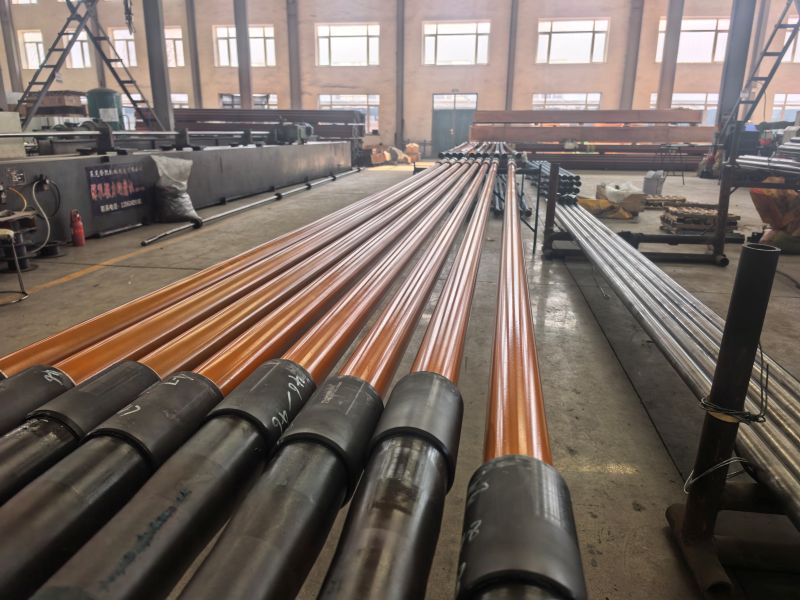
8. Pump Barrel and Plunger Selection
Pump efficiency depends heavily on barrel and plunger design.
8.1 Chrome-Plated Barrels
Advantages:
High hardness
Excellent wear resistance
Improved corrosion resistance
Widely used in deep well applications.
8.2 Hardened Plungers
High-strength plungers improve:
Seal stability
Wear resistance
Production consistency
8.3 Clearance Selection
Plunger clearance affects:
Pump leakage
Friction
Efficiency
Proper clearance must consider:
Temperature expansion
Fluid viscosity
Sand conditions
9. Common Deep Well Rod Pump Failures
Understanding failures helps optimize pump selection.
9.1 Rod Breakage
Causes:
Excessive load
Corrosion fatigue
Improper rod taper design
9.2 Pump Leakage
Caused by:
Valve wear
Poor sealing
Barrel damage
9.3 Tubing Wear
Often caused by:
Rod friction
Well deviation
Improper rod guiding
9.4 Gas Locking
Occurs when excessive gas prevents proper pump filling.
9.5 Valve Failure
Caused by:
Sand erosion
High impact loading
Corrosion
10. How to Improve Rod Pump Lifespan in Deep Wells
Long pump life is essential for reducing workover cost.
10.1 Optimize Pump Speed
Excessive speed increases:
Rod stress
Friction
Valve impact
Moderate speed improves stability.
10.2 Use Proper Materials
Material upgrades significantly improve durability.
Examples:
Alloy steel rods
Ceramic-coated plungers
Chrome barrels
10.3 Reduce Sand Production
Sand control methods:
Screens
Gravel packing
Optimized production rate
10.4 Regular Monitoring
Monitoring includes:
Dynamometer analysis
Load monitoring
Fluid level analysis
Predictive maintenance reduces failure risk.
11. Deep Well Rod Pump vs ESP Systems
Both systems are widely used in artificial lift applications.
Rod Pump Advantages
Lower operating cost
Easier maintenance
Better for moderate production
Strong reliability
ESP Advantages
Higher production capability
Better for ultra-deep wells
Higher flow rates
Rod Pump Limitations
Limited production volume
Mechanical wear issues
ESP Limitations
High installation cost
Sensitive to gas and solids
12. Material Selection for Deep Well Applications
Material quality strongly affects pump lifespan.
Common Materials
| Component | Common Material |
| Rod | Alloy steel |
| Barrel | Chrome-plated steel |
| Plunger | Hardened alloy |
| Valve | Hardened alloy |
Coating Technologies
Advanced coatings improve:
Wear resistance
Corrosion resistance
Heat resistance
13. Maintenance Strategies for Deep Well Rod Pumps
Proper maintenance extends operational life.
Preventive Maintenance
Includes:
Routine inspections
Lubrication checks
Rod alignment analysis
Predictive Maintenance
Uses:
Dynamometer cards
Sensor monitoring
Production analysis
Failure Analysis
Failure trend analysis helps:
Reduce downtime
Improve selection strategy
Optimize future operations
14. Future Trends in Deep Well Rod Pump Technology
Modern artificial lift systems are evolving toward:
Smart oilfield integration
Remote monitoring
Automated optimization
High-strength composite rods
AI-based predictive maintenance
These technologies improve:
Production efficiency
Failure prediction
Energy consumption optimization
15. FAQ
What is the best rod pump for deep oil wells?
Tubing pumps and heavy-duty rod pumps are commonly preferred for deep well applications because of their higher load capacity and improved stability.
How deep can a rod pump operate?
Rod pumps are widely used in medium-depth and deep wells, depending on rod design, pumping unit capacity, and production conditions.
What causes rod pump failure in deep wells?
Common causes include rod fatigue, tubing wear, gas interference, corrosion, sand erosion, and improper pump selection.
Which is better for deep wells: rod pump or ESP?
Rod pumps are better for stable moderate production with lower operating costs, while ESP systems are preferred for very high-volume production.
How can the rod pump's lifespan be extended?
Proper material selection, optimized pumping speed, regular maintenance, and effective sand control significantly improve lifespan.
Selecting the right rod pump for deep oil wells requires a complete understanding of well conditions, production targets, fluid characteristics, and mechanical loading requirements.
A properly engineered rod pump system improves:
Production efficiency
Operational reliability
Equipment lifespan
Maintenance cycle stability
For deep well applications, successful pump selection depends not only on pump type, but also on rod design, material quality, corrosion resistance, gas management, and long-term maintenance strategy.
As oilfield operations continue moving toward deeper and more challenging reservoirs, optimized deep well rod pump systems will remain one of the most important artificial lift solutions in modern oil production.