

Introduction
In the global oil and gas industry, artificial lift systems are essential for maintaining crude oil production after reservoir pressure declines. Among all artificial lift technologies, the terms Beam Pump and Rod Pump are frequently mentioned together. However, many international buyers, distributors, and even new oilfield engineers often confuse these two concepts.
Common questions include:
Is a beam pump the same as a rod pump?
Which artificial lift system is better for mature oilfields?
What are the advantages of a Rod Pump compared with other lifting methods?
How do I choose the correct Rod Pump for my oil well?
In reality, the Beam Pump and Rod Pump are closely related, but they are not exactly the same thing.
A Beam Pump usually refers to the surface pumping unit — the large “nodding donkey” visible above ground.
A Rod Pump typically refers to the complete downhole reciprocating artificial lift system, including the sucker rods, plunger, barrel, traveling valve, and standing valve.
Understanding this distinction is extremely important for:
Oilfield procurement teams
Artificial lift distributors
EPC contractors
Oilfield service companies
OEM buyers
International importers
This article provides a detailed technical comparison between Beam Pumps and Rod Pumps, while also explaining the structure, working principles, advantages, limitations, application scenarios, selection methods, and purchasing considerations of modern API-standard Rod Pump systems.
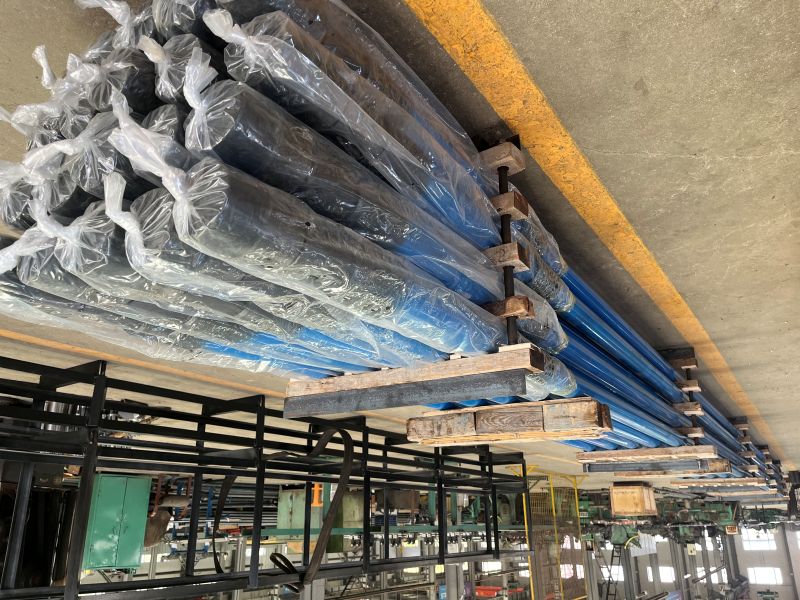
Understanding the Basic Definitions
What Is a Beam Pump?
A Beam Pump refers to the surface mechanical pumping unit used in oil production.
It is the visible structure located above the wellhead and typically consists of:
Walking beam
Horsehead
Gear reducer
Counterweights
Crank arms
Prime mover (motor or diesel engine)
The Beam Pump converts rotary motion into reciprocating vertical motion, driving the sucker rod string up and down.
Because of its characteristic nodding movement, it is commonly called:
Nodding donkey
Pumpjack
Horsehead pump
Beam Pumps are widely used in conventional onshore oilfields around the world.
What Is a Rod Pump?
A Rod Pump refers to the downhole positive displacement pumping system driven by sucker rods.
The Rod Pump system includes:
Pump barrel
Plunger
Traveling valve
Standing valve
Sucker rod string
Surface drive system
Its primary function is to lift crude oil from the reservoir to the surface when natural reservoir pressure is insufficient.
In practical oilfield terminology, many operators use “Rod Pump” to describe the entire sucker rod pumping system.
Beam Pump vs Rod Pump: What Is the Real Difference?
Although the two terms are related, they refer to different parts of the artificial lift system.
Quick Comparison Table
| Item | Beam Pump | Rod Pump |
| Definition | Surface pumping unit | Downhole pumping system |
| Main Function | Converts rotary motion into reciprocating motion | Lifts fluid from reservoir to surface |
| Installation Location | Above ground | Inside the wellbore |
| Core Components | Walking beam, crank, motor, gearbox | Barrel, plunger, valves, sucker rods |
| Primary Role | Mechanical drive system | Fluid displacement system |
| Visibility | Visible above surface | Installed downhole |
| API Standard | API 11E | API 11AX |
| Main Maintenance Area | Mechanical structure | Pump internals and rod string |
| Typical Failure Modes | Gear wear, motor issues | Valve leakage, plunger wear |
| Operational Importance | Provides movement | Performs actual fluid lifting |
Why People Often Confuse Beam Pumps and Rod Pumps
The confusion arises because both systems work together as a single complete artificial lift solution.
The Beam Pump drives the Rod Pump.
Without the Beam Pump:
The rod string cannot move.
The plunger cannot reciprocate.
Oil cannot be lifted.
Without the Rod Pump:
The Beam Pump has no lifting mechanism to operate.
Therefore, in many oilfields, operators informally refer to the entire pumping system as either a “beam pump” or “rod pump.”
However, from a technical and procurement perspective, the distinction is very important.
How a Rod Pump System Works
Basic Working Principle
The Rod Pump works using positive displacement reciprocating motion.
The operating cycle includes:
Surface Beam Pump generates motion
Sucker rods transfer motion downhole
Plunger reciprocates inside the barrel
Traveling and standing valves alternately open and close
Reservoir fluids are lifted to the surface
Upstroke Process
During the upward movement:
Traveling valve closes
The standing valve opens
Fluid enters the pump chamber
Oil above the plunger is lifted upward
Downstroke Process
During the downward movement:
The standing valve closes
Traveling valve opens
Fluid passes through the plunger
Pump chamber refills
This repeated cycle creates continuous oil production.
Main Components of a Rod Pump System
Surface Components
Beam Pump Unit
Provides mechanical reciprocating motion.
Prime Mover
Usually powered by:
Electric motors
Diesel engines
Variable frequency drive systems
Gear Reducer
Controls torque and rotational speed.
Downhole Components
Pump Barrel
The precision-machined chamber where the plunger reciprocates.
Technical Features
High-quality barrels often include:
Precision honing
Hardened inner surfaces
Corrosion-resistant materials
API manufacturing tolerances
Plunger
Moves inside the barrel to create pressure differential.
Common Plunger Types
Hard chrome plunger
Spray metal plunger
Grooved plunger
Sand-resistant plunger
Traveling Valve
Located inside the plunger.
Functions:
Controls fluid transfer
Prevents backflow
Standing Valve
Located at the bottom of the pump.
Functions:
Allows reservoir fluid entry
Maintains chamber pressure
Sucker Rod String
Transfers reciprocating motion from surface to downhole pump.
Materials include:
Carbon steel
Alloy steel
Corrosion-resistant steel
Major Advantages of Rod Pump Systems
High Reliability
Rod Pump systems have been used for decades because of their simple mechanical structure.
Advantages include:
Low electronic dependency
Stable operation
Easy troubleshooting
Mature technology
This makes Rod Pumps ideal for remote oilfields.
Lower Operating Costs
Compared with other artificial lift systems like ESPs, Rod Pumps often offer:
Lower power consumption
Lower maintenance cost
Lower replacement cost
This is especially important for mature oilfields and marginal wells.
Easy Maintenance
Rod Pump components are modular.
Benefits include:
Easier repairs
Faster servicing
Reduced downtime
Lower workover costs
Insert-type Rod Pumps are especially maintenance-friendly.
Excellent Adaptability
Rod Pumps can handle:
High water cut
Medium viscosity crude oil
Low-pressure reservoirs
Moderate gas interference
Specialized designs can also handle:
Sand production
Corrosive fluids
Deep wells
API Standardization
API-standard Rod Pumps provide:
Global interchangeability
Easier procurement
Better compatibility
Simplified spare parts management
This is highly valuable for international buyers and distributors.
Technical Features That Matter Most to B2B Buyers
For professional procurement teams, technical details directly impact equipment lifecycle and field performance.
Precision Barrel Manufacturing
The plunger-to-barrel clearance is critical.
Benefits of precision machining:
Reduced leakage
Improved pump efficiency
Better volumetric performance
Surface Coating Technology
Advanced coatings improve wear resistance.
Common technologies include:
Hard chrome plating
Thermal spray metal coating
Nickel coating
These technologies significantly extend service life.
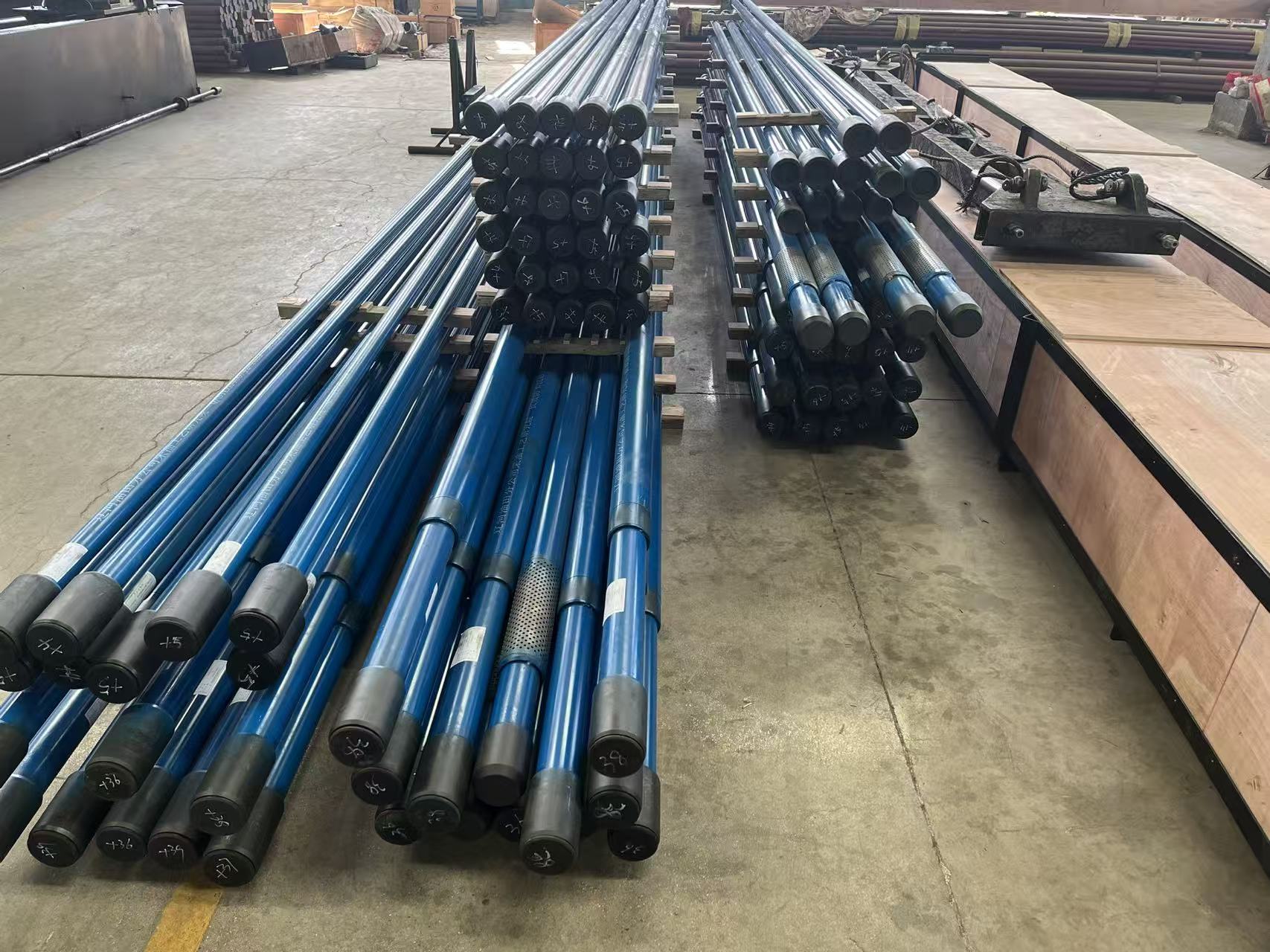
Valve Sealing Performance
Valve quality directly affects pump efficiency.
High-performance valves provide:
Better sealing
Reduced leakage
Longer operational life
Corrosion Resistance
In corrosive wells, material quality is essential.
Common corrosion-resistant materials include:
Stainless steel
Nickel-plated alloys
Special hardened steels
Sand Control Design
Sand abrasion is one of the main causes of Rod Pump failure.
Professional sand-control Rod Pumps may include:
Hardened plungers
Sand grooves
Improved valve clearance
Common Rod Pump Types
Different oilfield conditions require different Rod Pump designs.
Tubing Rod Pump
Installed directly inside tubing.
Advantages
Large displacement
Higher efficiency
Better for deep wells
Limitations
Higher workover cost
Insert Rod Pump
Installed inside tubing using sucker rods.
Advantages
Easier retrieval
Lower maintenance cost
Faster servicing
Applications
Sand-prone wells
Corrosive wells
Frequent maintenance environments
Heavy Oil Rod Pump
Designed for viscous crude oil.
Features
Enhanced sealing
Larger valve clearance
Wear-resistant surfaces
Corrosion-Resistant Rod Pump
Suitable for:
CO₂ wells
H₂S environments
High-salinity reservoirs
Deep Well Rod Pump
Designed for higher rod loads and deeper production zones.
Features include:
High-strength rods
Enhanced fatigue resistance
Improved metallurgy
Rod Pump vs Other Artificial Lift Systems
Rod Pump vs ESP
| Item | Rod Pump | ESP |
| Initial Cost | Lower | Higher |
| Maintenance | Easier | More complex |
| Best For | Low-to-medium production wells | High-volume wells |
| Surface Equipment | Required | Minimal |
| Sand Tolerance | Better | More sensitive |
| Gas Handling | Moderate | Often problematic |
| Power Consumption | Lower | Higher |
Rod Pump vs PCP
| Item | Rod Pump | PCP |
| Heavy Oil Capability | Moderate | Excellent |
| Maintenance Complexity | Lower | Higher |
| Sand Handling | Good | Very good |
| Cost | Lower | Moderate |
| Reliability | Very high | Moderate |
Common Oilfield Applications
Mature Oilfields
Rod Pumps are widely used in aging oilfields with declining reservoir pressure.
Marginal Wells
Low-production wells require cost-effective artificial lift solutions.
Rod Pumps offer excellent economic performance.
Heavy Oil Production
Special Rod Pump designs can handle moderate-viscosity crude oil.
Remote Oilfields
Rod Pumps require less complex infrastructure.
Advantages include:
Easier field repair
Lower operational dependency
Better environmental adaptability
How to Choose the Correct Rod Pump
Evaluate Production Rate
Daily liquid production affects:
Pump diameter
Stroke length
Displacement capacity
Analyze Fluid Conditions
Important factors include:
Oil viscosity
Sand content
Water cut
Corrosion level
Gas interference
Consider Well Depth
Deep wells require:
Higher-strength rods
Enhanced fatigue resistance
Optimized load calculations
Match Surface Equipment
The Rod Pump must match:
Beam Pump size
Stroke design
Motor power
Rod string specifications
Common Purchasing Mistakes
Choosing Price Over Quality
Low-cost non-standard pumps often cause:
Premature wear
Reduced efficiency
Higher replacement frequency
Ignoring API Standards
API-standard products improve:
Compatibility
Reliability
Spare parts sourcing
Overlooking Corrosion Conditions
Improper material selection dramatically shortens service life.
Ignoring Sand Production
Sand abrasion is one of the biggest causes of Rod Pump failure.
Proper sand-control design is critical.
Failing to Evaluate Supplier Technical Support
Professional manufacturers should provide:
Pump selection guidance
Engineering recommendations
Material analysis
After-sales support
What Buyers Usually Ask About Rod Pumps
Are Rod Pumps suitable for deep wells?
Yes. Specialized deep-well Rod Pumps are designed for higher rod loads and deeper production zones.
Can Rod Pumps handle corrosive fluids?
Yes. Corrosion-resistant materials and coatings significantly improve durability.
Which is easier to maintain: tubing pump or insert pump?
Insert pumps are generally easier and faster to service.
What affects Rod Pump lifespan?
Main factors include:
Fluid conditions
Sand production
Corrosion
Valve quality
Operating parameters
Why are API standards important?
API standards ensure:
Quality consistency
Global compatibility
Easier procurement
Simplified maintenance
Why Rod Pumps Remain Dominant in Global Oilfields
Despite the development of advanced artificial lift technologies, Rod Pumps remain one of the most widely used lifting systems worldwide.
Key reasons include:
Proven field reliability
Lower operational cost
Easier maintenance
Strong global supply chain
Excellent adaptability
Mature manufacturing technology
For many onshore conventional oilfields, Rod Pump systems still provide the best balance between cost and production efficiency.
FAQ
What is the main difference between a Beam Pump and a Rod Pump?
A Beam Pump refers to the surface pumping unit, while a Rod Pump refers to the downhole pumping mechanism that lifts fluid.
Is a Rod Pump the same as a sucker rod pump?
Yes. The terms Rod Pump and sucker rod pump are commonly used interchangeably in the oil industry.
Which artificial lift system is most economical?
For low-to-medium production wells, Rod Pumps are often the most economical solution.
Can Rod Pumps handle sand-producing wells?
Yes. Sand-control Rod Pump designs are specifically developed for abrasive well conditions.
How long can a Rod Pump last?
Service life depends on well conditions, maintenance quality, and material selection, but high-quality API Rod Pumps can operate for extended periods under proper conditions.
Conclusion
Although the terms Beam Pump and Rod Pump are often used interchangeably, they refer to different components of the artificial lift system. The Beam Pump is the surface drive mechanism, while the Rod Pump is the downhole fluid lifting system responsible for actual oil production.
For B2B buyers, oilfield contractors, distributors, and OEM customers, understanding this distinction is essential when selecting equipment, evaluating suppliers, and optimizing production systems.
Modern API-standard Rod Pump systems continue to dominate global oilfields because of their reliability, low operating costs, maintenance flexibility, and adaptability across various production environments.
As mature oilfields continue to expand worldwide, the Rod Pump remains one of the most dependable and commercially valuable artificial lift technologies available today.