

Introduction
Choosing the wrong artificial lift system does not just hurt production numbers — it can cost an operation hundreds of thousands of dollars in unplanned workovers, lost uptime, and premature equipment failure. Yet this decision is made every day across oilfields in the Permian Basin, the Middle East, West Africa, and Central Asia, often without a full picture of what each technology actually costs over its working life.
Two systems dominate the conversation: the rod lift system — anchored by the sucker rod pump — and the Electric Submersible Pump (ESP). Both have earned their place in the industry. Both are legitimate solutions for specific well conditions. But they are not interchangeable, and treating them as equivalent options is one of the most expensive mistakes a production engineer can make.
This article breaks down how each system works, where each one excels, and — critically — where one significantly outperforms the other. The analysis draws on published field data, independent engineering studies, and technical specifications from over a century of rod pump deployment across onshore fields worldwide.
If you are evaluating artificial lift options for a new completion, a mature field redevelopment, or a troubled well, the comparison below will give you a defensible technical basis for your decision.
Understanding the Two Systems: How They Work
How a Rod Lift System Works
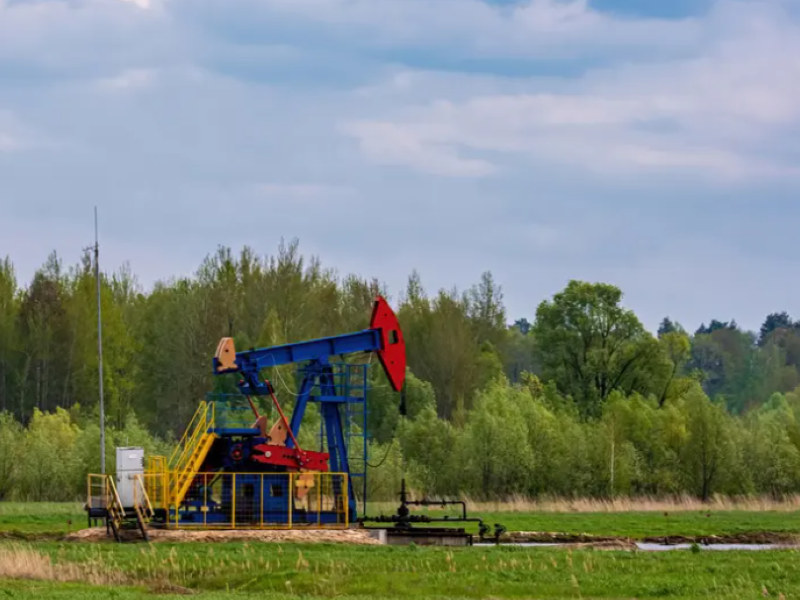
A rod lift system consists of two interconnected assemblies: a surface pumping unit and a downhole pump connected by a string of sucker rods that can extend more than a mile in length.
At the surface, a beam pumping unit — driven by an electric motor or internal combustion engine — converts rotational motion into a reciprocating up-and-down stroke. This motion travels down through the rod string to the downhole pump, where a plunger moves inside a pump barrel. On the upstroke, the traveling valve closes and the standing valve opens, allowing wellbore fluid to fill the barrel. On the downstroke, the traveling valve opens and fluid is displaced upward through the tubing to the surface.
The downhole pump is the precision heart of this system. It consists of four primary components: the pump barrel, the plunger, the traveling valve, and the standing valve. The fit between the plunger and barrel determines pumping efficiency, and the valve design determines how well the pump handles gas, sand, and viscous fluids.
Modern rod pump designs have moved far beyond the basic reciprocating plunger. Engineering advances now cover specialized geometries for gas-prone formations, extended-length plungers for sand-laden fluids, reinforced barrel walls for deep-well pressure differentials, and high-temperature alloy internals for thermal recovery operations.
How an Electric Submersible Pump Works
An ESP system places all of its primary mechanical components downhole. A multistage centrifugal pump — driven by a sealed electric motor — is run on production tubing into the wellbore, typically below the fluid level. Electrical power is delivered from the surface via a power cable that runs alongside the tubing string.
The ESP motor spins at 3,000–3,500 RPM, driving the pump stages to generate the pressure differential needed to lift fluid to surface. A variable frequency drive (VFD) at the surface adjusts motor speed to match inflow rates. The system also includes a protector (seal section) to prevent wellbore fluids from entering the motor, and a gas separator to reduce free gas entering the pump stages.
Because all the rotating equipment is downhole, any mechanical failure requires a full workover to pull the completion string — an operation that is inherently expensive and time-consuming.
The Real Problem: What It Actually Costs When You Choose Wrong
Field data from North American and Middle Eastern operations consistently shows that artificial lift selection errors rank among the top three causes of production underperformance in mature onshore fields.
An ESP pulled prematurely due to sand ingestion or gas lock does not just cost the workover bill — it costs lost production during the 2–6 week intervention window, plus the capital cost of the replacement equipment, plus the diagnostic time to understand what failed. In demanding conditions, that total cost routinely exceeds $250,000 per event.
A rod pump operating below its optimal stroke efficiency in a high-volume well does not fail catastrophically, but it silently bleeds production efficiency and increases rod string fatigue — a problem that compounds over months before it shows up as a parted rod or a worn barrel.
The point is simple: the right pump for the wrong well is still the wrong pump.
Sucker Rod Pump vs ESP: A Direct Technical Comparison
The table below reflects published operational data from peer-reviewed petroleum engineering literature and independent field studies. It covers the parameters that most directly affect the total cost and feasibility of each system.
Depth and Flow Rate
| Parameter | Rod Lift System | ESP |
|---|---|---|
| Typical depth range | Surface to ~14,000 ft (4,270 m) | To 15,000+ ft (4,570+ m) |
| Practical flow rate range | 1 – ~3,000 BFPD | ~150 – 30,000+ BFPD |
| Economic minimum rate | Below 1 bbl/d | ~150 bbl/d |
| Global well count | 750,000+ wells worldwide | ~200,000 wells |
The depth and rate data tell the first part of the story. Rod lift operates economically at rates where ESP systems simply cannot function. Below 150 barrels of fluid per day, ESPs become economically unviable — the motor generates more heat than the fluid can dissipate, and efficiency drops below 40%. Rod lift systems remain efficient and economical across this entire low-to-moderate rate spectrum, which describes the production profile of the vast majority of the world's onshore oil wells.
This is where the selection decision most often gets made — or gets made incorrectly.
| Well Condition | Rod Lift System | ESP |
|---|---|---|
| High gas-oil ratio (GOR) | Moderate-to-good (specialized pump types available) | Poor — prone to gas lock at >10% free gas by volume |
| Sand/solids content | Moderate-to-good (long plunger designs available) | Poor — impellers rotating at 3,500 RPM erode rapidly |
| Heavy/viscous crude | Good — effective at low bottomhole flowing pressures | Limited — requires minimum flow velocity to cool motor |
| High water cut | Fully compatible | Compatible, but increases cable deterioration risk |
| Corrosive fluids (H₂S, CO₂) | Good — no downhole electronics to corrode | Vulnerable — motor windings and cable insulation at risk |
| High temperature (>250°F) | Excellent — no electronic components downhole | Sensitive — motor windings begin to fail above 250°F |
For wells with any combination of high GOR, sand production, heavy oil, or elevated downhole temperatures — conditions that describe a large proportion of onshore mature field completions — rod lift maintains a clear operational advantage.
Maintenance, Workover Costs, and Run Life
| Cost Factor | Rod Lift System | ESP |
|---|---|---|
| Average run life | Years to decades with proper maintenance | ~2 years (730 days) industry average; <330 days in harsh conditions |
| Failure intervention | Rod pull unit — 12 to 24 hours | Full workover rig — 1 to 3 weeks |
| Workover cost per event | Baseline (1×) | 5× to 10× per event |
| Typical workover cost | $15,000 – $50,000 | $100,000 – $250,000+ |
| Lifecycle cost vs ESP | 30–50% lower for mature low-rate wells | Higher over well life |
The workover cost differential is significant and frequently underweighted in initial system selection. ESP workovers require mobilizing a full rig, pulling the entire tubing string, recovering the motor-pump assembly, and rerunning a replacement system with new cable — a process that can take several weeks in remote or constrained locations.
A rod pump failure, by contrast, typically requires only a rod-pull unit and can be completed in less than 24 hours. The downhole pump is retrieved with the rod string; the tubing remains in place. In a field with multiple wells, this difference in intervention cost compounds dramatically over a ten-year production horizon.
Energy Efficiency and Operating Costs
| Efficiency Parameter | Rod Lift System | ESP |
|---|---|---|
| System efficiency at <1,000 BFPD | 50–60% | <40% |
| System efficiency at >5,000 BFPD | Degrades significantly | ~50% |
| Power draw at equivalent low rates | Lower | Higher (motor generates heat regardless of load) |
| Compatibility with intermittent operation | Full — pump-off controllers are standard | Not suitable — frequent cycling destroys motor |
| Variable-frequency operation | Compatible with VFD | Requires VFD to function properly |
For wells producing under 1,000 barrels of fluid per day — which represents the majority of onshore completions globally — the rod lift system is the more energy-efficient choice by a measurable margin.
One of the most underappreciated advantages of rod lift is the diagnostic accessibility it provides. Surface and downhole dynamometer cards (dynacards) can be generated with standard field equipment and analyzed against well-established mathematical models that have been refined over decades of field application.
A dynacard tells the production engineer, at the surface, what is happening at the downhole pump: whether the pump is filling fully, whether gas interference is present, whether the plunger is worn, and whether the standing or traveling valve is leaking. This diagnostic clarity allows problems to be identified and addressed before they become failures.
ESP diagnostics, while improving with downhole sensor technology, operate as more of a "black box" system. Sensors can fail. The failure modes are harder to distinguish from the surface. Predictive maintenance models using machine learning are improving, with some systems achieving 70–85% accuracy in predicting failures 30–90 days in advance — but this technology requires additional investment and ongoing data management.
Why the Sucker Rod Pump Excels in Most Onshore Applications
Sucker rod pumps account for the largest share of artificially lifted wells worldwide — more than 750,000 installations — and that market position reflects a century of proven performance rather than inertia. The reasons for this dominance are technical, economic, and operational.
A Technology Refined Over More Than a Century
The sucker rod pump is not simply old technology maintained by habit. It is a continuously refined engineering platform that has absorbed improvements in materials science, manufacturing precision, downhole metallurgy, and system monitoring over more than 100 years of field deployment.
The fundamental operating principle — a reciprocating plunger pump driven by a surface unit through a rod string — has remained constant because it works. What has changed is the precision with which modern pumps are manufactured, the range of well conditions they can address, and the engineering sophistication brought to each application.
ISO 9001 quality management systems and the API 11AX certification standard exist specifically to ensure that rod pump components meet defined dimensional, material, and performance specifications. API 11AX covers everything from pump barrel bore tolerances and plunger-to-barrel clearance to valve seat geometry and material hardness requirements. A pump carrying this certification has been manufactured against specifications that the global oil and gas industry has validated over decades of field use.
Engineering for Difficult Well Conditions: Where Modern Rod Pump Design Separates Itself
The most significant advances in rod pump technology over the past two decades have come in specialty pump designs engineered for specific difficult well conditions. These are not incremental improvements — they represent fundamental engineering solutions to problems that standard pumps cannot adequately address.
High Gas-Oil Ratio Wells: The Anti-Gas Design
Gas interference is one of the most common causes of rod pump inefficiency in naturally fractured reservoirs and formations with elevated gas-oil ratios. When free gas enters a standard pump barrel, it compresses and expands rather than transmitting force to the fluid column — a condition known as gas lock that can bring pump output to near zero despite the surface unit continuing to stroke.
Specialized anti-gas pump designs address this through a mechanical open-and-close oil inlet valve structure. When gas enters the pump cavity, the valve automatically opens and closes through the reciprocating motion of the pump rod, effectively forcing exhaust of the gas phase and stabilizing fluid flow to the surface.
This design is available in Φ44mm and Φ57mm pump diameter specifications, compatible with conventional 2 3/8-inch, 2 7/8-inch, and 3 1/2-inch connecting oil pipe sizes — covering the tubing strings used in the vast majority of onshore completions. The result is stable production from wells that would otherwise require gas venting workarounds, intermittent operation schedules, or more expensive alternative lift methods.
High-Sand Wells: The Long Plunger Sand Control Design
Sand production damages standard pump components through abrasive wear on the plunger and barrel surfaces, and through sand accumulation in the pump barrel that can lock the plunger on the downstroke. In formations with significant fines or sand cut, pump run life under standard designs can drop to weeks rather than the months or years achievable in clean wells.
The long plunger sand control pump addresses this through a lateral oil inlet design that prevents sand from settling and accumulating at the pump intake — the location where bridging and packing most commonly occur in standard pump configurations. The extended plunger-to-barrel contact length distributes wear over a larger surface area, reducing the rate of clearance increase and extending the time before pump efficiency degrades to the point of requiring replacement.
This design principle makes it possible to maintain viable production rates in wells where sand control completions alone are insufficient, and where alternative lift systems — particularly ESPs with their high-speed rotating impellers — would fail within weeks of deployment.
Deep Well Applications: The Double-Layer Barrel Design
As wells deepen, the pressure differential across the pump increases, the hydrostatic load on the rod string grows, and the mechanical demands on the pump barrel and plunger assembly intensify. Standard single-wall barrel designs that perform adequately at moderate depths begin to show dimensional instability under the sustained high-differential pressures of deep well operation.
The double-layer pump barrel design used in deep well rod pump applications addresses this through an inner-outer barrel structure that distributes radial loads more effectively and maintains dimensional stability under conditions that would cause a single-wall barrel to distort. This design is engineered for production depths from 2,600 to 3,500 meters — covering the deep onshore completions that represent the frontier of rod lift application.
Heavy Oil and Steam-Drive Wells: The Thermal Recovery Design
Thermal recovery operations — including cyclic steam stimulation and steam-assisted gravity drainage (SAGD) — subject downhole equipment to temperature conditions that eliminate most standard lift system options. Motor winding insulation in ESP systems begins to degrade above 250°F (121°C), making ESP deployment in active steam injection wells impractical.
A specialized steam injection thermal recovery pump addresses this through a mechanical linkage design that synchronizes plunger movement with steam injection cycles. When the sucker rod string is lifted by a defined stroke increment, the plunger rises to connect the steam injection pathway through the sealing tube to the production tubing.
The critical material specification in this design is the use of Inconel 625 alloy bushing in the steam channel. Inconel 625 is a nickel-chromium-molybdenum alloy with exceptional resistance to oxidation and corrosion at elevated temperatures — it is the same material class used in jet engine components and nuclear reactor internals. It withstands continuous steam scouring at 350°C (662°F). Field testing at Liaohe Oilfield — one of China's primary heavy oil production regions — demonstrated a steam dryness retention rate of 85% or above throughout the steam injection cycle, confirming that the pump design does not compromise the thermal efficiency of the recovery process.
No comparable downhole solution exists for ESPs in this application. This is not a marginal advantage — it is a decisive one.
Medium-to-Deep Wells: The RXB Thick-Wall Insert Design
The RXB insert pump design targets medium-deep to deep well conditions where both the pump barrel's dimensional stability and the reliability of the bottom seating structure are critical to sustained performance.
The thick-walled pump barrel in the RXB design is machined from high-strength alloy steel with a multi-layer wear-resistant coating on the internal bore surface. This coating system reduces the coefficient of friction between the plunger and barrel, extends the service interval before clearance growth degrades pumping efficiency, and provides corrosion resistance in produced fluid environments with elevated H₂S or CO₂ content.
The fixed bottom structure of the RXB design eliminates the "breathing effect" — the cyclic expansion and contraction of the pump barrel that occurs in standard designs as differential pressure alternates with each stroke cycle. By eliminating this dimensional cycling, the design improves operating stability by more than 30% compared with conventional alternatives and reduces the rate of wear on both barrel and plunger.
All flow-path components in the RXB pump are manufactured from stainless steel with wear-resistant coating. Combined with the barrel design, this extends service life to between one and three times the run life of traditional designs in equivalent well conditions — a significant reduction in intervention frequency and associated workover cost.
The RXB insert pump is rated for deployment to 10,000 feet, covering the depth range of the majority of productive onshore oil formations globally.
Total Cost of Ownership: The Number That Actually Matters
Capital expenditure comparisons between rod lift and ESP systems often favor the analysis of initial equipment cost. This comparison framework is misleading and consistently leads to poor long-term decisions.
The correct comparison is total cost of ownership (TCO) over a defined production horizon — typically five to ten years. This calculation must include:
1. Initial equipment and installation cost
2. Ongoing power consumption
3. Routine maintenance and inspection cost
4. Intervention frequency and cost per event
5. Lost production during planned and unplanned interventions
Equipment replacement cost (full vs. partial system)
When this calculation is applied to low-to-moderate rate onshore wells — which represent the majority of global rod pump applications — rod lift systems demonstrate 30–50% lower lifecycle costs than ESP systems over a ten-year horizon.
This is not primarily because rod pumps are cheaper to buy. It is because their failure modes are accessible, their interventions are fast and low-cost, their run lives are longer in the well conditions where they are used, and their energy efficiency at low rates is superior.
An ESP workover at $100,000–$250,000 per event, occurring every 2 years on average (and every 11 months in challenging conditions), accumulates to a very large number over a well's productive life. The rod pump's ability to be serviced with a rod-pull unit in 12–24 hours changes the economic picture fundamentally.
Operating in Mature Fields: The Stripper Well Advantage
More than 40% of all artificially lifted oil wells worldwide produce fewer than 15 barrels of oil per day — classified as "stripper wells" in North American terminology. These wells collectively account for a meaningful portion of total onshore production, but their individual rates make high-cost artificial lift systems economically unviable.
Rod lift is the only artificial lift method that remains economically rational at production rates below 1 barrel per day. At these rates, ESP systems cannot generate sufficient fluid flow to cool the motor, and the economics of the system — capital cost, workover cost, power consumption — cannot be justified against the revenue generated by low-rate production.
This is why rod lift accounts for more than 750,000 installations globally and remains the first-choice lift method for onshore wells across North America, China, the Middle East, Russia, and South America.
When ESP Is the Right Choice
A balanced technical comparison requires acknowledging where ESP systems genuinely outperform rod lift.
High-Volume Production
For wells producing above approximately 3,000 barrels of fluid per day, rod lift becomes mechanically constrained. The stroke rate and pump geometry required to handle very high rates impose rod string fatigue loads that limit operating efficiency and increase failure frequency. ESP systems are the appropriate lift method for high-rate producers, offshore wells, and deepwater applications where production volumes justify the higher capital and operating costs.
Deviated and Horizontal Wells
The rod string in a rod lift system must travel in a nearly straight path from the surface unit to the downhole pump. In deviated wells — particularly those with dogleg severity above approximately 10 degrees per 100 feet — rod-to-tubing contact increases friction, accelerates wear on both rods and tubing, and can lead to rod parting at contact points. While deviated rod pumping is practiced with specialized centralizers and friction-reduction components, it introduces complexity and cost that does not exist in a vertical well completion.
ESPs have no rod string. The motor-pump assembly runs on tubing and cable, with no mechanical constraint on wellbore deviation. For horizontal wells and strongly deviated completions, ESP is typically the preferred lift option when flow rates justify the system.
Offshore Applications
Platform space constraints, well density, and the high production rates typical of offshore wells make rod lift impractical in most offshore environments. ESP systems are the dominant lift method for offshore and subsea applications, where their compact surface footprint and high-rate capability align with the operational requirements.
Common Mistakes in Artificial Lift Selection
Understanding where the decision goes wrong in practice helps avoid the most costly errors.
Selecting ESP based on depth alone. Depth capability is a necessary but insufficient criterion for ESP selection. If the well does not produce at rates above the ESP's economic minimum (~150 bbl/d), the system will operate below its thermal management threshold and fail prematurely.
Ignoring fluid composition data. Sand cut, GOR, and fluid viscosity data are frequently incomplete at the time of initial lift system selection for new completions. Defaulting to the same lift type used in adjacent wells without verifying that fluid conditions are comparable is a common source of early failures.
Underestimating workover frequency in challenging formations. ESP run-life statistics are averages across all well types. In wells with high sand production, elevated temperatures, or high GOR — exactly the conditions where rod pump specialty designs exist — ESP run life can fall to 11 months or less. The intervention cost economics change dramatically at that failure frequency.
Treating all rod pump designs as equivalent. A standard API insert pump and a specialized anti-gas, sand control, or thermal recovery pump are engineered for fundamentally different operating environments. Selecting a standard pump for a challenging well condition because it is available and familiar is a design error, not a cost-saving decision.
Focusing only on CAPEX rather than TCO. Equipment purchase price is the most visible cost, but it is rarely the largest cost over a well's productive life. Workover costs, energy consumption, and production losses during interventions consistently dominate the ten-year TCO calculation.
A Framework for Artificial Lift Selection
The following decision logic reflects the technical criteria that should drive lift system selection for onshore wells.
Start with production rate and depth. If the well is expected to produce below 3,000 BFPD and is less than 14,000 feet deep, rod lift is the appropriate primary candidate. If the well is expected to produce above 5,000 BFPD, or is strongly deviated or offshore, ESP becomes the appropriate primary candidate.
Evaluate fluid composition. If the well has significant sand production, high GOR, heavy oil, or elevated temperature — evaluate specialty rod pump designs before considering ESP. Specialty designs (anti-gas, long plunger, thermal recovery, RXB thick-wall) exist specifically because these conditions are common in productive onshore formations.
Model total cost of ownership. Use realistic workover cost estimates, expected run life based on analogous wells in the same formation, and current energy prices. Do not use theoretical efficiency numbers — use field-observed averages from comparable completions.
Consider operational context. Remote locations, limited rig availability, and small field teams favor rod lift's simpler intervention requirements. High-volume producing fields with dedicated workover capacity and advanced monitoring infrastructure can manage ESP operations more effectively.
Verify certification and quality standards. Regardless of pump type, API 11AX certification provides the minimum assurance that dimensional and material specifications have been met. ISO 9001 quality management certification at the manufacturing level provides additional assurance about consistency of production and incoming material controls.
Frequently Asked Questions
Q: At what production rate should I consider switching from a rod pump to an ESP?
A: The general inflection point is around 3,000 BFPD. Below this rate, rod lift systems maintain a significant efficiency and cost advantage. Above 5,000 BFPD, ESP systems become progressively more appropriate. The 3,000–5,000 BFPD range requires a full TCO analysis to determine the optimal choice for your specific well and field conditions.
Q: Can a sucker rod pump handle both sand and gas at the same time?
A: Yes — with the right pump design. A standard insert pump is not well-suited to combined sand and high-GOR conditions. However, specialty designs combining lateral oil inlet (sand control) geometry with a mechanical anti-gas valve structure can address both conditions simultaneously. The key is matching the pump design to the specific well fluid characterization data, not selecting a standard pump and hoping it performs in a challenging environment.
Q: How often does a well-maintained rod pump need to be pulled and inspected?
A: In wells with clean fluids and moderate conditions, a properly designed rod pump can run for several years without requiring a pull. In challenging wells — high sand, high GOR, corrosive fluids — inspection and pump replacement may be required every 12 to 24 months. The critical advantage over ESP is that when a pull is required, the intervention cost is a fraction of an ESP workover: a rod-pull unit, 12–24 hours, no rig required.
Q: What does API 11AX certification actually guarantee?
A: API 11AX is the international standard for subsurface sucker rod pumps. It specifies dimensional tolerances for pump barrel bores, plunger outside diameters, valve dimensions and materials, and barrel and plunger hardness requirements. A pump certified to API 11AX has been manufactured within these validated specifications and has passed the associated quality audits. It ensures dimensional interchangeability — critical for field maintenance — and provides the minimum baseline for pump quality in professional oilfield applications.
Q: Is an ESP cheaper to operate than a rod pump in a deep well?
A: Not necessarily — and often not at all. Depth alone does not make ESP the lower-cost option. For wells producing below 1,500–2,000 BFPD at depth, the rod lift system's lower intervention cost, longer run life, and better efficiency at moderate rates typically produce a lower ten-year TCO. The economic case for ESP in a deep well requires either high production rates or well conditions (horizontal deviation, very high temperature requiring specialized solutions outside rod pump capability) that make rod lift impractical.
Conclusion
The sucker rod pump versus ESP comparison does not resolve to a simple answer — but the conditions under which each system is appropriate are well-defined, and the technical evidence is clear.
For the vast majority of onshore oil wells — characterized by low-to-moderate production rates, vertical to slightly deviated wellbores, challenging fluid compositions, and cost-constrained operating environments — rod lift systems are the technically superior and economically rational choice. They operate at rates where ESP systems cannot function economically, they tolerate the fluid conditions that destroy ESP components, their failures are diagnosable and accessible, and their interventions are fast and inexpensive relative to the alternatives.
The development of specialty pump designs — for high-GOR, sand-laden, heavy oil, deep, and thermal recovery applications — has extended the operating envelope of rod lift significantly beyond the limitations of standard pump designs. These are not incremental improvements; they are engineered solutions to the specific well conditions that make artificial lift challenging, and they are manufactured to the same API 11AX and ISO 9001 standards that define professional-grade oilfield equipment globally.
ESP systems are genuinely superior for high-volume, offshore, and strongly deviated applications. In those specific contexts, their higher capital and operating costs are justified by capabilities that rod lift systems cannot match.
The mistake to avoid is applying ESP selection logic to well conditions where rod lift is demonstrably more appropriate — not because rod lift is the older technology, but because it is the better-engineered solution for those conditions. Over a ten-year production horizon, the difference in total cost of ownership between the right choice and the wrong choice can reach seven figures per well.
Select based on the well. Not based on the equipment catalog.