

Introduction
Every sucker rod pump installation begins with a choice that production engineers, completions teams, and equipment procurement specialists routinely underestimate: insert pump or tubing pump? The two configurations share the same five core components and operate on the same physical principle — but they differ fundamentally in how they are installed, how they are serviced, and what production rates they can achieve for a given tubing size.
Get this decision right and you have a system matched to your well's production rate, intervention economics, and operational constraints. Get it wrong, and you are either leaving production on the table with an undersized pump or absorbing workover costs that erode the economics of the installation for its entire service life.
This guide walks through both configurations in detail: how each works, how they compare across the technical parameters that actually matter, and how to structure the selection decision for different well conditions and operational contexts. The goal is not to promote one type over the other — it is to give the engineer, field supervisor, and equipment evaluator the technical foundation to choose correctly for each specific situation.
The Foundation: What Both Pump Types Share
Before examining the differences, it is important to establish what insert pumps and tubing pumps have in common — because their shared fundamentals are what define them both as sucker rod pumps.
Both pump types are positive displacement reciprocating pumps that operate within a production tubing string to lift fluid from the wellbore to the surface. Both are manufactured to API Specification 11AX — the standard that defines dimensional tolerances, material requirements, valve geometry specifications, and plunger-to-barrel clearance ranges for all subsurface sucker rod pump assemblies. And both contain the same five functional components:
The pump barrel (working barrel) is the stationary cylindrical body of the pump. Its internal bore is the running surface for the plunger. Bore diameter, wall thickness, and internal surface finish are among the most critical manufacturing parameters — they directly determine pump efficiency, service life, and the range of well conditions the pump can handle.
The plunger is the reciprocating element inside the barrel. The clearance between the plunger outer diameter and the barrel bore determines how much fluid bypasses the plunger on each stroke — a loss mechanism called "slippage" that reduces volumetric efficiency. Modern plunger designs incorporate hard metal spray coatings on the outer surface to reduce wear rate in abrasive and corrosive produced fluid environments.
The traveling valve is a one-way check valve mounted within the plunger body. On the downstroke, it opens to allow fluid compressed in the barrel to pass upward through the plunger. On the upstroke, it closes, held shut by the weight of the fluid column above, preventing backflow.
The standing valve is a one-way check valve at the base of the pump assembly. On the upstroke, it opens under the pressure differential created by the rising plunger, allowing produced fluid from the wellbore annulus to fill the barrel. On the downstroke, it closes, preventing fluid from returning to the annulus as barrel pressure rises.
The hold-down (seating assembly) anchors the pump at the designed setting depth. API 11AX defines two hold-down types: cup-type (using elastomeric cups that create a friction seal against the tubing or seating nipple) and mechanical (a positive latch mechanism). Hold-down selection affects both the force required to release the pump for retrieval and the reliability of the anchor under upward hydraulic loading from the fluid column.
These five components perform the same function in both insert and tubing configurations. The differences between the two pump types lie entirely in how the barrel relates to the tubing string — and that structural difference cascades into significant differences in bore size, production capacity, service cost, and operational flexibility.
The Insert Pump: Self-Contained, Retrievable, and Built for Operational Efficiency
Structural Design: The Complete Downhole Assembly
The insert pump — designated by the letter R in API 11AX nomenclature — is a self-contained unit. Its barrel, plunger, valves, and hold-down are all assembled together before the pump enters the well. The complete assembly is connected to the bottom of the sucker rod string and lowered inside the production tubing to the setting depth, where the hold-down seats into a seating nipple that was installed as part of the tubing completion.
This design means the entire pump — barrel and all — fits inside the tubing. The pump must be sized to pass through the tubing bore during installation and retrieval, which constrains the maximum plunger diameter relative to the tubing size. An insert pump run in 2 7/8-inch tubing, for example, will have a plunger diameter in the range of 1.75 to 2.00 inches. The equivalent tubing pump in the same tubing would accommodate a plunger of approximately 2.25 inches — a difference that translates directly to production capacity.
Once seated, the plunger is connected to the rod string and the surface pumping unit drives it in the reciprocating stroke cycle. The barrel remains stationary, anchored at the seating nipple; the plunger moves within the barrel, creating the pressure differentials that drive fluid through the valves and up the production tubing.
Installation and Retrieval: The Core Operational Advantage
The defining operational characteristic of the insert pump is its retrieval method. When the pump requires inspection, service, or replacement — for any reason — it is retrieved by pulling the sucker rod string. The production tubing stays in the well.
This rod-pull operation requires a rod-pulling unit: a truck-mounted winch that lifts the rod string progressively, connecting the surface unit to each rod joint as it comes out of the hole. This is a standard, relatively simple field operation. It does not require a full workover rig. It typically requires two to three personnel and can be completed in 12 to 24 hours from decision to the pump being back on production with a replacement unit.
The economic significance of this is substantial and frequently underestimated in initial pump type selection. A rod-pull operation costs a fraction of a full workover rig mobilization. In a field operating multiple wells, the intervention cost difference between insert pump service and tubing pump service accumulates rapidly over a production horizon of five to ten years.
The tubing also benefits from not being disturbed. Repeated tubing runs risk thread damage, seal degradation at tubing connections, and the introduction of debris into the wellbore. An insert pump installation that requires only rod pulls throughout its service life protects the tubing string from the wear associated with repeated installation and retrieval operations.
Understanding the API 11AX Designation System for Insert Pumps
The three-letter pump type code in the API 11AX designation system carries specific technical information about the barrel wall thickness and the hold-down position — both of which affect which well conditions the pump is suited for.
Barrel Wall Thickness:
H (Heavy Wall): The barrel wall is thick enough that the barrel provides its own structural rigidity. Heavy-wall barrels maintain bore geometry under higher differential pressures and are used in deeper wells and applications where barrel stability is important.
L (Light Wall): A thinner barrel wall that relies on the surrounding tubing for radial support. Light-wall barrels typically achieve a larger bore for a given tubing size (because less wall thickness means more bore), but they require the tubing to be present and intact as structural support. They are used in shallower wells where differential pressure is lower.
W (Thin Wall / Soft-Packed): Uses soft packing material between the barrel and tubing for a different sealing configuration — less common in standard applications.
Hold-Down Position:
A (Top Anchor): The hold-down is located above the pump barrel. In this configuration, the barrel hangs below the seating nipple. Top-anchor designs are general-purpose configurations suitable for most well conditions.
B (Bottom Anchor): The hold-down is located below the barrel. This positions the pump intake below the anchor point, which has advantages in gassy wells: the fluid enters the pump from below the hold-down, improving liquid/gas separation before the fluid reaches the standing valve. Bottom-anchor designs also exhibit lower pump intake pressure, which is beneficial for high-drawdown applications.
The four primary insert pump designations are therefore:
| Code | Description | Primary Application |
|---|---|---|
| RHA | Heavy wall, top anchor | General-purpose, moderate-to-deep wells |
| RHB | Heavy wall, bottom anchor | Gassy wells, high-drawdown applications |
| RLA | Light wall, top anchor | Shallow wells, maximum bore for given tubing |
| RLB | Light wall, bottom anchor | Shallow gassy wells, maximum bore with gas advantage |
Understanding the four-way combination of wall thickness and anchor position allows the selection to be matched to the specific well's depth, GOR, and production rate requirements — rather than defaulting to a single configuration for all applications.
The Universal Seating Joint: Changing Bore Without Touching the Tubing
One of the most practically significant design features of the API insert pump system is the universal seating nipple. The seating support joint used in insert pump completions is dimensionally standardized across different pump bore sizes. This means that when operating conditions change — production rate declines and a smaller bore is more appropriate, or tubing pressure changes make a different bore size optimal — the pump bore can be changed without adjusting, pulling, or replacing the tubing string.
Only the pump itself changes. The seating nipple in the tubing accommodates the new pump. This flexibility is particularly valuable in mature fields where well productivity changes over time, and where the ability to adapt pump sizing without incurring the cost of a tubing workover has measurable economic value.
The Tubing Pump: Maximum Displacement for High-Rate Applications
Structural Design: The Barrel as Part of the Completion
The tubing pump — designated by the letter T in API 11AX nomenclature — takes a fundamentally different approach to barrel placement. Rather than running the barrel inside the tubing as part of a self-contained insert, the tubing pump barrel is threaded directly into the production tubing string and run to depth as part of the tubing completion itself.
When the tubing pump is installed, the tubing string is made up with the pump barrel in the correct position — typically near the bottom of the string, above the perforations. The entire tubing string, including the pump barrel section, is run into the well on a workover rig. Once the tubing is in place and set, the plunger is separately run on the sucker rod string and lowered through the tubing until it seats inside the pump barrel.
The plunger connects to the rod string at the top and hangs into the barrel below. The surface pumping unit drives the rod string and plunger in the standard reciprocating stroke cycle. The barrel, being part of the tubing string, remains stationary while the plunger moves within it.
Why the Tubing Pump Achieves Greater Production Capacity
The structural difference between the two pump types creates an immediate and significant difference in maximum achievable bore size. The insert pump barrel must fit inside the tubing — there must be clearance between the outside of the pump body and the tubing wall to allow the pump to pass through. This clearance requirement limits how large the barrel bore can be.
The tubing pump barrel is the tubing — or, more precisely, it is a specially manufactured section of tubing with a precision-honed bore that replaces a segment of the standard tubing string. Its bore can fill the full available internal diameter of that tubing section, limited only by the tubing's own internal diameter and the manufacturing constraints of the honed bore.
The result is that for any given tubing size, the tubing pump achieves a meaningfully larger plunger diameter than the insert pump. The difference ranges from approximately 0.25 to 0.50 inches in plunger diameter depending on tubing size. Because pump displacement per stroke is proportional to the square of the plunger radius times the stroke length, this bore difference translates into a proportionally larger displacement per stroke — and directly into higher production volume at the same stroke rate and stroke length.
For example:
In 2 7/8-inch tubing: an insert pump achieves approximately 1.75–2.00-inch bore; a tubing pump achieves approximately 2.25-inch bore. The tubing pump's displacement per stroke is approximately 27–65% greater.
In 3 1/2-inch tubing: an insert pump achieves approximately 2.25–2.50-inch bore; a tubing pump achieves approximately 2.75-inch bore. Again, a significant displacement advantage per stroke.
For wells producing at rates where the insert pump's maximum bore cannot meet the inflow without running at impractically high stroke rates, the tubing pump is the configuration that makes the production target achievable.
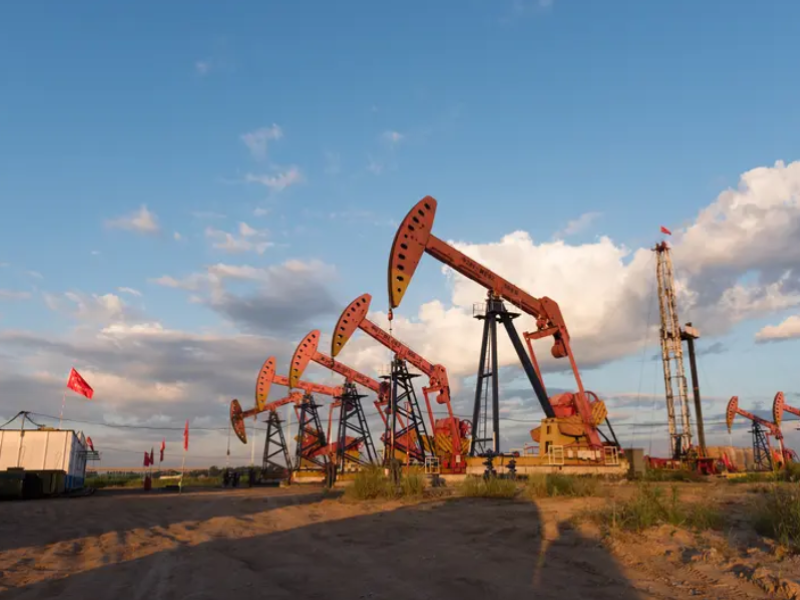
Retrieval and Service: The Critical Trade-Off
The tubing pump's service trade-off is direct and important: because the pump barrel is part of the tubing string, servicing the barrel requires pulling the entire tubing string.
This is a full workover rig operation. The rig must be mobilized to the well location. The sucker rod string is pulled first to retrieve the plunger. Then the tubing string — the entire production string, which may be thousands of feet of tubing — must be pulled joint by joint, the pump barrel serviced or replaced, and the tubing string rerun. In most cases, the well must also be killed before the tubing is pulled — a process that involves injecting kill fluid into the wellbore to equalize formation pressure and temporarily stop fluid inflow.
The rig time for a tubing pump service ranges from one to several days depending on well depth, rig capability, and the condition of the tubing connections. The cost per event is multiples of an equivalent insert pump rod pull.
For wells that require frequent pump service — due to sand production, corrosive fluid, high operating temperatures, or any other factor that reduces pump run life — this service cost difference becomes a dominant factor in the total cost of ownership calculation.
Side-by-Side Technical Comparison
| Parameter | Insert Pump (API Code: R) | Tubing Pump (API Code: T) |
|---|---|---|
| Barrel location | Inside tubing, self-contained unit | Integral part of tubing string |
| Installation method | Run on rod string | Barrel run with tubing; plunger run on rod string |
| Retrieval method | Rod pull only — no rig required | Must pull entire tubing string — rig required |
| Service time | 12–24 hours typical | 1–5 days typical |
| Crew required | 2–3 personnel | 3–6 personnel + rig crew |
| Well kill required | Usually not required | Usually required |
| Maximum bore | Constrained by tubing ID and seating nipple | Full available tubing bore — maximum possible |
| Production capacity | Low to moderate rate | Moderate to high rate |
| Depth capability | Deeper — no structural dependence on tubing | Deep capable; structural rigidity from tubing |
| Light-wall variant | Available (relies on tubing for support) | Not applicable — barrel IS the tubing |
| Bore size changeout | Without tubing pull (universal seating nipple) | Requires tubing pull |
| API types | RHA, RHB, RLA, RLB | TH (most common) |
| Gassy well configuration | Bottom anchor (RHB, RLB) | Requires gas anchor below pump intake |
| Best for | Low-to-moderate rate, service-cost-sensitive | High-rate production where capacity is primary requirement |
Insert Pump Advantages: Where the Case Is Strongest
The Intervention Cost Difference Is the Dominant Factor for Most Wells
For the majority of the world's onshore oil wells — characterized by low-to-moderate production rates, mature field conditions, and production economics that are sensitive to operating cost — the insert pump's rod-pull service model is the most important practical advantage.
A full workover rig mobilization costs multiples of a rod-pull operation in both equipment cost and time. In remote locations, rig availability can extend the time between the decision to service a pump and the first day of restored production to weeks — during which the well produces nothing or produces below capacity. In contrast, a rod-pull unit can often be deployed on short notice, complete the service within a single working day, and have the well back on production the same afternoon.
This intervention economics advantage is most pronounced when wells require service frequently — which is exactly the condition in challenging formations. A well producing sandy fluid, corrosive fluid, or high-GOR mixture will require more frequent pump service than a clean, simple well. The insert pump's low-cost service model provides the flexibility to service wells when service is needed, without the cost and scheduling constraints associated with rig-dependent operations.
Running Deeper With the Insert Configuration
The insert pump can be run deeper than the tubing pump in most practical applications. This is a function of the structural independence of the insert pump design: the barrel is a self-contained heavy-wall assembly that does not rely on surrounding tubing for radial support in the same way the light-wall tubing pump barrel does.
For the specialty deep-well applications described in more detail below, the insert configuration — particularly heavy-wall designs — maintains barrel bore integrity under the sustained high differential pressures of deep formation work where tubing-supported light-wall designs would begin to deform.
Specialty Insert Designs for Demanding Well Conditions
The insert pump configuration is the platform on which the most sophisticated specialty pump designs have been developed — precisely because the rod-pull service model makes it economically practical to match the pump design to specific well conditions without the penalty of a full rig workover every time service is required.
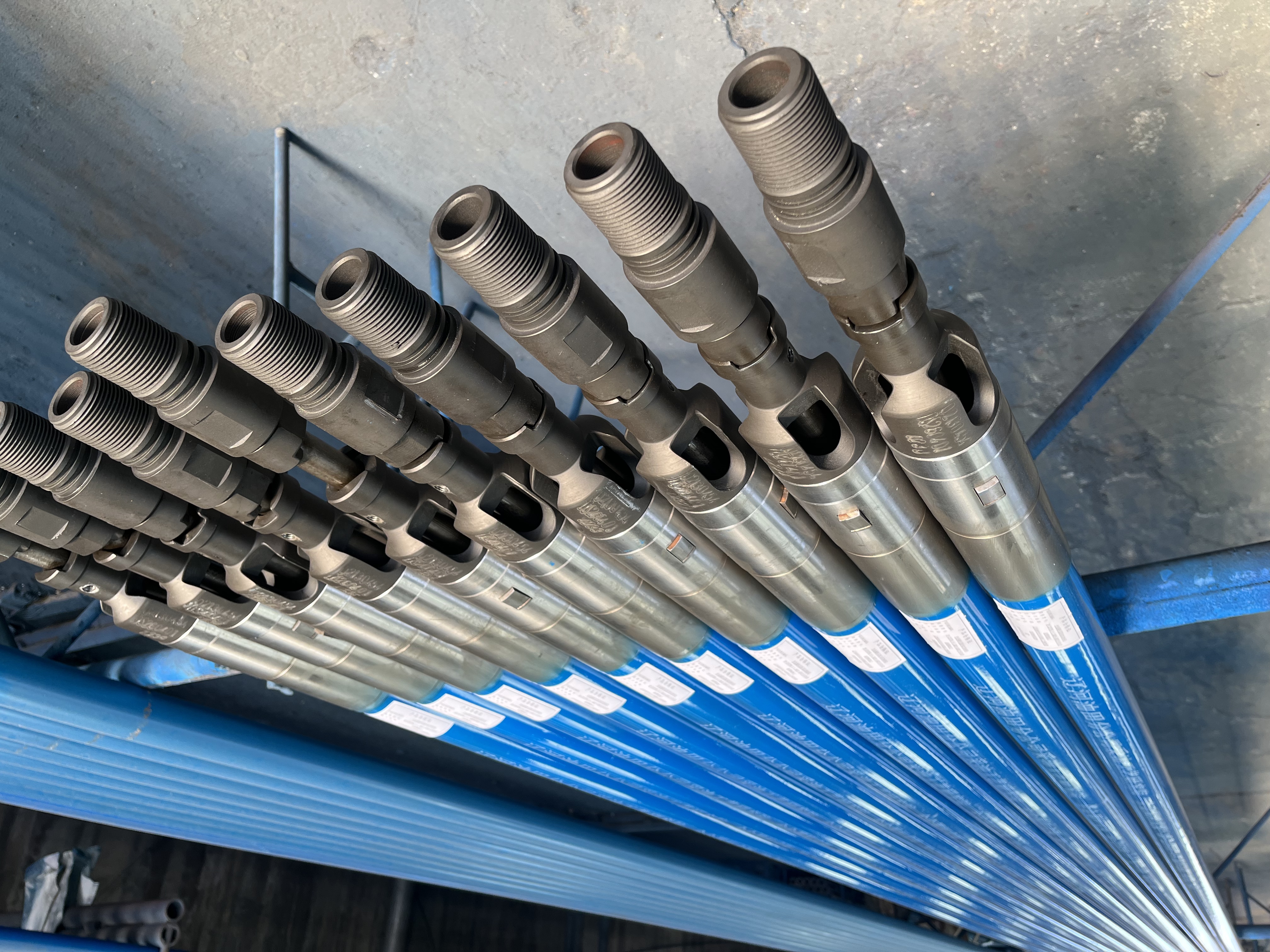
The RXB thick-wall insert pump represents the state of the art in this specialty design category. Its barrel is manufactured from high-strength alloy steel with a multi-layer wear-resistant coating on the internal bore surface. The thick-wall construction maintains bore geometry under the cyclic high-differential pressures of medium-deep to deep well operation, where single-wall barrel designs exhibit the "breathing effect" — cyclic wall flexion under alternating pressure that gradually disturbs the plunger-barrel fit. By eliminating this dimensional cycling through structural rigidity, the RXB design improves operating stability by more than 30% compared with conventional designs and achieves service life one to three times longer in equivalent well conditions.
All flow-path components in the RXB pump are manufactured from stainless steel with wear-resistant coating — a material specification that addresses corrosion in produced fluid environments containing hydrogen sulfide, carbon dioxide, or high-chloride formation water, where standard carbon steel components degrade progressively between service intervals. The design is rated for deployment to 10,000 feet, covering the depth range of the vast majority of productive onshore oil formations globally.
Because the RXB is an insert pump, it is retrieved by rod pull when service is required. A premium pump design with superior run life, in a configuration that minimizes service intervention cost — this combination defines the economic case for well-engineered insert pump selection in challenging applications.
The anti-gas insert pump addresses high gas-oil ratio wells through a mechanical open-and-close oil inlet valve structure that forces gas exhaust from the barrel on each stroke, eliminating the gas lock condition that standard valve designs cannot reliably prevent. Available in Φ44mm and Φ57mm bore specifications, compatible with 2 3/8-inch, 2 7/8-inch, and 3 1/2-inch tubing, this design covers the bore and tubing size combinations needed for the majority of gassy onshore completions.
The long plunger sand control insert pump uses lateral oil inlet geometry to prevent sand accumulation at the pump intake, combined with extended plunger length to distribute abrasive wear over a larger contact surface. Both mechanisms directly extend pump run life in sand-producing formations where a standard insert pump would require frequent replacement — and each replacement, in this configuration, remains a low-cost rod pull rather than a rig-dependent operation.
Tubing Pump Advantages: Where Maximum Displacement Justifies the Trade-Off
When Production Rate Makes the Bore Size Difference Decisive
There is a production rate threshold above which the insert pump's maximum achievable displacement cannot meet well inflow without impractically high stroke rates. At stroke rates above approximately 15 to 20 strokes per minute, rod string fatigue loading increases sharply, surface unit wear accelerates, and the system begins to operate outside its design envelope. If the insert pump's maximum displacement at a reasonable stroke rate is insufficient to handle well production, the tubing pump is not a preference — it is a technical necessity.
For wells producing above approximately 800 to 1,000 barrels of fluid per day, the tubing pump's larger bore provides the displacement capacity to handle that inflow within normal operating parameters. For high-rate producers — new completions in high-permeability formations, wells on secondary recovery projects with high water cuts and high fluid volumes — the tubing pump is the configuration that makes the production target technically achievable.
Viscous Fluid Handling: The Large Bore Advantage
The tubing pump's large plunger diameter creates low resistance to flow through the pump because the fluid column does not need to accelerate to high velocity through narrow passages to enter and exit the pump. In wells producing heavy crude with elevated viscosity, this flow geometry advantage reduces the pressure drop through the pump and allows the pump to handle viscous fluid with less energy loss than a smaller-bore insert pump in the same well.
For high-rate heavy oil applications — where the well produces large fluid volumes of viscous crude — the combination of maximum bore and large-bore flow characteristics makes the tubing pump the more practical choice despite the higher service cost.
The Bore Size Calculation: Making the Comparison Concrete
The selection decision between insert and tubing pump configurations often comes down to a straightforward production rate calculation. Here is how to structure it:
Step 1: Determine the required daily fluid production target (BFPD)
Step 2: Establish the practical stroke rate range for the installation (typically 6 to 14 strokes per minute for most applications)
Step 3: Calculate the required pump displacement per stroke:
Required displacement (bbl/stroke) = Target BFPD ÷ Strokes per Day (strokes/min × 1,440)
Step 4: Calculate the required plunger diameter for that displacement at the chosen stroke length:
Plunger area (in²) = Displacement (bbl/stroke) × 231 (in³/gal) × 42 (gal/bbl) ÷ Stroke Length (in)
Required diameter = 2 × √(Plunger area ÷ π)
Step 5: Compare the required plunger diameter against the maximum achievable bore for insert and tubing pumps in the available tubing size
If the required diameter falls within the insert pump's achievable bore range for the tubing size, the insert pump is a viable configuration. If it exceeds the insert pump maximum but falls within the tubing pump range, the tubing pump is required. If it exceeds both, pump sizing, tubing size, or stroke parameters must be revisited.
This calculation makes the production rate threshold for the insert-to-tubing pump transition specific to each well's stroke length, stroke rate, and tubing size — rather than applying a generic rule that may not fit the actual well conditions.
Scenario-Based Selection Guide
Low-to-Moderate Rate Well in a Mature Field (Below 600 BFPD)
This is the insert pump's core application. For a well producing below 600 barrels of fluid per day, the insert pump's bore size in any standard tubing provides adequate displacement at normal stroke rates. The service economics advantage — rod pull versus tubing pull — is the dominant selection factor. Choose the insert configuration and select the appropriate designation (RHA, RHB, RLA, or RLB) based on depth and GOR.
High-Rate New Completion or Secondary Recovery Well (Above 800 BFPD)
For a well that will produce above 800 barrels of fluid per day — either a high-permeability primary producer or a well on waterflood with high water cut — verify that the maximum insert pump bore for the planned tubing size can achieve the required displacement at acceptable stroke rates. If not, the tubing pump is the technically correct choice. The higher service cost per intervention is the accepted trade-off for the production capacity the application requires.
Gassy Well with Moderate Rate
Select an insert pump with bottom-anchor configuration (RHB or RLB) to take advantage of the lower pump intake pressure and improved gas-liquid separation that bottom-anchor positioning provides. Consider the anti-gas specialty insert design if the GOR is high enough that standard valve designs produce gas lock events in similar wells. The insert configuration's rod-pull service model is particularly valuable in gassy wells, where pump-related production problems tend to require more frequent intervention than in clean-fluid wells.
Sandy Formation with Uncertain Run Life
Use the insert pump with the long-plunger sand control design. The lateral oil inlet geometry and extended plunger contact length extend run life in abrasive conditions, and the rod-pull service model ensures that when service is eventually needed, the intervention cost is manageable. If this same well used a tubing pump and required service every 12 to 18 months because of sand damage to the barrel, the accumulated rig workover cost over five years would substantially change the economic case.
Deep Well Above 8,000 Feet
Use the heavy-wall insert pump configuration — RHA or RHB — with the RXB specialty design where the well depth and pressure differential make barrel stability a critical factor. The heavy-wall barrel maintains bore geometry under sustained high differential pressure. The insert configuration allows the pump to be retrieved by rod pull if service is required, without disturbing the tubing string that has been carefully run to manage the deep well completion.
Field with Multiple Wells and Limited Workover Rig Access
For field operations in remote locations or areas with limited rig availability, the insert pump's service model provides a significant operational advantage regardless of production rate. The ability to service any well in the field with a rod-pulling unit — without waiting for rig scheduling — reduces both planned maintenance costs and the duration of unplanned downtime when pumps fail unexpectedly.
Common Selection Mistakes
Selecting the tubing pump for all high-rate applications without verifying that insert pump bore is actually insufficient. The automatic assumption that high production requires a tubing pump is not always correct. In 3 1/2-inch or larger tubing, insert pump bore sizes can achieve significant displacement. Run the bore size calculation before committing to the rig-dependent service model.
Selecting the insert pump for all wells to minimize service cost, without checking that the bore is large enough. An insert pump that cannot achieve the well's production rate at reasonable stroke rates will run at high stroke rates, increasing rod fatigue loading and accelerating surface unit wear. An undersized pump that runs fast is not a cost-saving decision — it is an accelerated failure.
Ignoring the hold-down designation (top vs. bottom anchor) in the insert pump selection. Top and bottom anchor configurations behave differently in gassy wells and wells with high pump intake pressures. Selecting the correct hold-down position costs nothing — it is part of the pump specification. Selecting the wrong one in a gassy well will produce gas interference problems that appear to be pump failures when they are actually configuration errors.
Underestimating tubing pump workover frequency in challenging wells. In a clean-fluid well operating within design parameters, a tubing pump barrel may run for several years before requiring service. In a sandy, gassy, or corrosive well, that run life can shorten dramatically. If the well conditions suggest frequent service needs, the tubing pump's rig-workover cost model becomes the dominant factor in total cost of ownership — and the insert pump configuration, even with a smaller bore, may produce lower total operating cost over the well's life.
Failing to account for bore size changeout flexibility in long-term planning. The insert pump's universal seating nipple allows bore size adjustment without a tubing pull as well productivity changes over time. The tubing pump does not offer this flexibility. For wells expected to see significant production rate changes over their productive life, the insert pump's adaptability has value that is difficult to quantify in the initial selection but becomes apparent as the field matures.
Frequently Asked Questions
Q: Can I change from an insert pump to a tubing pump without pulling the tubing?
A: No. Converting from insert pump to tubing pump requires a full tubing workover, because the tubing pump barrel must be threaded into the tubing string. The reverse conversion — from tubing pump to insert pump — also requires a tubing pull to remove the pump barrel from the string and install a seating nipple in its place. This conversion cost is one reason the initial pump type selection matters so significantly — changing types mid-well life is expensive.
Q: What is the maximum production rate achievable with an insert pump?
A: This depends on the tubing size, available stroke length, and acceptable stroke rate. In 3 1/2-inch tubing with a 2.50-inch bore insert pump, a 144-inch stroke at 14 strokes per minute, the theoretical displacement approaches 1,000 barrels of fluid per day. In practice, volumetric efficiency of 70–85% brings that figure to 700–850 BFPD. For most wells in this rate range, a properly sized insert pump covers the production requirement within normal operating parameters.
Q: Why does the bottom-anchor insert pump (RHB) perform better in gassy wells?
A: The bottom-anchor configuration places the pump intake below the hold-down assembly. This positions the standing valve closer to the production perforations and at a lower pressure point in the wellbore, which tends to improve liquid/gas separation before fluid enters the pump. Gas bubbles tend to rise; positioning the pump intake where hydrostatic pressure is highest and gas is least concentrated gives the standing valve the best chance of admitting liquid rather than gas. Top-anchor designs are more general-purpose; bottom-anchor designs are specifically advantaged in gassy or high-drawdown applications.
Q: How often should I expect to service an insert pump in a normal application?
A: In a well with clean fluid and operating conditions within the pump's design envelope, insert pump components can run two to four years or longer before requiring service. In challenging wells — sand production, corrosive fluid, high operating temperatures — service intervals can shorten to 12 to 18 months. The advantage of the insert configuration is that when service is required, the rod-pull operation is fast and inexpensive relative to any rig-dependent alternative. This makes it practical to service insert pumps when early signs of efficiency decline appear — measured through dynamometer card analysis — rather than waiting for complete failure.
Q: Does API 11AX certification apply to both insert and tubing pumps?
A: Yes. API Specification 11AX covers both insert (R designation) and tubing (T designation) pump types, along with all their components. The standard specifies dimensional tolerances for barrel bores, plunger outside diameters, valve seat geometry, and material hardness requirements for both configurations. API 11AX certification ensures that components meet defined specifications and provides the standardized dimensional basis for interchangeability across suppliers. ISO 9001 quality management certification at the manufacturing level provides additional assurance about the consistency of production processes — both certifications together represent the quality standard for professional oilfield pump procurement.
Conclusion
The choice between insert pump and tubing pump configurations is one of the most consequential decisions in the design of a sucker rod pump installation — and it is one that is frequently made on the basis of habit or general rules rather than systematic analysis of the specific well's production requirements and operational context.
The insert pump earns its position as the industry's most widely deployed configuration through the combination of technical flexibility and low service cost. Its rod-pull retrieval model — no rig, no well kill, 12 to 24 hours to restore production — creates a service economics advantage that compounds across every intervention over the well's productive life. The universal seating nipple provides bore size flexibility as well productivity changes over time. The range of specialty insert designs — heavy-wall for depth, bottom-anchor for gas, anti-gas valve for high-GOR, long plunger for sand, RXB thick-wall for deep-well stability — means the insert configuration can be matched to the specific well conditions that challenge standard designs.
The tubing pump earns its place in high-rate applications where the insert pump's maximum achievable bore cannot meet production requirements at acceptable operating parameters. For wells producing above the rate ceiling that insert pump sizing can cover, the tubing pump's maximum bore for a given tubing size is not a preference — it is a technical necessity. The higher service cost per intervention is the accepted cost of the production capacity the application requires.
The correct approach to this decision is systematic: calculate the required pump displacement from the production target and operating parameters, compare it against the achievable bore for each pump type in the planned tubing size, factor in the expected service frequency for the well's fluid conditions, and calculate the total cost of ownership over the planned production horizon. That analysis — applied to the specific well data, not to general rules — consistently produces the right answer.
A sucker rod pump system designed correctly from the initial configuration decision outperforms one that was corrected later. The engineering investment made at the selection stage pays dividends in production uptime, operating cost, and intervention simplicity for the entire life of the installation.