

Introduction
Most people who see a pumpjack nodding slowly in an oil field do not think about what is happening 3,000 feet underground. The visible motion at the surface — that steady up-and-down arc of the walking beam — is only half the story. The real engineering happens downhole, where a precision pump assembly converts mechanical motion into fluid lift, cycle after cycle, under high pressure, abrasive fluid, dissolved gas, and extreme temperatures.
Understanding how a sucker rod pump works is not just an academic interest for production engineers. It is the foundation for every meaningful decision in artificial lift: which pump type to select, how to configure the stroke rate and length, what the dynamometer card is telling you about downhole conditions, and how to diagnose the difference between gas interference, valve wear, and fluid pound before one of them turns into an unplanned workover.
This guide walks through the complete working mechanism — from the prime mover at the surface through the rod string to the downhole pump — and connects each component's function to the practical outcomes that determine whether a well produces efficiently or struggles with avoidable problems. It also covers the specialty pump designs engineered for the difficult well conditions — gas, sand, heavy oil, high temperature, and deep depth — that standard pump configurations cannot reliably handle.
Whether you are evaluating lift system options for a new completion, troubleshooting production decline in an existing well, or sourcing pumping equipment for field deployment, the technical content that follows gives you the detailed foundation you need.
What Is a Sucker Rod Pump?
A sucker rod pump is a positive-displacement reciprocating pump used to lift crude oil and produced fluids from a wellbore to the surface when reservoir pressure is insufficient to allow the well to flow naturally. It is the most widely deployed artificial lift system in the global oil and gas industry, operating in more than 750,000 wells worldwide — the largest installed base of any lift technology by well count.
The system works on a principle that has remained mechanically consistent since its first commercial deployment in the Pennsylvania oil fields in the 1860s: a downhole pump is driven by a reciprocating rod string connected to a surface pumping unit. What has changed over 160 years is the precision with which the components are manufactured, the range of well conditions the design addresses, and the sophistication of the monitoring and diagnostic systems that tell engineers what is happening at the pump.
The American Petroleum Institute's API 11AX specification provides the global dimensional and material standard for subsurface sucker rod pumps. This standard ensures that pump components from different manufacturers meet defined bore tolerances, plunger clearances, valve geometry requirements, and material hardness specifications — enabling interchangeability in the field and establishing the minimum quality baseline for professional oilfield pump applications.
The Two Worlds of the System: Surface and Downhole
A rod lift system operates across two distinct physical environments connected by a mechanical transmission link. Understanding each environment and what happens within it is the key to understanding why the system behaves the way it does — and why problems manifest the way they do.
Surface Equipment: Converting Rotary to Reciprocating Motion
The surface pumping unit — commonly called a pump jack, beam pump, or nodding donkey — performs a single fundamental function: it converts the rotary motion of an electric motor or gas engine into the reciprocating up-and-down motion required to operate the downhole pump.
The prime mover provides the source of mechanical power. In most modern installations, this is an electric motor; in areas where grid power is unavailable or unreliable, a natural gas engine or diesel engine serves the same function. Motor size is matched to the anticipated peak polished rod load and stroke speed of the installation.
The gear reducer takes the high-speed rotation of the motor shaft — typically 1,200 to 1,800 RPM — and reduces it to the operating crank speed of the pumping unit, which ranges from roughly 2 to 25 strokes per minute depending on well conditions and production targets. The gear reducer simultaneously increases torque to the levels required to overcome the rod string load and fluid column weight.
The crank and pitman arm assembly translates the gear reducer's rotational output into the rocking motion of the walking beam. The crank arms are mounted on the gear reducer output shaft; the pitman arms connect the crank pins to the rear of the walking beam. As the cranks rotate, the pitman arms push and pull the rear of the beam in an arc, causing the front end — where the horsehead and polished rod hanger are located — to move up and down.
The walking beam operates on the principle of a lever pivoting at a central samson post. When the rear end rises (driven by the crank), the front end descends, and vice versa. The geometry of the beam, the position of the pivot, and the length of the crank determine the stroke length — the total vertical distance the polished rod travels in one complete cycle.
The horsehead at the front end of the beam carries the bridle — typically wire rope or a fiberglass cable — that connects to the polished rod hanger. The curved shape of the horsehead ensures that the polished rod moves in a straight vertical line throughout the stroke arc, despite the arc motion of the beam end.
The polished rod is a precision-machined rod that passes through the stuffing box at the wellhead and connects directly to the top of the sucker rod string below. It is manufactured to tight surface finish tolerances because it must slide through the stuffing box seal thousands of times per day without allowing produced fluids to escape to atmosphere. The polished rod is the mechanical link between the surface pumping unit and the rod string.
The stuffing box, mounted at the wellhead, provides the dynamic seal around the polished rod. Packing elements inside the stuffing box compress against the rod surface to contain wellbore pressure while allowing the rod to reciprocate freely. Stuffing box condition directly affects both environmental containment and polished rod wear rate.
Counterweights are mounted on the crank arms or on the beam itself to balance a portion of the rod string and fluid column load. Without counterweighting, the motor would need to lift the full rod and fluid load on the upstroke while receiving no useful load on the downstroke. Proper counterweighting reduces peak torque on the gear reducer and improves the energy efficiency of the system by recycling potential energy from the downstroke to assist the upstroke.
The Rod String: Mechanical Transmission Across Depth
The sucker rod string is the mechanical link that transmits reciprocating motion from the polished rod at surface to the downhole pump plunger. It is, in effect, a long flexible column of steel under alternating tension and compression — and it behaves nothing like a rigid shaft.
Standard sucker rods are manufactured in 25- or 30-foot lengths with threaded pin connections at each end. API rod grades D, K, C, and high-strength grade HS (and others) provide different tensile strength ratings for different depth and load requirements. In deep wells or heavy fluid applications, the rod string may incorporate multiple grades in a tapered string design, with higher-grade rods at the top where tension is greatest and standard grades toward the bottom.
The rod string in a producing well is subject to two primary stress conditions on every stroke: tensile stress on the upstroke as it supports the plunger load and fluid column weight, and a reversal toward compression on the downstroke as the string shortens to push the plunger down. This cyclic stress reversal is the fundamental cause of rod fatigue — the gradual accumulation of damage at stress concentration points (connections, corrosion pits, scratches) that eventually leads to rod parting if the string is not inspected and replaced on an appropriate schedule.
The rod string also stretches. A steel rod string in a 6,000-foot well under full fluid load may elongate by 12 to 24 inches relative to its unloaded length. This elasticity has important consequences for pump behavior: the pump stroke at the plunger is not identical to the surface stroke at the polished rod. When the polished rod starts moving upward, the top of the rod string moves before the bottom — the motion propagates down the string as a mechanical wave. The pump plunger may begin its stroke slightly late, and the actual pump stroke length may be shorter or longer than the surface stroke depending on rod dynamics. Understanding this behavior is essential for optimizing pump fillage and production efficiency.
Centralizers are devices mounted on the rod string at intervals in deviated or directional wells to prevent metal-to-metal contact between the rod couplings and the tubing wall. A well-designed centralizer uses a three-curved-surface geometry that increases the rod-to-tubing contact area and reduces the unit contact pressure, significantly decreasing the rate of wear on both the rod couplings and the tubing interior. In wells with significant deviation, centralizer selection and spacing are critical to rod string run life.
Downhole Pump Assembly: Where the Work Happens
The downhole pump is the component that directly acts on the produced fluid. Its function is to create a pressure differential that draws fluid from the wellbore annulus into the pump cavity and displaces it upward through the production tubing. Everything the surface unit and rod string do is in service of driving this pump.
A standard downhole pump assembly contains five core components:
The pump barrel (also called the working barrel) is a precision-honed cylinder that forms the stationary body of the pump. It is manufactured from high-strength steel alloy and honed to tight bore tolerances. The internal bore surface is the running surface for the plunger — its surface finish, hardness, and dimensional accuracy directly determine pump efficiency and service life. Advanced barrel designs incorporate multi-layer wear-resistant coating on the internal bore to reduce friction, extend service intervals, and provide corrosion resistance in produced fluid environments containing hydrogen sulfide or carbon dioxide.
The plunger is the reciprocating element that moves inside the pump barrel. The clearance between the plunger outside diameter and the barrel bore is one of the most critical dimensional parameters in pump design. A tighter clearance reduces slippage — the leakage of fluid back past the plunger on the upstroke — but increases friction and requires more precise manufacturing tolerances. A looser clearance reduces friction but allows more fluid to bypass the plunger, reducing volumetric efficiency. API 11AX specifies allowable clearance ranges for different bore sizes and production environments.
Modern plunger designs frequently incorporate a metal spray coating — a thermally sprayed hard coating applied to the plunger outer surface. This coating increases surface hardness to resist abrasive wear from sand and scale particles in the produced fluid, reduces the coefficient of friction against the barrel bore, and provides a corrosion-resistant surface in chemically aggressive produced fluid environments. The spray metal plunger represents one of the most cost-effective improvements available for extending pump service life in challenging well conditions.
The traveling valve is a check valve mounted within the plunger body. It allows fluid to flow upward through the plunger on the downstroke and seals closed on the upstroke to prevent the fluid column above from flowing back down. The traveling valve is the component under the greatest dynamic stress in the pump — it opens and closes on every stroke at whatever frequency the surface unit is operating, potentially thousands of times per day. Valve seat and ball material selection is critical: standard carbon steel balls and seats are adequate for clean, moderate-fluid wells; tungsten carbide seats and balls are used in abrasive and corrosive environments.
The standing valve is a check valve mounted at the bottom of the pump barrel. It allows produced fluid from the wellbore to enter the pump on the upstroke and seals closed on the downstroke to prevent backflow into the annulus. Unlike the traveling valve, the standing valve moves only at the bottom of the pump assembly, in the fluid inflow zone where sand, scale, and wellbore debris are most concentrated. Sand particles that settle on the standing valve seat between strokes can prevent full valve closure, causing backflow and significant efficiency loss.
The seating assembly (hold-down) anchors the pump in the tubing string at the designed setting depth. API 11AX defines two primary seating types: cup-type (friction-based, using elastomeric cups) and mechanical (positive latch engagement). The seating assembly must hold the pump firmly against the upward hydraulic force generated by the fluid column above while allowing the pump to be released and retrieved with the rod string when service is required.
How It Actually Works: The Stroke Cycle Explained
With the component functions established, the complete working cycle of the downhole pump can be understood precisely.
When the surface pumping unit begins its upstroke — the polished rod moving upward — the mechanical force travels down the rod string to the plunger, pulling it upward inside the barrel.
As the plunger rises, the volume of space below the plunger and above the standing valve increases. This creates a region of lower pressure inside the pump barrel. The pressure in the wellbore annulus, maintained by the hydrostatic column of produced fluid and by formation inflow pressure, is higher than the pressure inside the barrel.
This pressure differential acts on the standing valve. Since the standing valve is a one-way check valve that opens inward (toward the barrel) when bottom pressure exceeds barrel pressure, it opens. Produced fluid — oil, water, and whatever dissolved or free gas is present — flows through the standing valve and fills the space created by the rising plunger.
Simultaneously, the traveling valve (mounted on the plunger) is held closed by the weight and pressure of the fluid column above it in the production tubing. The traveling valve cannot open during the upstroke because the pressure differential acts against it.
The full upstroke loads the barrel with produced fluid, drawing it from the wellbore annulus. The volume of fluid entering the barrel on each upstroke determines pump fillage — the percentage of theoretical pump displacement actually occupied by liquid. Wells with low reservoir pressure, high gas-oil ratio, or producing below the pump's economic rate frequently show incomplete barrel fill, a condition that reveals itself clearly in the dynamometer card signature.
The Downstroke: Compressing and Displacing
When the surface unit reaches the top of its stroke and begins the downstroke, the polished rod — and with it the rod string and plunger — begins moving downward.
As the plunger descends into the fluid-filled barrel, it compresses the fluid below. This closes the standing valve immediately: the pressure inside the barrel now exceeds wellbore annulus pressure, preventing backflow into the formation.
As the plunger continues downward, barrel pressure rises until it exceeds the pressure of the fluid column in the production tubing above. At this point, the traveling valve opens. Fluid displaced by the descending plunger flows through the traveling valve and is added to the column of fluid in the tubing above.
The fluid already in the tubing does not need to be lifted to surface on each stroke — it is an incompressible column that simply advances upward by the volume displaced by each downstroke. The net effect of each complete stroke is that one plunger-volume-equivalent of fluid advances from the wellbore annulus, through the pump, and up toward the surface.
At a stroke speed of 10 strokes per minute with a 60-inch pump stroke and a 2-inch bore plunger, the theoretical displacement is approximately 40 to 50 barrels per day — a figure that actual production approaches depending on volumetric efficiency.
The elastic behavior of the rod string creates a gap between what is commanded at the surface and what happens at the pump. This is not a flaw — it is physics — but it has important operational consequences.
On the upstroke, the top of the rod string begins moving before the bottom. The rod must first stretch to pick up the fluid load (the weight of the fluid column above the plunger) before the plunger actually lifts. This stretch — which can reach 12 to 24 inches in deep wells under full load — means the plunger's effective upstroke is shorter than the surface stroke. This is called rod stretch under-travel.
Conversely, at high stroke speeds, the momentum of the descending rod string on the downstroke can cause the plunger to travel slightly beyond the nominal pump stroke — a condition called over-travel. In wells where the pump barrel is not completely full of liquid (incomplete fill), the plunger can impact the fluid surface in the barrel at the bottom of the downstroke, generating a hydraulic shock called fluid pound that imparts high instantaneous stress to the rod string connections and surface equipment.
Understanding and managing rod elasticity is the core analytical challenge in rod pump design and optimization, and it is why surface dynamometer cards are interpreted through the lens of mechanical models rather than read as direct measurements of downhole force.
Reading the Dynamometer Card: What Your Pump Is Telling You
The surface dynamometer card — a plot of polished rod load versus polished rod position throughout one complete stroke — is the most powerful diagnostic tool available to the rod pump operator. It provides a window into downhole conditions that would otherwise be invisible without expensive pressure gauges or downhole sensors.
A well-functioning pump with complete barrel fill produces a characteristic card shape: load rises rapidly at the start of the upstroke as the rod picks up the fluid column, remains approximately constant through the mid-upstroke, then drops at the top as the traveling valve begins to close and load transfers back to the tubing. Departures from this idealized shape indicate specific downhole conditions:
Rounded or gradual load pickup at the start of the upstroke indicates gas compression before the standing valve opens — the barrel contains free gas that must be compressed before liquid inflow begins. This is an early signature of gas interference.
Sharp load drop followed by a secondary load increase partway through the downstroke, combined with a high-frequency vibration signature, indicates fluid pound — the plunger striking the liquid surface in an incompletely filled barrel.
A parallelogram shape with rounded corners indicates a fully loaded, well-filled pump operating normally.
Progressively shrinking cards over time indicate declining pump fillage, typically caused by declining well inflow or increasing pump clearance from wear.
Asymmetric upstroke-downstroke loading can indicate valve problems — standing valve leakage allowing backflow through the pump on the upstroke, or traveling valve wear permitting fluid bypass on the downstroke.
The ability to diagnose downhole conditions from the surface — without pulling the pump — is one of the most significant operational advantages of rod lift over ESP and other lift methods. It enables proactive intervention before problems become failures, and it provides a continuous record of pump health that informs maintenance scheduling.
The Two Standard Pump Types and How They Differ in Operation
API 11AX recognizes two primary classifications of sucker rod pumps, and the choice between them affects operating characteristics, service cost, and application suitability.
Insert Pump: Speed and Cost of Service
The insert pump (designated by the letter R in API nomenclature) is run inside the production tubing as a complete assembly. The entire pump — barrel, plunger, and valves — is connected to the bottom of the rod string and lowered into the tubing to its setting depth, where it is anchored in a seating nipple that was installed as part of the completion string.
When the insert pump requires service, the entire pump assembly is retrieved by simply pulling the rod string. The production tubing remains in the well. This means that a well with a failed insert pump can be serviced with a rod-pulling unit — a far less expensive and faster operation than a full workover rig. Turnaround time from the decision to pull to the pump being back on production is typically 12 to 24 hours.
The trade-off is pump bore diameter. Because the pump must fit inside the production tubing, the maximum plunger diameter — and therefore maximum pump displacement — is limited by the tubing inside diameter. This makes insert pumps the preferred choice for lower-to-moderate rate wells where the servicing cost advantage outweighs the capacity constraint.
In deep wells where changing pump bore size would require pulling and resetting the production tubing string, the API insert pump design provides a significant operational advantage: the seating support joint is universal with the tubing, so changing to a different pump bore size does not require adjusting the tubing string. Only the pump itself is changed.
Tubing Pump: Maximum Displacement Capacity
The tubing pump (designated by the letter T in API nomenclature) uses the production tubing itself as the pump barrel. The barrel is threaded directly into the tubing string; the plunger is run on the rod string and seated into the barrel.
Because the barrel is the full-bore tubing, a tubing pump can accommodate a significantly larger plunger diameter than an insert pump of the same tubing size. For a given stroke length and stroke rate, this translates directly into higher production volume. The tubing pump is the appropriate choice for high-rate wells where maximum pump displacement per stroke is needed.
The service disadvantage of the tubing pump is that any operation requiring barrel inspection or replacement necessitates pulling the entire production tubing string — a full workover rig operation. For high-rate, high-value wells, this cost is justified by the production capability. For mature, low-rate wells, the servicing cost asymmetry typically makes the insert pump the more economic choice.
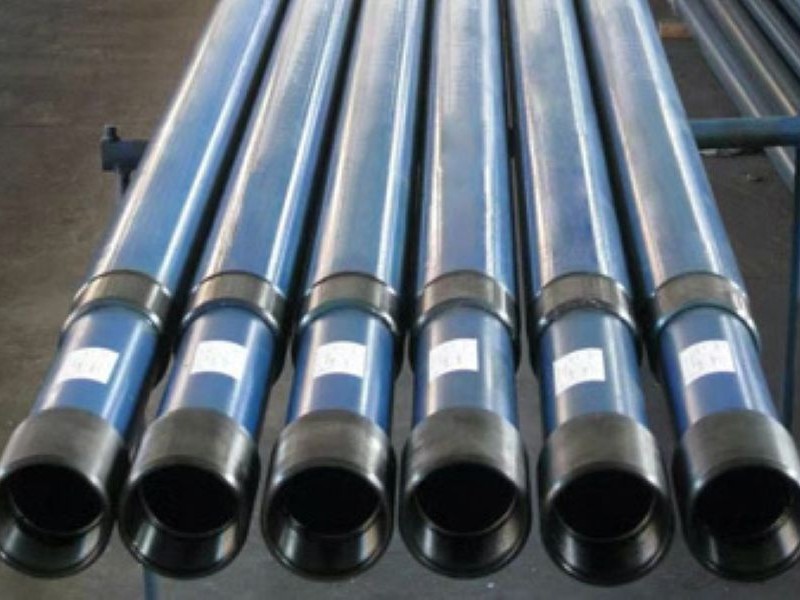
Specialty Pump Designs: Engineering Solutions for Difficult Wells
The standard API pump designs — insert and tubing — perform well in wells with clean fluid, moderate gas-oil ratios, and benign operating conditions. A significant proportion of the world's productive onshore wells do not meet these criteria. Specialty pump designs exist precisely because the standard designs cannot reliably address the specific failure modes that challenging well conditions impose.
Anti-Gas Design: Defeating Gas Lock Before It Stops Production
Gas lock is one of the most common causes of production loss in sucker rod pumped wells, particularly in naturally fractured reservoirs, wells producing above the bubble point, and formations with elevated gas-oil ratios.
The mechanism of gas lock is straightforward but difficult to address with standard valve designs: when free gas enters the pump barrel, it occupies volume without contributing to fluid lift. On the downstroke, the gas compresses rather than transmitting force to the fluid column above. If the gas volume in the barrel is large enough, the traveling valve never opens — and cycle after cycle passes without any fluid displacement.
The anti-gas pump design addresses this through a mechanical open-and-close oil inlet valve structure that operates independently of the pressure differential conditions that govern standard check valves. When gas enters the pump cavity, the valve automatically opens and closes through the reciprocating motion of the pump rod — physically exhausting gas from the barrel rather than waiting for a pressure differential to drive valve action. This forces the gas phase out of the barrel on each stroke and restores liquid-phase pumping.
This design is available in Φ44mm and Φ57mm pump diameter specifications, covering the bore sizes used with the standard 2 3/8-inch, 2 7/8-inch, and 3 1/2-inch tubing sizes found in the vast majority of onshore completions. The result is stable production continuity from wells where gas interference would otherwise force intermittent operation schedules, surfactant injection programs, or conversion to more expensive lift alternatives.
Long Plunger Sand Control: Sustained Performance in Abrasive Formations
Sand production attacks standard pump components through two mechanisms: abrasive wear between the plunger and barrel surfaces, and sand accumulation in the pump barrel that physically blocks plunger travel.
In formations with significant sand cut, a standard insert pump's run life can collapse from the multi-year performance achievable in clean-fluid wells to a matter of weeks. The plunger-to-barrel clearance opens rapidly as abrasive particles erode both surfaces; simultaneously, sand settling at the bottom of the barrel can pack around the standing valve and plunger, creating a mechanical jam that results in stuck pump and rod parting.
The long plunger sand control pump design addresses both failure modes through a lateral oil inlet geometry. Rather than taking fluid intake at the bottom of the pump assembly — where settling sand concentrates — the lateral inlet design positions the fluid entry point at the side of the pump, above the sand accumulation zone. This prevents sand from packing around the standing valve and blocking plunger movement.
The extended plunger length distributes the abrasive wear load over a larger plunger-barrel contact surface. Instead of concentrating wear on a short plunger segment, the longer contact area reduces unit wear rate and extends the time before clearance growth degrades pump efficiency below the economic threshold. In high-sand formations, this design difference translates directly into measurable extensions of pump run life.
RXB Thick-Wall Insert: Stability Under Downhole Pressure
The RXB insert pump design targets the specific challenge of maintaining barrel dimensional stability under the sustained high differential pressures of medium-deep to deep well operation.
In a standard single-wall barrel at depth, cyclic pressure loading — rising to full differential pressure on the downstroke and returning to near-zero on the upstroke — causes the barrel wall to flex slightly on each stroke. This "breathing effect" creates micro-dimensional changes in the barrel bore that gradually disturb the plunger-barrel fit and accelerate wear at the barrel ends where pressure gradients are steepest.
The thick-wall barrel in the RXB design reduces the amplitude of this cyclic deformation by increasing the barrel wall's resistance to radial pressure loading. The fixed bottom structure eliminates the breathing effect at the barrel base — the location most vulnerable to dimensional instability — improving operating stability by more than 30% compared with standard barrel designs in equivalent well conditions.
All flow-path components in the RXB pump are manufactured from stainless steel with wear-resistant coating. This material specification addresses the corrosion mechanism that compounds mechanical wear in produced fluid environments containing H₂S, CO₂, or formation water with high chloride content. The combination of dimensional stability and corrosion resistance delivers service life that is one to three times longer than traditional designs in the same well conditions — a meaningful reduction in workover frequency and its associated costs.
The RXB design is rated for deployment to 10,000 feet (approximately 3,050 meters), covering the depth range of the majority of productive onshore oil formations globally.
Steam Injection Thermal Recovery Pump: Operating Where Electronics Cannot
Thermal recovery operations — including cyclic steam stimulation and steam-assisted gravity drainage — create downhole temperature conditions that exceed the operational limits of most lift system components. Electric submersible pump motor windings begin to degrade above 250°F (121°C). Standard elastomeric seals in many completion components have similar temperature limits.
The thermal recovery pump design addresses this through a mechanical linkage that synchronizes plunger movement with the steam injection cycle without relying on any downhole electronic or elastomeric components. When the sucker rod string is lifted by a defined increment, the plunger rises to connect the steam injection pathway through the sealing tube to the production tubing — a purely mechanical action requiring no sensors, no electronics, and no temperature-sensitive materials in the flow path.
The material specification that makes this design viable in active steam injection environments is the Inconel 625 alloy bushing used in the steam channel. Inconel 625 is a nickel-chromium-molybdenum alloy developed for applications requiring sustained performance at extreme temperature — it is used in jet engine hot-section components, nuclear reactor internals, and deep-sea flexible risers. Its resistance to oxidation and corrosion at elevated temperatures allows it to withstand continuous steam scouring at 350°C (662°F) without dimensional degradation.
Field testing at Liaohe Oilfield in northeastern China's primary heavy oil production region confirmed a steam dryness retention rate of 85% or above throughout the steam injection cycle — meaning the pump design does not compromise the thermal efficiency of the recovery process.
Deep Well Double-Layer Barrel: Maintaining Precision at Depth
As production depth increases beyond 2,600 meters (approximately 8,500 feet), the mechanical demands on the pump barrel increase substantially. The hydrostatic pressure differential across the barrel walls grows, the rod string load increases, and any dimensional instability in the barrel bore creates disproportionate efficiency losses because the fluid column being lifted is longer and heavier.
The double-layer pump barrel design addresses this through an inner-outer barrel structure that distributes radial loads more effectively than a single-wall design. The inner barrel, manufactured to tight bore tolerances for direct contact with the plunger, is supported by the outer barrel, which provides structural rigidity under the sustained high-differential pressures of deep well operation. This configuration maintains bore dimensional integrity in conditions where a single-wall barrel would exhibit measurable distortion.
The deep well pump design is rated for the 2,600 to 3,500 meter depth range, covering the production horizon of many mature deep onshore formations.
Common Operating Problems: What They Mean and How to Respond
Understanding how the pump works makes it possible to interpret the problems that occur when it does not work as intended.
Gas Lock: The Silent Production Killer
Gas lock occurs when free gas in the pump barrel prevents the traveling valve from opening on the downstroke. The gas compresses and expands without being displaced upward, and the pump produces nothing despite the surface unit continuing to stroke. The dynamometer card shows a rounded, gradually changing load pattern without the sharp transitions of normal fluid handling.
The immediate response is often to slow the pump — giving more time per stroke for gas to escape around the valve — or to install a gas anchor below the pump intake to separate gas from liquid before it enters the pump. The permanent solution for wells with sustained high gas-oil ratios is the anti-gas pump design described above.
Fluid Pound: Stress on Every Component
Fluid pound occurs when the barrel is incompletely filled — pump-off condition — and the plunger reaches the liquid surface before the end of the downstroke. The sudden impact of the plunger into liquid generates a hydraulic shock that manifests as a sharp load spike on the downstroke portion of the dynamometer card and as audible knocking from the pump jack.
Repeated fluid pound accelerates fatigue at rod connections, damages pump internals, and can cause coupling failures in the rod string. Pump-off controllers that detect incomplete fill through load or motion sensors and automatically reduce stroke rate — allowing the barrel to refill between strokes — are the standard management tool. Long-term, fluid pound points to a mismatch between pump displacement and well inflow that requires resizing the pump or adjusting stroke parameters.
Valve Wear and Leakage: Gradual, Invisible Efficiency Loss
Worn or damaged valves leak fluid back past the check valve seat on each stroke. Standing valve leakage allows fluid to flow back from the barrel into the wellbore annulus on the downstroke, reducing net upward displacement. Traveling valve leakage allows the fluid column to flow back through the plunger on the upstroke, reducing load pickup and net lift.
Both valve failure modes appear on the dynamometer card as changes in the load pattern — reduced peak load on the upstroke for traveling valve issues, reduced minimum load on the downstroke for standing valve issues — but they are often gradual and easy to overlook until production has declined measurably. Regular dynamometer card monitoring, on a monthly or quarterly basis, is the standard method for detecting valve degradation before it reaches failure.
Frequently Asked Questions
Q: How deep can a sucker rod pump operate effectively?
A: Standard API insert pumps are effective to approximately 14,000 feet (4,270 meters) in normal configurations. Specialty deep well designs using double-layer barrel construction are engineered specifically for the 2,600 to 3,500 meter range (approximately 8,500 to 11,500 feet) where single-wall barrel designs begin to show dimensional instability under sustained high-differential pressure. Beyond 15,000 feet, the rod string weight and fatigue load typically make other lift methods more practical.
Q: What is a normal pump efficiency, and how do I know if mine is too low?
A: Volumetric pump efficiency — the ratio of actual production to theoretical maximum displacement — typically ranges from 70% to 90% in well-optimized installations. Efficiencies below 60% generally indicate a problem worth investigating: gas interference reducing barrel fill, valve wear allowing backflow, plunger-barrel clearance worn beyond acceptable range, or pump sizing mismatched to well inflow. Surface dynamometer cards provide the primary diagnostic data for identifying which of these conditions is responsible.
Q: How often should pump components be inspected or replaced?
A: In clean-fluid wells operating within design parameters, pump valves and plunger clearance can be assessed annually through dynamometer card analysis without pulling the pump. In wells with sand, corrosive fluids, or high operating temperatures, inspection intervals should be shortened based on observed production trends. When production declines by 15–20% from the pump's baseline without a corresponding change in reservoir inflow, a pull and inspection is warranted. Worn valves and plunger-barrel clearance are the most common findings.
Q: Can a sucker rod pump handle gas and sand at the same time?
A: A standard pump cannot handle both conditions reliably. Specialty pump designs that combine the lateral oil inlet geometry of the sand control configuration with the mechanical anti-gas valve structure can address both conditions simultaneously. The key requirement is accurate well fluid characterization — sand cut data, GOR measurements, and fluid composition analysis — before pump type selection, not after the first pump failure.
Q: What maintenance does the surface pumping unit require?
A: The surface unit requires routine lubrication of the gearbox, walking beam bearings, and crank pin bearings; periodic inspection of the counterweight balance relative to actual polished rod load (measured with a dynamometer); stuffing box packing replacement as the packing wears or begins to leak; and periodic structural inspection of the Samson post, beam, and base for fatigue cracking. Most of this work can be performed with standard field crew tools without specialized equipment. Dynamometer measurement of polished rod load is the single most valuable maintenance activity, as it provides the baseline data needed to interpret downhole pump condition over time.
Conclusion
The sucker rod pump is not a simple machine. It is a mechanical system that operates across two physically separated environments — surface and downhole — connected by a transmission element that is neither rigid nor massless, in conditions of cyclic loading, pressure differential, abrasive fluid, and chemical exposure, at cycle rates that accumulate to more than five million strokes per year in a well pumping at ten strokes per minute.
What makes it remarkable is that it achieves this reliably, economically, and with a level of diagnostic transparency that no other artificial lift method can match. The dynamometer card — generated at surface with standard field equipment — provides a real-time window into downhole pump behavior that guides maintenance decisions before problems become failures.
The development of specialty pump designs for gas-prone, sand-laden, heavy oil, high-temperature, and deep-well applications has extended the envelope of effective rod lift significantly. These are not incremental refinements — they are purpose-engineered solutions to the specific failure modes that challenging well conditions impose on standard pump designs, manufactured to API 11AX and ISO 9001 standards that define professional-grade quality in oilfield equipment.
Understanding how the pump works — the stroke cycle, the valve mechanics, the rod elasticity effects, the diagnostic signatures — is the foundation for making better decisions about pump selection, operating parameter optimization, and maintenance scheduling. That understanding, applied to the right pump design for each well's specific conditions, is what separates an installation that runs for years from one that fails in months.