

How to Select the Right Rod Pump and Reduce Wear in Sand-Producing Oil Wells
High-sand wells are among the most challenging operating environments for rod pump systems. Sand particles continuously circulate through the pump, causing accelerated wear on valves, plungers, barrels, and other critical components. As sand production increases, pump efficiency often declines, maintenance frequency rises, and operating costs increase. Selecting the right rod pump type, wear-resistant materials, and maintenance strategy can significantly improve reliability and reduce workover expenses. In many high-sand applications, operators often favor insert pumps because they are easier to service, while wear-resistant tubing pumps may be selected when higher production capacity is required.
Why High-Sand Wells Are Difficult for Rod Pumps
Sand is one of the most destructive contaminants encountered in oil production.
Unlike gas interference or fluid level fluctuations, sand causes direct mechanical wear.
As sand particles repeatedly pass through the pump, they can damage:
· Traveling valves
· Standing valves
· Plungers
· Pump barrels
· Seating assemblies
Over time, this wear leads to:
· Increased leakage
· Reduced pump efficiency
· Lower production rates
· More frequent repairs
· Higher operating costs
For this reason, pump selection in high-sand wells should focus not only on production capacity but also on durability and maintenance efficiency.
What Problems Does Sand Cause in Rod Pump Systems?
Valve Wear
Sand particles frequently impact valve balls and valve seats.
Common consequences include:
· Poor sealing
· Internal leakage
· Reduced pump fillage
Valve wear is often the first sign of sand-related damage.
Plunger and Barrel Wear
Continuous abrasion gradually enlarges operating clearances.
This may result in:
· Increased fluid slippage
· Lower displacement efficiency
· Reduced production performance
Shortened Pump Life
In severe sand-producing wells, pump service life may be significantly reduced if wear-resistant materials are not used.
Increased Workover Costs
Frequent pump failures often lead to:
· More rig interventions
· Additional replacement parts
· Extended production downtime
Which Rod Pump Type Is Better for High-Sand Wells?
The answer depends on the operator's priorities.
If maintenance efficiency is critical, one solution may be preferable.
If production volume is the primary objective, another option may be more suitable.
Option 1: Insert Pump for High-Sand Wells
Insert pumps are often selected when frequent maintenance is expected.
Advantages
✓ Easier pump retrieval
✓ Lower workover costs
✓ Faster replacement of worn components
✓ Reduced production downtime
Why It Works in High-Sand Wells
Sand-related wear often requires periodic replacement of:
· Valves
· Plungers
· Pump assemblies
Because insert pumps can be removed without pulling the entire tubing string, maintenance operations are generally more efficient.
Recommended For
· High-sand wells
· Mature oilfields
· Wells requiring frequent interventions
· Remote fields where downtime is costly
Option 2: Tubing Pump for High-Sand Wells
Tubing pumps can also perform successfully in sandy environments when properly designed.
Advantages
✓ Higher production capacity
✓ Larger pump diameters
✓ Greater displacement potential
Challenges
Maintenance typically requires pulling the tubing string.
As a result, repair costs are often higher when severe wear occurs.
Recommended For
· High-production wells
· Stable production environments
· Wells where maximizing output is the primary objective
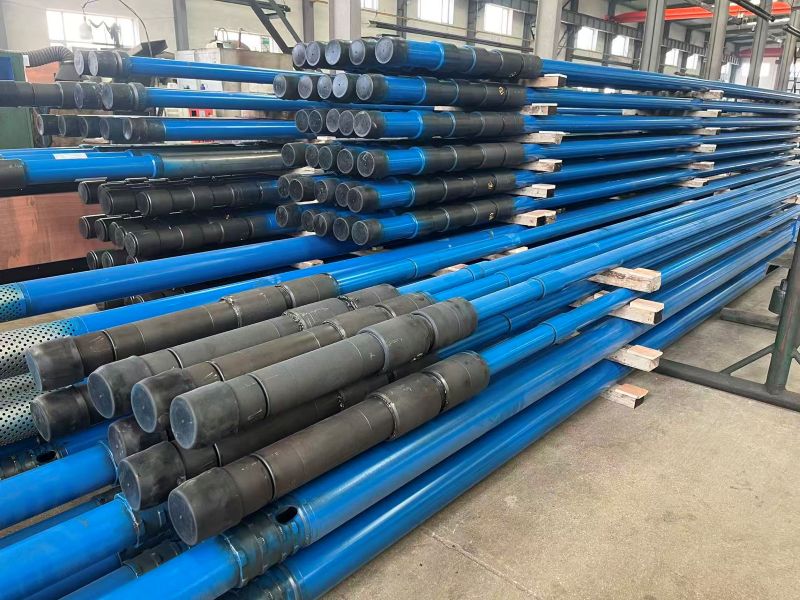
Insert Pump vs Tubing Pump for High-Sand Wells
Comparison Item | Insert Pump | Tubing Pump |
Maintenance Efficiency | Excellent | Moderate |
Workover Cost | Lower | Higher |
Production Capacity | Moderate | Higher |
Sand Wear Management | Excellent | Good |
Downtime During Repair | Lower | Higher |
High-Volume Production | Good | Excellent |
High-Sand Applications | Excellent | Good |
In many high-sand wells, maintenance costs often have a greater impact on profitability than small differences in production capacity.
For this reason, insert pumps are frequently preferred.
Material Selection Is Just as Important as Pump Type
Choosing the correct pump type alone is not enough.
Material selection often determines whether a pump survives in a sandy environment.
Recommended Materials for High-Sand Wells
Wear-Resistant Valve Components
Recommended options may include:
· Hardened alloy steel
· Tungsten carbide components
· Wear-resistant valve assemblies
These materials help reduce valve leakage caused by abrasion.
Wear-Resistant Plungers
Recommended for:
· Moderate sand production
· High sand production
· Long production cycles
Improved plunger durability often leads to longer service intervals.
Abrasion-Resistant Barrels
A durable barrel can significantly reduce internal wear and maintain pump efficiency.
Real Well Scenarios and Pump Recommendations
Scenario 1: High Sand + Frequent Pump Failures
Typical Conditions
· Sand production remains high
· Valve wear occurs frequently
· Pump replacement is common
Recommended Pump
Insert Pump
Why?
✓ Faster maintenance
✓ Lower workover costs
✓ Reduced downtime
Scenario 2: High Sand + High Production Requirement
Typical Conditions
· Strong reservoir support
· High fluid production targets
· Sand production remains manageable
Recommended Pump
Tubing Pump with Wear-Resistant Materials
Why?
✓ Higher displacement capacity
✓ Greater production potential
✓ Improved wear resistance
Scenario 3: Mature Oilfield with Sand Production
Typical Conditions
· Declining reservoir pressure
· Increasing sand production
· Frequent optimization activities
Recommended Pump
Insert Pump
Why?
✓ Flexible maintenance strategy
✓ Easier pump replacement
✓ Better long-term operating economics
Scenario 4: Remote Oilfield with High Sand Content
Typical Conditions
· Limited service resources
· High transportation costs
· Expensive interventions
Recommended Pump
Insert Pump
Why?
✓ Reduced rig time
✓ Faster servicing
✓ Lower total maintenance costs
Additional Strategies to Reduce Sand-Related Pump Failures
Even the best rod pump can fail prematurely if sand production is not managed properly.
Recommended Practices
Implement Sand Control
Examples include:
· Sand screens
· Gravel packing
· Other sand management technologies
Increase Inspection Frequency
High-sand wells generally require closer monitoring.
Monitor Pump Efficiency
Early identification of wear can prevent larger failures.
Analyze Failure Patterns
Repeated failures often reveal opportunities for optimization.
Quick Selection Guide
Well Condition | Recommended Pump |
High Sand + Frequent Repairs | Insert Pump |
High Sand + Maximum Production Required | Tubing Pump |
High Sand + Remote Location | Insert Pump |
High Sand + Mature Oilfield | Insert Pump |
High Sand + Stable Production | Tubing Pump |
High Sand + High Maintenance Costs | Insert Pump |
FAQ
What is the biggest threat to rod pumps in high-sand wells?
Sand abrasion is typically the primary cause of valve wear, plunger damage, and reduced pump life.
Are insert pumps better than tubing pumps in sandy wells?
Not always. Insert pumps generally offer lower maintenance costs, while tubing pumps may provide higher production capacity.
Can wear-resistant materials extend pump life?
Yes. Material selection is often one of the most effective ways to improve reliability in abrasive environments.
Should high-sand wells always use insert pumps?
No. Pump selection should consider production goals, maintenance strategy, and overall operating costs.
What is more important in high-sand wells: production or maintenance?
The answer depends on the economics of the field. In many cases, reducing downtime and maintenance costs provides greater long-term value.
Conclusion
There is no single rod pump that is best for every high-sand well. The optimal solution depends on production targets, maintenance requirements, workover costs, and reservoir conditions. For wells where maintenance efficiency and lower operating costs are the primary concerns, insert pumps are often the preferred choice. For wells focused on maximizing production, tubing pumps equipped with wear-resistant components may provide better performance. Ultimately, the most successful high-sand well strategy combines the correct pump type, appropriate material selection, effective sand control measures, and a proactive maintenance program.